Egypt at the Helm of African Peace and Security: An Exceptional Presidency at a Pivotal Continental Moment

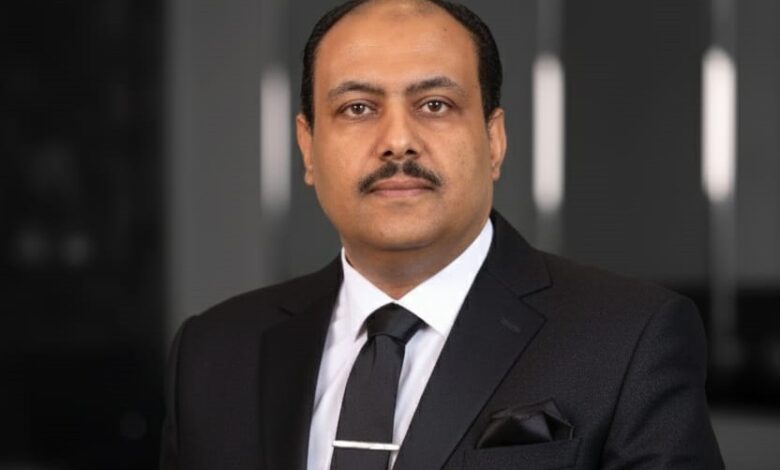
Ramy Zohdy — Expert in African Affairs
The commencement of Egypt’s presidency of the African Peace and Security Council as of February 2026 cannot be viewed as a routine entitlement or a merely procedural rotation over the leadership of one of the African Union’s most important bodies. Rather, it represents a qualitative shift laden with profound political and strategic implications, extending beyond institutional representation to a redefinition of Egypt’s role within the continental security architecture, at a moment of acute African complexity. It is a moment in which armed conflicts intersect with sweeping geopolitical transformations, international powers compete intensely for influence, and African peoples search for a new equilibrium between sovereignty, stability, and development.
Since its establishment in 2004 as one of the African Union’s principal pillars, the Peace and Security Council has evolved into a political and security operations room for managing conflicts, preventing disputes, and building post-conflict peace.
According to official Union data, the African continent has witnessed more than 35 armed conflicts of varying intensity over the past decade, ranging from protracted civil wars such as those in Sudan, the Democratic Republic of the Congo, and Somalia, to low-intensity yet chronic internal conflicts as seen in the Sahel region and Libya. This is in addition to the rise of new threat patterns, including transnational terrorism, maritime piracy, organized crime, and conflicts linked to water scarcity, climate change, and natural resources.
Within this troubled context, Egypt’s assumption of the presidency of the Peace and Security Council comes at an exceptionally sensitive time. African Union reports for 2025 indicate that nearly 45 percent of the continent’s population lives in countries directly or indirectly affected by conflict and instability, and that the cost of conflicts to the African economy exceeds 18 billion dollars annually, equivalent to roughly 2 percent of the continent’s gross domestic product. These figures do not merely reflect the scale of the challenge; they place a historic responsibility on the state leading the Council in managing this complex and multifaceted file.
The central wager of the Egyptian presidency lies in its ability to shift the Peace and Security Council from a logic of crisis management to one of conflict prevention, and from reactive responses to proactive action. Egypt, by virtue of its long-standing political and security experience and its unique geographic position at the crossroads of North and East Africa and at the gateway between the Red Sea and the Mediterranean, possesses genuine tools to drive such a transformation. Over recent years, Egypt has participated in more than 25 percent of African peacekeeping operations and has contributed over 3,000 military and police personnel to United Nations and African Union missions, placing it among the world’s top ten contributors to peacekeeping efforts.
More important than the numbers, however, is the philosophy underpinning the Egyptian role, a philosophy that views security as inseparable from development and holds that stability cannot be imposed by force alone, but must be built through addressing the root causes of conflict, whether political, economic, or social. This approach, which Egypt has consistently advocated within the African Union, gains renewed momentum with its assumption of the Council’s presidency, as it becomes possible to translate this vision into executable policies, monitoring mechanisms, and frameworks for regional coordination.
One of the core axes anticipated during Egypt’s presidency concerns the handling of protracted conflicts, foremost among them the Sudanese crisis, which poses a direct threat to regional security in the Horn of Africa and the Nile Basin. Sudan, by virtue of its geographic position and borders with seven African states, constitutes a central security nexus, and any internal collapse or fragmentation inevitably reverberates across neighboring countries. Egypt, which has played an active role in supporting political settlement paths and preserving the unity of the Sudanese state, will be expected during its presidency to advance a renewed and distinctly African approach, based on a ceasefire, facilitation of Sudanese-Sudanese dialogue, and rejection of division or externally imposed solutions.
In eastern Democratic Republic of the Congo, where United Nations estimates indicate that more than six million people have been displaced, Egypt’s presidency represents an opportunity to reassess the effectiveness of African missions and to link security action with development and reconstruction pathways. This is particularly critical given the region’s abundant natural resources, which too often shift from being an economic blessing to fuel for conflict. Here, the Egyptian role emerges in pushing toward regional development partnerships that place local communities at the heart of the equation and curb war economies.
Egypt’s presidency of the Peace and Security Council cannot be separated from the counterterrorism file, especially in the Sahel and Sahara region, which in recent years has become one of the world’s most dangerous epicenters of terrorism. According to the Global Terrorism Index for 2024, Sahel countries alone accounted for nearly 50 percent of global terrorism-related casualties. The Egyptian approach in this domain combines firm security confrontation and the drying up of financing sources with support for the national state and its institutions, and rejection of political vacuums exploited by extremist organizations. Through the Council’s presidency, Egypt can restore the primacy of African security coordination and activate the African Standby Force, which for years has remained largely theoretical due to funding shortages and insufficient political will.
The maritime dimension of African security also imposes itself forcefully, whether in the Gulf of Aden, the Red Sea, or the Gulf of Guinea. Data from the International Maritime Organization indicate that more than 90 percent of Africa’s external trade passes through maritime routes, making maritime security both a sovereign and economic imperative. Egypt, with its extensive experience in securing the Suez Canal and its engagement in regional Red Sea security initiatives, has an opportunity to expand the concept of African maritime security to include the protection of shipping lanes, the fight against piracy, the security of ports, and the linkage of these efforts to coastal development strategies.
At the institutional level, Egypt’s presidency of the Peace and Security Council represents a test of the African Union’s own capacity to develop its mechanisms. Despite its importance, the Council continues to face challenges related to the speed of decision-making, overlapping mandates with regional organizations, and weak sustainable financing. Here, Egypt can play a reformist role by advocating greater reliance on Africa’s own resources, activating the Peace Fund levy adopted by the Union, and linking Council decisions to more rigorous monitoring and evaluation mechanisms.
Politically, this presidency also reflects Egypt’s strong return to the heart of the African equation, not merely as a security actor, but as a rational voice defending balance and rejecting the polarization of the continent within competing international axes.
At a time when the world is witnessing intense competition among major powers over Africa, whether in energy, rare minerals, or military influence, Egypt’s presidency of the Council provides Cairo with an important platform to defend the independence of African decision-making and to reinforce the principle of African solutions to African problems, without severing international partnerships, but rather redefining them according to rules of parity and mutual interest.
In sum, the start of Egypt’s presidency of the African Peace and Security Council in February 2026 is not a passing event on the Union’s calendar, but a genuine test of Egypt’s continental role and of its ability to translate its historical capital and political experience into tangible policies on the ground. Success in this mission is not measured by the number of statements or meetings, but by the ability to reduce the intensity of conflicts, build sustainable peace pathways, link security to development, and restore the African citizen’s confidence in continental institutions. It is a difficult battle, but one that Egypt knows well how to fight when it steps to the forefront, not in search of a role, but in defense of a continent that deserves stability and progress.
At “critical juncture”, Egypt to assume AU Peace and Security Council