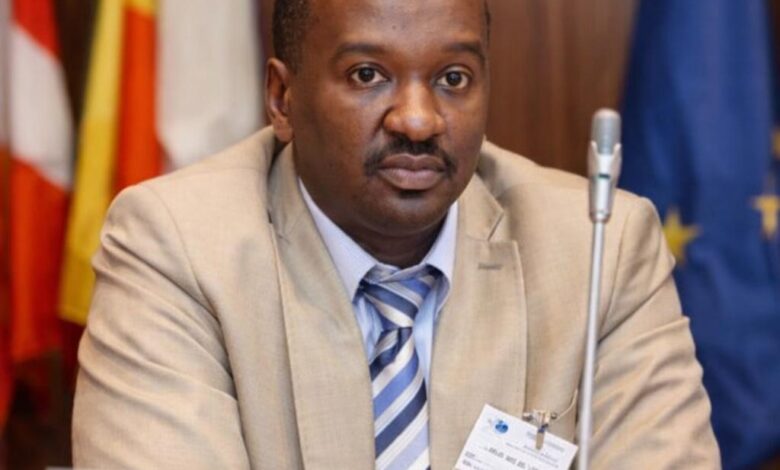
By – Dr. Abdelnasser Solum Hamed
In Darfur, war is no longer a means of control, but a means of eliminating the need for control altogether , Death in Darfur is no longer a collateral consequence of state collapse or a protracted civil war. Since the outbreak of fighting in April 2023, it has become a deliberately engineered political product. What is unfolding in the region is not a random eruption of violence, but a system of rule through violence operating with calculated precision: selecting target communities, using geography as an instrument of dominance, and restructuring time itself so that siege and starvation become slow mechanisms of killing. Power here is no longer exercised through institutions, but through control over the very conditions of life.
Seen through this lens, Darfur cannot be understood merely as a security crisis or a peripheral conflict. It represents an advanced manifestation of structural violence—harm inflicted not only through direct killing, but through the systematic destruction of the foundations of social existence: markets, water, food, healthcare, and freedom of movement. Society is not shattered in a single moment; it is besieged within a coercive structure that reproduces devastation day after day.
In other words, violence in Darfur is no longer the result of chaos or institutional breakdown; it has become a mode of governance, exercised through deliberate control over food, mobility, and social time.
Here, violence does not signal the failure of rule. It reflects what political sociology defines as rule through violence, whereby conventional instruments of authority—law, public services, and legitimacy—are replaced by coercive tools: fear, scarcity, and restrictions on movement. Within this framework, the state does not simply collapse; a parallel sovereignty emerges, imposed by force and sustained through continuous coercion.
At its deepest level, this sovereignty becomes a sovereignty of death—a form of power exercised through decisions over who may live, who may be left to die, when, and at what pace. Authority no longer produces life or protects bodies; it manages annihilation, classifying populations according to their disposability.
Within this logic, elimination extends far beyond displacement. It constitutes a form of radical social exclusion. Communities are not only expelled from their land, but erased simultaneously from the social, political, and economic spheres. They are denied the right to remain, to return, or even to represent themselves in public space. Social existence itself becomes subject to negation.
Success within this system is not measured by military victories or territory seized, but by villages erased, neighborhoods emptied, and roads closed to life. Civilians are no longer “non-combatants”; they become strategic targets because they carry the social infrastructure of existence—family networks, markets, collective memory, and the possibility of return. Targeting them is a long-term investment in dismantling society itself.
What happened in Khartoum was not an isolated exception. It was an initial prototype, now reproduced daily in Darfur’s cities under RSF control.
The same mechanisms—raids, systematic looting, terrorizing civilians, disruption of services, and control over food and movement—did not end with the fighting in the capital. They shifted geographically and deepened structurally. In Darfur, these practices are no longer moments of breakdown; they have become routine instruments of governance, transforming cities from spaces of life into zones regulated by force.
West Darfur, particularly El Geneina, offers the clearest illustration of this model. In May–June 2023, the violence there was not reciprocal communal conflict, but a coordinated process: targeting specific neighborhoods, hunting civilians as they fled, mass killings along escape routes, followed by the systematic burning of villages and the prevention of return. This sequence is not merely a humanitarian account; it constitutes an operational blueprint for producing demographic emptiness and entrenching a reality that relies on force rather than governance.
The same pattern—albeit with varying intensity—was repeated in Misterei, Kebkabiya, and Ardamata: raids, looting, selective killing, followed by widespread destruction of homes and markets. Markets here are not merely economic spaces; they are nodes of social life. Their destruction disables survival even for those who escape death. The outcome is not simply displacement, but the impossibility of remaining.
In Central Darfur, particularly Zalingei and its surroundings, violence has assumed a quieter yet more structurally lethal form. A coercive reality has been imposed through arbitrary arrests, enforced disappearances, restrictions on civilian movement, and the seizure of property. These practices are not designed for immediate deterrence; they aim to suffocate daily life, turning survival itself into a psychological and social burden that ultimately forces communities to flee.
El Fasher exemplifies the most dangerous tool within this system: systematic starvation as a policy of managed scarcity. Food is not denied all at once; its flow is regulated with calculated precision. Siege is tightened, then partially relaxed, keeping society perpetually on the edge of survival without rescue. What is governed here is not hunger alone, but time itself. Social time is suspended—no past to return to, no future to plan for, and no stable present.
Starvation, in this sense, becomes an economy of decision. Whoever controls food controls movement; whoever controls movement redraws the human map. Displacement may appear as an individual choice, but in reality it is the outcome of coerced engineering that replaces collective agency with survivalist logic. As a result, hundreds of thousands of civilians have been forcibly displaced, and entire towns and villages emptied—not as collateral damage, but as an objective in itself.
This violence also extends to knowledge and memory. Local documentation networks are targeted, witnesses displaced, and local journalism dismantled, turning crimes into events without narratives. Violence is not merely concealed; the definition of truth itself is monopolized, and denial becomes a tool of governance.
This pattern aligns with the findings of multiple UN and human-rights reports, which describe what is unfolding in Darfur as a widespread and systematic attack on civilians, exceeding the logic of isolated violations and entering the logic of elimination.
Attempts to reduce the violence to identity-based targeting collapse under scrutiny. The engineering of death has not followed fixed ethnic lines whenever local communities—regardless of identity—stood in the way of control. In East Darfur (Abu Karinka), as well as parts of North and Central Darfur, Arab communities were subjected to looting, forced displacement, and arbitrary detention when they resisted subjugation or sought to protect their land and routes. Such cross-identity targeting reflects a broader strategy of fragmenting the social field and preventing the formation of any cohesive communal alliance.
The RSF cannot credibly claim to represent Darfur or “the margins,” ethically or analytically. Representation in political sociology is defined by the protection and empowerment of society—not by its depletion, starvation, and denial of return. “The margin” is a concept rooted in liberation, aimed at dismantling historical exclusion, not a slogan deployed to justify erasure. When markets are destroyed, urban life suspended, and social bonds shattered through killing and starvation, what is practiced is rule through violence, not political representation. Actions—not slogans—are the measure of representation.
This logic is inseparable from the use of sexual violence as a tool for destroying social reproduction. Such acts do not harm victims alone; they disrupt intergenerational relations, embed fear and stigma, and undermine the possibility of return. What is targeted is not only the present, but the social future itself.
After killing, starvation, and the destruction of social ties comes the decisive final stage: preventing return. Burned villages are sealed off, and emptied areas administered as a new reality. Violence thus shifts from episodic crime to a stable system. High-intensity killing becomes unnecessary once elimination has been achieved. What follows is no longer conflict, but the management of its outcomes.
Why has violence reached this level now? Because the latest phase of the war removed previous constraints: state collapse, competing regional sponsorships, and global distraction by other crises. In this vacuum, excessive violence becomes a rational choice, as its deferred international costs are lower than its immediate territorial and demographic gains.
More dangerous than the crimes themselves is international silence when it becomes a form of temporal partnership. Genocide is not completed in a single moment, but over time. Every day of delayed naming and accountability contributes directly to the completion of the project.
Silence here is not neutrality; it is a political decision with an accumulating human cost.
Darfur today reveals not only the worst of war, but its coldest rationality:
Death is a decision. Starvation is a tool. Displacement is the goal.
Darfur is not a historical exception. It is a mirror reflecting a world learning how to manage death efficiently—how to turn annihilation into procedure and displacement into policy.
The question is no longer why Darfur is being destroyed, but what has become possible in a world that allows this to happen.
Day after end of siege: Dozens killed in RSF drone attack in Sudan’s South Kordofan