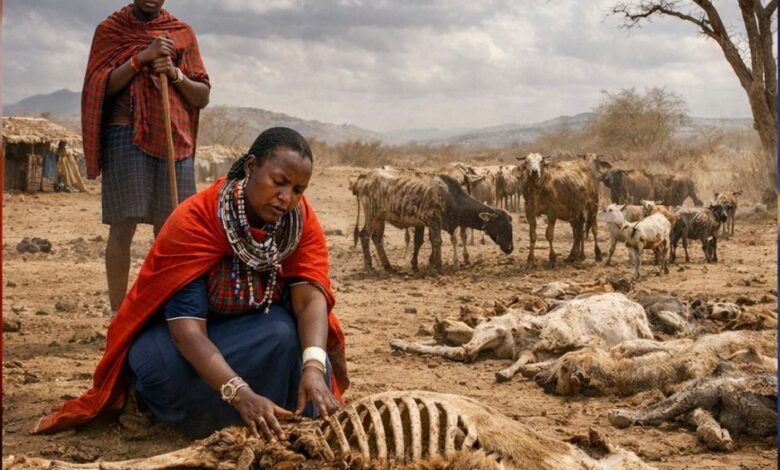
The dozens of cow and goat carcasses scattered around Maria Katanga’s family compound testify to the grinding impact of an ongoing drought on Kenya’s pastoralist communities who rely on livestock for survival.
Since August, the 24-year-old Maasai herder has lost more than 100 cattle and 300 goats to drought – and the animals still in her care are too emaciated to produce milk.
Kenya has been here before, most recently in 2022 when a record drought decimated livestock populations and plunged pastoralists in the East African country’s arid north and northeast into a hunger crisis.
But now, as such climate disasters become more frequent, their impact is also spreading to areas that have traditionally not been deeply affected by drought such as Kajiado county, which borders the capital Nairobi and where Katanga lives.
As the animals have grown weaker, their value has also shrivelled, Katanga’s stepson Emmanuel Loshipae said .
“A cow that was being sold for 60,000 or 70,000 Kenyan shillings (before the drought)… is being sold for 5,000 shillings,” Loshipae, 19, said.. He added that the family had been forced into distress sales to pay for animal feed in the absence of grazing land.
Partner Spotlight: Giraffe Manor – A Signature Kenya Experience