“Lion of Guinea”: How Ahmed Sékou Touré Traded Colonial Riches for the Dignity of Freedom

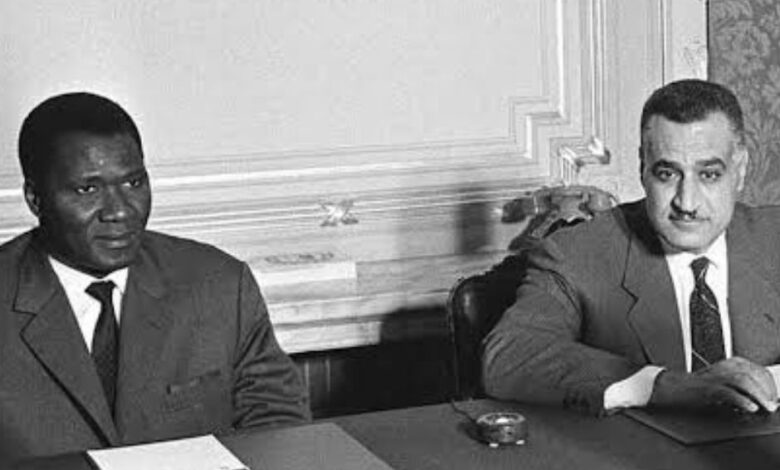
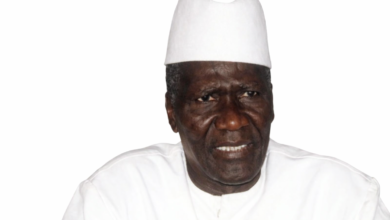
Ahmed Sékou Touré was not merely a politician; he was a seismic force that reshaped the African continent’s destiny. Born in 1922 to a modest Muslim peasant family, Touré’s early life was a synthesis of traditional Koranic wisdom and French technical education. This duality forged a leader who could navigate the complexities of colonial administration while remaining deeply rooted in the aspirations of his people. Starting as a humble treasury clerk, he rapidly transformed into a formidable trade union activist, realizing early on that the liberation of the African mind began with the empowerment of the African worker. His leadership during the historic 1953 strike was the first major crack in the facade of French colonial dominance, proving that organized African labor could bring an empire to its knees.
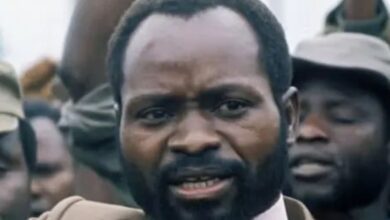
The defining moment of Touré’s career, and arguably of 20th-century African history, came in 1958. When Charles de Gaulle offered African colonies a choice between semi-autonomy within a “French Community” or total independence, Touré chose the latter with a defiant declaration that still echoes today: “We prefer poverty in liberty to riches in slavery.” Guinea became the only French colony to vote “No” to the referendum, a move that prompted an immediate and vengeful withdrawal by France. Yet, Touré remained indomitable. As the first President of independent Guinea, he embarked on a radical mission to dismantle the remnants of feudalism, seizing land from notorious landlords and redistributing wealth to the peasantry. His governance was a blend of fierce nationalism and pragmatic socialism, later evolving into economic liberalization, but his core mission never wavered: the absolute sovereignty of the Guinean people.
Central to Sékou Touré’s legacy was his visionary partnership with Egypt’s Gamal Abdel Nasser. In the wake of French withdrawal, when Guinea faced total economic isolation, it was Cairo that stood as the “Strongest Pillar” of support. Nasser and Touré forged a friendship built on the shared “Logos” of anti-colonialism and Pan-Africanism. Egypt provided critical financial loans and urgent supplies like flour to prevent a humanitarian collapse. More importantly, Cairo sent doctors, nurses, and technical experts to fill the void left by the French. This was not mere charity; it was a strategic alignment of two giants seeking to build a unified Africa. Their cooperation was institutionalized through training programs for Guinean diplomats, police, and agricultural experts, ensuring that the fledgling state could survive the Western blockade.
The political synergy between Cairo and Conakry reached its zenith in the struggle for continental unity. Both leaders were instrumental in the 1963 formation of the Organization of African Unity, advocating for a world defined by non-alignment and mutual solidarity. Touré’s loyalty to this alliance was profound; following the 1967 war, he was among the first African leaders to sever ties with Israel in a show of unwavering support for Egypt. This bond was cemented in the cultural and academic spheres as well. Touré, a poet and intellectual in his own right, was awarded an honorary PhD from Al-Azhar University—a rare tribute to his efforts in articulating a political philosophy of Islam that rejected foreign subjugation. In a reciprocal gesture of eternal respect, Guinea’s largest university in Conakry was named Gamal Abdel Nasser University, a name it proudly carries to this day.
Sékou Touré’s international stature was recognized with prestigious accolades, including the Lenin Peace Prize and Egypt’s Order of the Nile. Yet, for the millions of Guineans he led for over three decades, his greatest award was the “Dignity” he restored to their lives. He was a master planner who understood that African unity was the only shield against the “Veil of Blindness” imposed by neo-colonialism. Even as he faced internal challenges and shifted economic strategies in the 1970s, his image as a brave freedom fighter remained untarnished in the hearts of his compatriots. He was the man who dared to say “No” when the world expected a “Yes,” proving that true fame is found in the service of one’s innate nature and national pride.
The end of this influential era came in March 1984, when Touré passed away following a heart attack during a medical procedure in the United States. His death marked the conclusion of a political career that served as a beacon for liberation movements across the globe. Today, Ahmed Sékou Touré is remembered as an eloquent poet, a fierce patriot, and a visionary who understood that the destiny of Guinea and Egypt were intertwined in the broader narrative of African resurgence. His life remains a testament to the fact that while colonial powers can withdraw their resources, they can never reclaim a soul that has tasted the sweetness of liberty.
read more