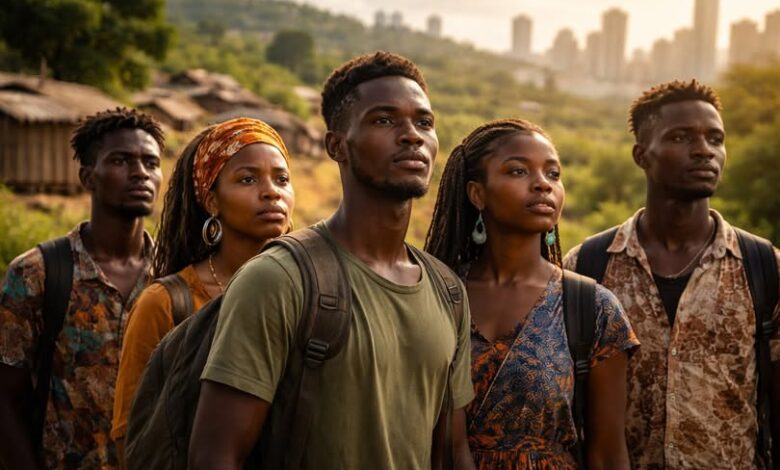
The story of a New Generation in Africa today is not found in formal statistics; it is written in the shared sighs of street corners and the quiet prayers of those living between ancestral roots and a shifting world. For the African youth, life is a delicate dance of belonging and breaking free. They are the guardians of an ancient warmth, yet they are navigating ten profound social currents that pull at the very fabric of their identity and community. This common pain is the silent language of a generation seeking a place under the sun.
1. The Weight of Unfulfilled Potential
The most pervasive woe is the heavy cloud of waiting. According to recent International Labour Organization (ILO) data, Africa has the highest rate of “working poverty” among youth globally, meaning even those with jobs cannot find a path to dignity. Millions of brilliant minds are stuck in a social limbo; they have the passion and the spark, but society offers no stage for their performance. This is not merely about a lack of income; it is about the erosion of a young person’s sense of purpose. When a generation is forced into what sociologists call “waithood,” a quiet melancholy settles over the neighborhood, turning vibrant energy into a slow, patient ache.
2. The Digital Mirror and the Search for Self
The internet has brought the whole world to the palm of a young African’s hand, but it has also brought a crisis of reflection. While World Bank reports highlight that mobile internet penetration is transforming the continent, they also note a massive “usage gap” where high data costs limit true participation. The youth see a global culture that often ignores their reality. This creates a social tug-of-war: the desire to be modern versus the deep, instinctive need to remain rooted. This search for a true face in a digital mirror is a daily struggle for belonging.
3. The Silent Wall Between Generations
In many African homes, there is a sacred respect for elders, but this beautiful tradition can sometimes become a wall of silence. United Nations (UN) demographic profiles show a staggering age gap between the median citizen (age 19) and the average political leader (age 62). The youth feel the breath of the future, while the elders hold tight to the keys of a world that is fading. Young people are longing for a bridge—a way to honor the wisdom of their fathers without sacrificing the dreams of their children.
4. The Thirst for a Living Education
Education in the heart of Africa is often a beautiful but broken promise. UNESCO has consistently warned that despite higher enrollment rates, “learning poverty” remains critical, with many students lacking the skills needed for the modern world. Young people sit in crowded classrooms, memorizing facts that have nothing to do with the soil beneath their feet. They are hungry for an education that breathes, one that teaches them how to heal their communities. The frustration with an empty diploma is a social wound that leaves many feeling cheated.
5. The Taboo of the Troubled Mind
For too long, the internal storms of the heart have been ignored in favor of a forced resilience. The World Health Organization (WHO) indicates that suicide rates among young Africans are rising, yet mental health funding remains less than one percent of most national health budgets. Admitting to sadness is often seen as a sign of personal weakness. But the youth are starting to speak. They are tired of wearing the smiling mask and are seeking a society that understands that the spirit can get tired just like the body.
6. The Shadow of Inequity in the Home
The path of a young African woman is still paved with invisible stones of expectation. UN Women statistics reveal that young women in Sub-Saharan Africa are twice as likely as men to be not in education, employment, or training. While her spirit is indomitable, she often faces social scripts that limit her horizon. The youth are now questioning these old patterns, dreaming of a community where a girl’s education is as celebrated as her wedding. This shift is about the wholeness of the social body.
7. The Grief of the Changing Earth
The African youth have a profound connection to their land, but the seasons are changing in ways their grandfathers cannot explain. The African Development Bank estimates that the continent loses up to fifteen percent of its GDP growth per capita annually due to climate disasters. This environmental shift is a social tragedy; it breaks the link between the youth and their ancestral heritage, forcing them to leave the villages they love for the cold, grey anonymity of the city, losing their sense of place in the process.
8. The Fading Song of Ancient Tongues
As global languages dominate the airwaves, the melodies of indigenous mother-tongues are beginning to fade. UNESCO’s Atlas of the World’s Languages in Danger lists hundreds of African languages as vulnerable. Many feel a quiet grief as they realize they cannot fully grasp the poems of their ancestors. This loss of language is a loss of a specific way of seeing the world—a social blindness that the youth are trying to cure by reclaiming their stories in the music and art of today.
9. The False Allure of the Faraway
There is a social myth that true life only exists across an ocean or a desert. The International Organization for Migration (IOM) documents thousands of young Africans embarking on irregular journeys every year, driven by the belief that happiness is always “elsewhere.” This is a poison that drains the community of its dreamers. The social cost of this hope is the empty chairs at the family table and the lonely hearts of those who leave and those who are left behind to wait.
10. The Hunger for Sincerity
Beyond all else, there is a deep, social yearning for truth. Afrobarometer surveys consistently show that the top concern for African youth is the lack of institutional integrity and transparency. They are tired of the theatre of pretense. They are looking for mentors who speak with a straight tongue and act with a clean heart. This is not about politics; it is about the basic human need for trust. The youth are seeking to build a society where the light of integrity is the only compass for the future.
read more