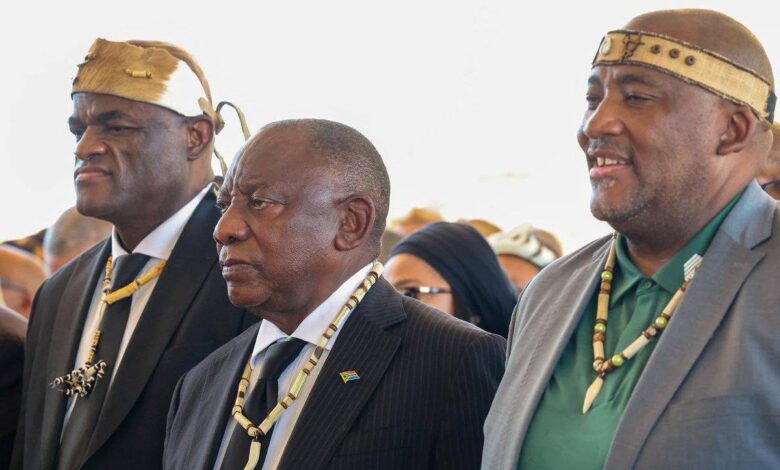
President Cyril Ramaphosa presided over the emotional repatriation and reburial of ancestral Khoi and San remains today, marking a significant milestone in South Africa’s ongoing effort to address colonial-era atrocities. The ceremony, held at the historic Kinderlê site, concluded a decades-long journey to return remains that were unethically exhumed and transported to Europe for “scientific” study.
The reburial included the remains of individuals previously held at the Hunterian Museum at the University of Glasgow and the Iziko Museum in Cape Town. Records indicate that between 1868 and 1924, human remains, plaster face-casts, and personal artifacts were removed from graves in the Northern Cape and donated to international institutions. These remains were often used during the 18th and 19th centuries to support theories of racial superiority.
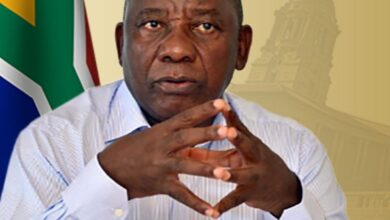
President Ramaphosa characterized the event as a vital act of restoration, noting that the victims were historically dispossessed of their land and humanity. “In life, they were robbed of their names, their culture, and their very humanity,” Ramaphosa stated. “Today, we restore the dignity that was so cruelly denied to them.”
The government’s intervention follows a formalized partnership established in 2022 between the South African Heritage Resources Agency (SAHRA), the Iziko Museums, and the University of Glasgow. This collaboration led to the successful repatriation of five individuals last year, along with cultural items excavated from burial grounds.
The choice of Kinderlê as the final resting place carries deep symbolic weight. The site is a memorial to a 1867 massacre where 32 Nama children were murdered. By burying the returned ancestors alongside these children, the Northern Cape Reburial Task Team aims to foster reconciliation and highlight the shared history of the Nama, Khoi, Korana, Griqua, and San people.
Policy and Future Actions
The President reaffirmed South Africa’s commitment to the National Policy on Repatriation of Human Remains and Heritage Objects. This framework serves as the primary mechanism for:
* Land Restitution: Addressing historical land dispossession.
* Cultural Revival: Supporting indigenous language preservation and leadership structures.
* Global Partnerships: Engaging with international museums to recover remains illegally taken from South African soil.
While acknowledging that some European nations have begun confronting their colonial legacies, Ramaphosa emphasized that South Africa would pursue justice on its own terms, moving beyond “deferred reckonings” to ensure inherent human dignity is recognized for all citizens, regardless of their past.
read more
Stability Amidst Strife: How South Africa’s $426B Economy Anchors the Rand