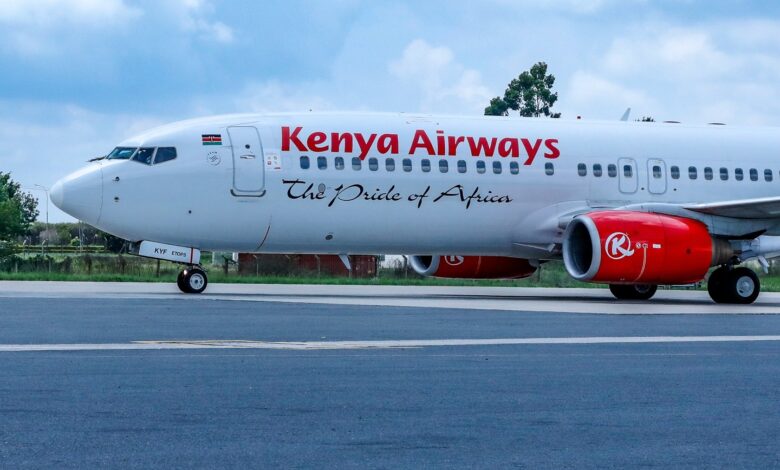
The intensification of the U.S.-Israeli conflict with Iran has triggered a seismic shift in global aviation logistics, inadvertently positioning Kenya Airways (KQ) as a primary beneficiary of the “New Operational Reality.” As carriers worldwide scramble to bypass Middle Eastern hubs and cancel high-risk routes, Nairobi’s Jomo Kenyatta International Airport (JKIA) has emerged as a vital southern conduit. According to acting CEO George Kamal, the airline’s load factor—a key metric of seat occupancy—has experienced a dramatic surge, skyrocketing from approximately 70% in January to nearly 100% in March 2026.
This “Strategic Altitude” is a direct consequence of the disruption to traditional East-West flight paths. Major international airlines have been forced to implement aggressive schedule changes, increasing fares and reducing stops in the Gulf to mitigate exposure to the “Department of War” zone. In this vacuum, Kenya Airways has seen its most significant gains from long-haul markets in Europe, the United States, and Asia. These regions are increasingly utilizing Nairobi as a secure “Strategic Decentralization” point, rerouting passengers through East Africa to maintain connectivity between the West and the Global East without traversing Iranian or adjacent contested airspaces.
However, the surge in demand is met with the pressing challenge of energy security. With the closure of the Strait of Hormuz choking traditional fuel supply lines, the aviation industry is facing a localized “Feedstock Crisis.” Kenya Airways currently maintains approximately 56 days of jet fuel reserves—a critical buffer in an era of extreme volatility. To sustain this momentum, the airline’s flight operations division, led by Paul Njoroge, is aggressively diversifying its procurement strategy, pivoting toward India to secure consistent fuel shipments and insulate the carrier from the tremors of the Middle Eastern energy shock.
For Kenya, this windfall represents more than a temporary spike in ticket sales; it is a fundamental revaluation of the country’s role in the global transport architecture. Just as the Cape of Good Hope has reclaimed its status as a maritime cornerstone, Nairobi is consolidating its position as an indispensable aerial hub. As global volatility remains high, Kenya Airways is transitioning from a regional player into a critical stabilizer for international travel, proving that in a world of fragmented borders, the value of a “Safe Corridor” is the ultimate currency of the aviation industry.
read more