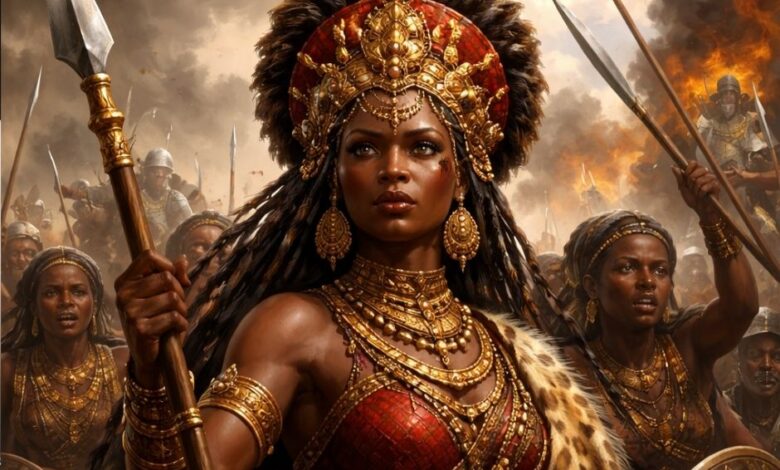
The history of African liberation is often framed through the lens of the 20th century, yet the blueprint for national sovereignty was drawn centuries earlier. As documented in the extensive research of historian John Thornton, one of the most formidable sagas of resistance against European colonialism is the story of Queen Nzinga Mbandi of Ndongo and Matamba. Her life remains a paragon of strategic brilliance and diplomatic perspicacity, serving as a timeless proverb for African self-determination.
The Catalyst of Conflict
In the early 17th century, the Portuguese Empire sought to expand its influence in Southwestern Africa, driven by the lucrative slave trade. According to contemporary Portuguese colonial archives, the Kingdom of Ndongo found itself at a precarious juncture. The Portuguese were not merely traders; they were encroaching sovereign powers using “divide and rule” tactics to destabilize local leadership.
Nzinga entered the historical stage not as a monarch, but as an envoy. In 1622, she was sent to Luanda to negotiate peace. This encounter, vividly detailed in the accounts of Italian Capuchin missionaries who witnessed the era, became legendary for a single act of defiance that changed the course of history.
The Chair of Sovereignty
Upon entering the governor’s office, Nzinga noticed a deliberate disparity: the governor sat in a velvet chair, while she was expected to sit on a floor mat. This scene, now a staple of Angolan oral tradition and historical record, saw Nzinga signal one of her attendants to create a human seat.
This was not a mere display of vanity; it was a masterclass in diplomatic parity. By refusing to sit lower than the colonizer, she asserted that Ndongo was a sovereign state, not a vassal. This moment has since become a primordial symbol of African dignity in the face of European arrogance.
A Life of Strategic Fluidity
Nzinga’s brilliance lay in her versatility. When diplomacy failed, she turned to guerrilla warfare. Military historians often highlight her mastery of subterfuge:
* The Formation of Matamba: After being forced from Ndongo, she conquered the kingdom of Matamba, turning it into a powerhouse of resistance.
* Global Alliances: In an unprecedented move recorded in Dutch West India Company logs, Nzinga formed an alliance with the Dutch, recognizing the internecine rivalries between European powers to her advantage.
The Architect of National Identity
Nzinga’s resistance lasted for over forty years. She led her armies into battle well into her sixties, displaying a tenacity that frustrated successive Portuguese governors. She worked tirelessly to unify various groups against the common colonial threat, creating a sense of national identity.
Her efforts ensured that Matamba remained a sovereign entity. She eventually forced the Portuguese to sign a peace treaty in 1657—a document still cited by scholars of international law as an early recognition of African statehood.
Why Nzinga’s Legacy Endures
Today, Queen Nzinga is more than a historical figure; she is a talisman for freedom fighters. Her story is a manifesto of the African spirit’s refusal to be subjugated.
In modern political discourse, her life teaches that liberation requires a multifaceted approach: the wisdom to negotiate, the courage to fight, and the foresight to build alliances.
Conclusion: The Eternal Light of Liberty
Nzinga’s story is one of triumph. She died in her eighties, a free queen of a free people. She proved that colonial power is not invincible when met with a mind that refuses to accept the “veil of blindness” imposed by the oppressor.
For the modern reader, Nzinga Mbandi serves as a reminder that the “Logos” of freedom is inherent in every soul. Her legacy is the spearhead that continues to pierce through the remnants of colonial thought, lighting the way for a future built on mutual respect and absolute sovereignty.
read more
Gamal Abdel Nasser: Liberation Icon and Architect of African Sovereignty