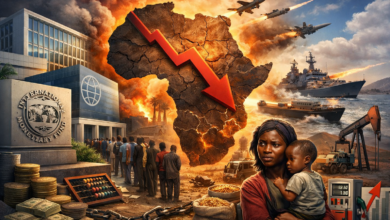
Global oil prices recorded a sharp decline on Wednesday, falling below the critical $100 per barrel threshold following a major geopolitical breakthrough between the United States and Iran. The announcement by Donald Trump of a two-week ceasefire agreement triggered an immediate reaction across global energy markets, significantly reducing the geopolitical risk premium that had previously driven crude prices to record highs.
Sharp Decline in Brent and WTI Crude Prices
The oil market response was swift and substantial, with benchmark crude prices posting steep losses:
- Brent crude futures dropped by $14.51, or 13.3%, to settle at $94.76 per barrel
- West Texas Intermediate (WTI) fell by $17.16, or 15.2%, closing at $95.79 per barrel
This rapid downturn reflects a reassessment of supply risks, particularly those associated with the Strait of Hormuz, a critical maritime route that handles approximately 20% of global oil shipments.
Ceasefire Agreement Linked to Strait of Hormuz Reopening
The ceasefire agreement between Washington and Tehran is fundamentally tied to the immediate and safe reopening of the Strait of Hormuz, aiming to restore secure maritime navigation and stabilize global energy supplies.
President Trump confirmed that both parties agreed to a mutual ceasefire shortly before a U.S.-imposed deadline that warned Iran to reopen the waterway or face extensive strikes targeting civilian infrastructure.
Iran responded through its Foreign Minister, Abbas Araqchi, confirming that Tehran would halt offensive operations provided that attacks against Iran cease. The agreement also includes coordinated measures to ensure safe transit through the Strait during the two-week truce.
Diplomatic Mediation Prevents Major Escalation
The ceasefire represents a significant diplomatic breakthrough that helped avoid a large-scale regional conflict. According to diplomatic reports, the agreement was facilitated through mediation efforts led by Shehbaz Sharif and Asim Munir.
The White House described the agreement as a strategic success, stating that the United States had already achieved key military objectives and made progress toward negotiating a broader peace framework. Meanwhile, Iran’s Supreme National Security Council framed the ceasefire as a victory, asserting that Washington accepted Tehran’s conditions.
Ongoing Regional Tensions Despite Ceasefire
Despite the ceasefire announcement, regional instability continues. Several Gulf countries, including Saudi Arabia and United Arab Emirates, have reported ongoing missile launches and drone activity.
At the same time, Benjamin Netanyahu confirmed support for suspending strikes on Iran during the two-week period but clarified that the ceasefire does not extend to operations in Lebanon. This distinction has resulted in continued military activity in southern Lebanon, underscoring the fragile nature of the agreement.
Analysts Warn Geopolitical Risk Premium Will Persist
Energy analysts remain cautious about the long-term outlook. According to Saul Kavonic, markets are likely to continue pricing in elevated risks related to the Strait of Hormuz, even with a temporary agreement in place.
Similarly, Vivek Dhar noted that a significant geopolitical risk premium may remain embedded in oil prices until a comprehensive and lasting agreement is achieved.
Unusual Market Dynamics: WTI Trades Above Brent
In an unusual development, WTI crude is currently trading at a premium over Brent. This reversal of typical pricing patterns reflects strong demand for near-term supply, as WTI contracts are focused on May delivery while Brent futures are centered on June.
This pricing anomaly highlights the urgency in physical oil markets as traders respond to evolving geopolitical developments and supply concerns.
Diplomatic Efforts Intensify Ahead of Key Talks
The diplomatic process is expected to accelerate, with U.S. and Iranian delegations scheduled to meet in Islamabad following an invitation from the Pakistani government.
President Trump confirmed that the United States has received a ten-point proposal from Iran, describing it as a workable foundation for negotiating a long-term peace agreement. However, Tony Sycamore cautioned that several technical and political challenges remain unresolved, which could complicate efforts to secure a permanent deal.
Economic Impact and Market Outlook
The ceasefire has provided short-term relief to global markets, supporting the U.S. dollar and easing fears of immediate supply disruptions. However, the broader outlook remains uncertain.
The U.S. Energy Information Administration had previously warned that fuel prices could remain elevated for months due to disruptions caused by the six-week conflict, which has resulted in more than 5,000 fatalities across multiple countries.
Additionally, the oil market continues to absorb the impact of a historic surge, with crude prices having risen by more than 50% in March—the steepest monthly increase on record.
Conclusion: Temporary Relief Amid Ongoing Uncertainty
While the two-week ceasefire between the United States and Iran has successfully reduced immediate tensions and pushed oil prices below $100 per barrel, the global energy market remains highly sensitive to geopolitical developments.
The reopening of the Strait of Hormuz is a crucial step toward stabilizing supply flows. However, without a comprehensive and lasting agreement, geopolitical risks will continue to influence oil price movements and shape the outlook for the global economy in the months ahead.
read more
Global oil prices surged, how Black Gold turned into Barometer of Geopolitical Attrition?