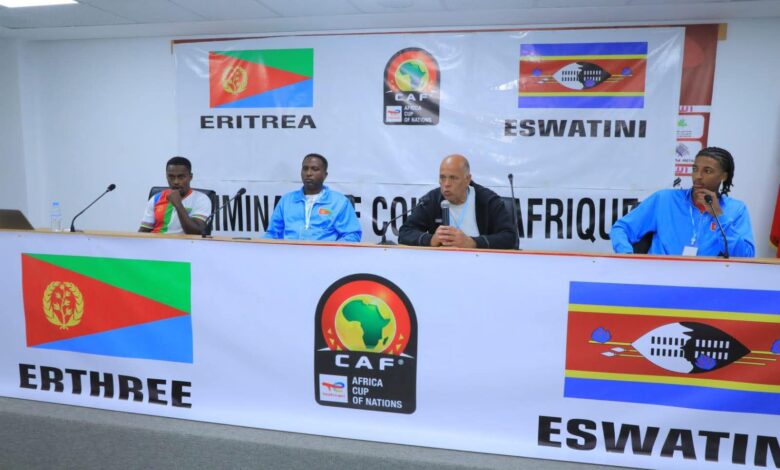
Eritrea’s future participation in the 2027 Africa Cup of Nations (AFCON) is facing a critical crossroads following the disappearance of seven national team players.
The incident occurred in Eswatini last month, immediately after the team secured a landmark victory to advance into the group-stage qualifiers.
The disappearance of these athletes marks a recurring and systemic challenge for the Eritrean National Football Federation. Despite a 4-1 aggregate triumph over Eswatini on March 31—the country’s first international outing in six years—the achievement has been overshadowed by a pattern of defections that has haunted the “Red Sea Boys” for two decades. Since 2007, an estimated 80 footballers have sought asylum while competing abroad, fleeing what human rights organizations describe as a highly repressive domestic environment.
The timing of these defections is particularly damaging to Eritrea’s recent efforts to emerge from self-imposed sporting isolation. The nation recently appointed former Egyptian international Hesham Yakan as head coach and saw its federation president, Paulos Weldehaimanot Andemariam, elected to lead the regional CECAFA governing body. These moves were seen as a strategic pivot toward reintegration into the global football community.
Eritrea’s qualification for the group stages, set to begin in September, was a significant sporting upset. The squad featured a unique blend of domestic talent and diaspora players from the UK and Australia. However, the embarrassment of the latest defections puts their continued involvement in the tournament—destined for Kenya, Tanzania, and Uganda—under intense scrutiny by state authorities.
As the Confederation of African Football (CAF) prepares for the group-stage draw, the sports world awaits confirmation on whether the Eritrean government will allow the team to travel for future fixtures. For a nation that has largely remained a “hermit state” since its independence in 1993, this latest episode serves as a stark reminder of the internal pressures that continue to stifle its athletic potential on the continental stage.
Read more