Political Earthquake in Hungary: Péter Magyar Ends Orbán’s 16-Year Rule in Landslide Victory

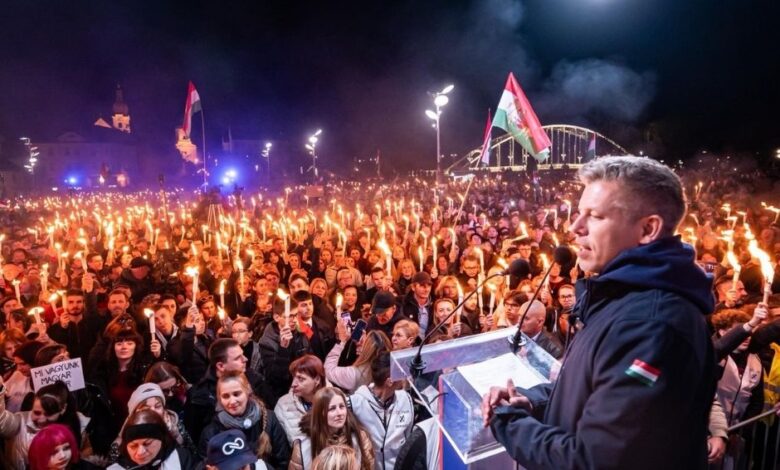
In a definitive shift that has reshaped the geopolitical landscape of Central Europe, Viktor Orbán’s long-standing dominance over Hungary has come to an abrupt end, According to preliminary election results reported by the BBC on Monday, April 13, 2026, the 45-year-old former party insider Péter Magyar and his Tisza party have secured a historic landslide victory.
With more than 98% of the votes counted, Tisza is on course to claim an extraordinary 138 seats in the 199-seat parliament, granting Magyar the two-thirds constitutional majority required to dismantle the “electoral autocracy” established by his predecessor.
The scale of the defeat for Orbán’s Fidesz party—which plummeted to just 55 seats—marks the conclusion of a 16-year era characterized by nationalistic policies and deep friction with the European Union. Addressing a jubilant crowd overlooking the Danube, Magyar declared the end of the “Hungarian regime,” promising to restore judicial independence and eradicate the systemic corruption known as the NER patronage system. Data from the National Election Office, as cited by international monitors, highlighted a record-breaking turnout of 79.5%, signaling a massive public mandate for Magyar’s platform of transparency and European reintegration.
The implications of this transition extend far beyond Budapest’s borders. While Orbán maintained close ties with Moscow and Washington’s Republican establishment—even receiving campaign support from US Vice-President JD Vance—Magyar has pledged a radical foreign policy reset. Diplomatic briefings indicate that the incoming Prime Minister intends to distance Hungary from Russia in favor of strengthening ties with Ukraine and the EU. According to Bloomberg and AFP reports, Magyar’s first scheduled international visit will be to Warsaw, aiming to solidify the historical bond with Poland’s pro-EU government under Prime Minister Donald Tusk, who was among the first to congratulate Magyar on his “glorious victory.”
As the transition begins, Magyar faces the monumental task of unlocking approximately €17 billion in European Commission funds, which were previously frozen over rule-of-law concerns during the Orbán administration. While Viktor Orbán remains as leader of Fidesz in a caretaker capacity, his concession speech—described by witnesses as “painful and jaded”—reflects a party in crisis. For the people of Hungary, the 2026 election represents a “miracle” on the Danube, moving the nation from a period of isolationist populism toward a renewed alignment with the democratic standards of the Western world.
read more
African Educational Rebirth: Building a Future-Ready Workforce