An Egyptian Decade at the Heart of Africa: From Restoring the Role to Shaping Partnership (2014–2025)

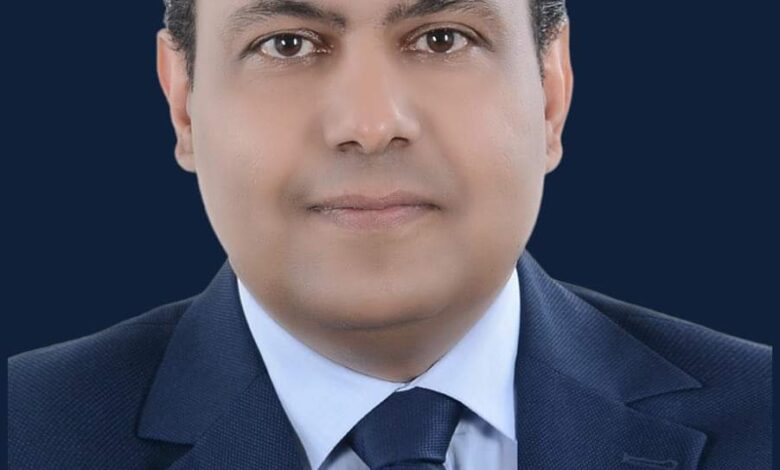
Ramy Zohdy – African Affairs Expert
Since 2014, Egypt’s presence on the African continent has not been a mere traditional diplomatic return after years of retreat; rather, it has represented a conscious shift from a logic of reaction to a philosophy of action, from managing files to shaping trajectories, and from a discourse of solidarity to the construction of tangible, sustainable partnerships.
More than a decade of sustained Egyptian engagement in Africa has unfolded with limited media noise but deep, quiet accumulations that have restored Egypt’s natural standing as a pivotal state in Africa’s balance equation and as a trusted development partner—one that does not approach the continent as a sphere of influence, but as an organic strategic extension of Egyptian national security.
The real transformation began with redefining Africa within the Egyptian strategic mindset. The continent was no longer treated as an external file, but rather as a vital sphere encompassing security, development, economy, and the future. This shift was clearly reflected in the intensity of presidential diplomacy: from 2014 to 2025, Egypt recorded more than 45 presidential visits to African countries, compared to fewer than 10 visits in the previous decade. Cairo also hosted dozens of African and international summits and forums, including Egypt’s presidency of the African Union in 2019—a presidency that was not symbolic, but functional, reopening files of institutional reform, restructuring peace and security mechanisms, linking development to security, and aligning international financing with Africa’s real priorities.
Economically, Egypt adopted a different approach in its engagement with Africa—one based on integration rather than competition, and on long-term investment rather than quick deals.
Trade volume between Egypt and African countries rose from approximately USD 4.8 billion in 2014 to nearly USD 10 billion by the end of 2024, reflecting growth of about 98 percent, despite global challenges, supply-chain disruptions, and successive crises. Egyptian direct investments in Africa also exceeded USD 14 billion, distributed across infrastructure, energy, contracting, pharmaceuticals, agriculture, and telecommunications, with a clear concentration in Nile Basin countries, the Horn of Africa, and West and Central Africa.
Perhaps the most prominent model in this context is Egypt’s role in the infrastructure sector. Egyptian companies implemented more than 300 projects in nearly 40 African countries, with total contract values exceeding USD 25 billion. These projects included roads, bridges, dams, power stations, ports, and logistics zones. They were not merely an export of contracting services, but a transfer of expertise, training of local labor, and capacity building—making the Egyptian model both publicly and officially accepted in many African capitals.
In the energy sector, Egypt played a pivotal role in supporting electricity and renewable energy projects, whether through state-owned or private companies, or by transferring expertise in grid management and interconnection. It suffices to note that Egypt directly contributed to adding more than 6,000 megawatts of electricity capacity in African countries over the past decade, alongside supporting regional power interconnection projects—one of the key drivers of sustainable development on the continent.
On security and peace, Egypt reintroduced the concept of comprehensive security, linking counterterrorism with nation-state building, economic development, and social justice. Egypt contributed troops and expertise to several peacekeeping missions and ranked among the leading troop-contributing countries in Africa. Cairo also hosts the African Union Center for Post-Conflict Reconstruction and Development, a clear indicator of African trust in Egypt’s role and its ability to manage complex files with balance and rationality.
In the humanitarian and development dimension, Egyptian soft power did not fade; rather, it returned strongly through education, healthcare, and capacity building. Egypt provided more than 22,000 training scholarships for African cadres in administration, security, health, agriculture, and diplomacy. Egyptian universities hosted tens of thousands of African students, reaching nearly 40,000 by 2024. In healthcare, Egypt organized dozens of medical convoys, established treatment centers, and contributed to the transfer of pharmaceutical expertise—particularly during the COVID-19 pandemic, when Egypt was among the first countries to provide medical and logistical support to several African states at a time when vaccines had become a global political commodity.
Politically, Egypt maintained a balanced discourse that respects state sovereignty, rejects interference in internal affairs, and supports African solutions to African problems. This stance granted Cairo high credibility and positioned it as an acceptable mediator in several crises—from Sudan to Libya, and from the Horn of Africa to the Sahel and West Africa. This role was not based on maneuvering, but on a deep understanding of the complexities of African societies, the history of conflicts, and the entanglement of international interests.
Throughout this decade, Egypt did not present itself as an alternative or competing power, but as a partner seeking to maximize shared gains. This explains the broad alignment with Egyptian visions within the African Union and the repeated support for initiatives proposed by Cairo, whether in development, security, or institutional reform. Africa has come to recognize that Egypt is not pursuing fleeting influence, but long-term stability—and that the stability of the continent is inseparable from the stability of the Egyptian state.
Between 2014 and 2025, Egypt succeeded in reshaping its relationship with Africa on new, deeper, and more realistic foundations—based on shared interests, mutual respect, and serious work beyond slogans. Ten years of effort—sometimes quiet, often difficult—ultimately laid the groundwork for a new phase of Egyptian presence in Africa, a presence measured not only by the number of visits or agreements, but by the depth of impact, the sustainability of partnership, and the resilience of this role in a turbulent world that recognizes only those capable of action, not merely words.
Kwame Nkrumah … From the Struggle for Ghana’s Independence to the Dream of African Unity