Operation Absolute Resolve :Trump Asserts US Governance Over Venezuela After Maduro’s Capture


>> declaration of direct U.S. oversight ignites firestorm of criticism
In a stunning geopolitical maneuver that has sent shockwaves through the Western Hemisphere, U.S. President Donald Trump announced that the United States will effectively “run” Venezuela following the dramatic apprehension of Nicolás Maduro.
This transition marks the climax of “Operation Absolute Resolve,” a lightning-fast military and intelligence strike that resulted in the seizure of Maduro and his wife, Cilia Flores, who were swiftly transported to New York to face federal indictments for narco-terrorism and international drug trafficking.
The move effectively ends the decade-long standoff between Washington and the Chavista regime, replacing diplomatic sanctions with direct administrative intervention.
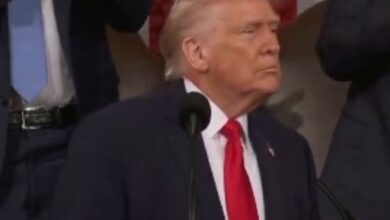
President Trump, speaking from the White House, characterized the intervention not merely as a regime change, but as a total administrative overhaul.
He asserted that the U.S. will oversee a transitional period to “fix the country,” prioritizing the stabilization of the hyper-inflationary economy and the restoration of the rule of law.
Central to this vision is the immediate revitalization of the Venezuelan oil sector—home to the world’s largest proven reserves.
Trump signaled that American energy giants would lead the reconstruction of the dilapidated PDVSA infrastructure, aiming to flood the global market with Venezuelan crude to drive down energy costs and solidify U.S. energy dominance.
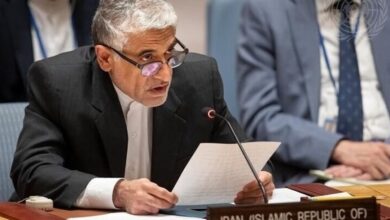
The capture of Maduro leaves a power vacuum that the U.S. intends to fill with a hand-picked governing council until “free and fair elections” can be organized. However, the declaration of direct U.S. oversight has ignited a firestorm of criticism from regional adversaries and traditional allies alike, who question the legality of such a unilateral administrative takeover.
While the Venezuelan opposition has largely welcomed the end of Maduro’s grip on power, the prospect of prolonged U.S. management raises complex questions about sovereignty and the future of Latin American geopolitics.
As New York prepares for a high-profile trial that mirrors the 1989 prosecution of Manuel Noriega, the world watches to see if this “Absolute Resolve” will lead to lasting stability or a new era of regional friction.
African Union Voices Deep Concern Over Situation in Venezuela