Egypt, EU Step Up Strategic Partnership in Talks on Gaza, Sudan and Regional Security

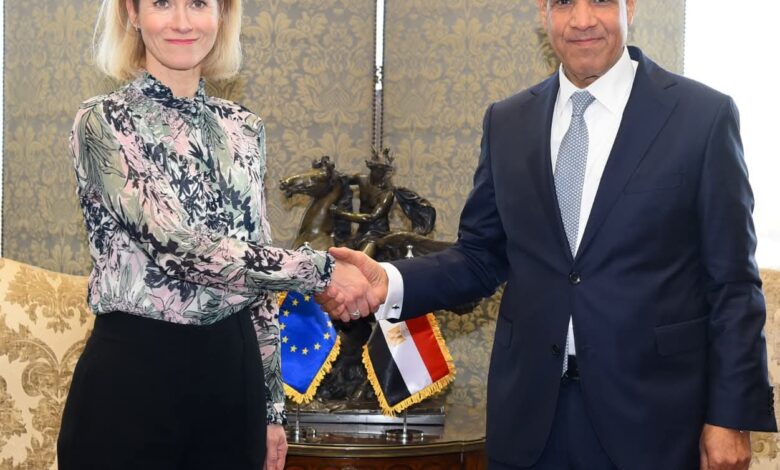
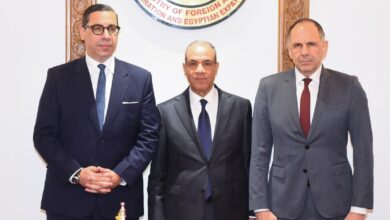
Minister of Foreign Affairs, Emigration, and Egyptian Expatriates, Dr. Badr Abdelatty, received on Thursday, January 8, Kaja Kallas, to hold political consultations on relations between Egypt and the European Union and to review the latest regional and international developments of mutual interest.
The Official Spokesperson for the Ministry of Foreign Affairs, Ambassador Tamim Khallaf, stated that during the talks Minister Abdelatty welcomed the continued consultation and coordination with the High Representative and the European Union on various issues, whether at the level of bilateral relations or regional and international issues of common interest, commending the qualitative leap witnessed in relations between Egypt and the European Union. He affirmed Egypt’s aspiration to continue working with the High Representative to support cooperation within the framework of implementing the six pillars of the Strategic and Comprehensive Partnership, and to implement the outcomes of the Egypt–EU Summit held in Brussels on 22 October last year, as a roadmap for the coming two years until the next summit scheduled for 2027.
Minister Abdelatty also highlighted the importance of activating the Egypt–EU Investment Platform, which was launched in June 2025, through expanding the sectors benefiting from these investments to include sectors that directly affect citizens’ daily lives, including small and medium-sized productive projects in sectors such as industry and agriculture. He emphasized the importance of working to remove obstacles hindering the access of Egyptian goods to European markets.
Minister Abdelatty expressed his aspiration to continue coordination and cooperation with the European Union in other areas such as legal migration and skilled labor training. He also expressed Egypt’s aspiration to convene the Egypt–EU Security and Defense Dialogue, as well as to enhance cooperation in the field of counterterrorism, in addition to supporting the European Union’s efforts to enable Egypt to become a regional hub for the provision of humanitarian aid to crisis areas in the region. Views were also exchanged regarding the Action Plan of the Mediterranean Pact, during which Minister Abdelatty outlined Egypt’s vision for the Pact and the list of proposed projects and initiatives in this regard, noting Egypt’s interest in hosting the headquarters of the Secretariat of the Euro-Mediterranean University.
Ambassador Khallaf added that the consultations addressed regional issues of mutual interest, foremost among them the situation in the Gaza Strip. In this context, Minister Abdelatty stressed the importance of the European Union’s engagement to ensure the implementation of the entitlements of the second phase of U.S. President “Trump’s” plan. He emphasized the necessity of allowing humanitarian, medical, and relief aid to enter in sufficient quantities without restrictions, particularly in light of the harsh winter conditions, to alleviate the suffering of the population of the Strip. He also underscored the importance of announcing the formation of the Palestinian technocratic committee to manage the daily affairs of Palestinians, in addition to the swift deployment of an international stabilization force to monitor the ceasefire and pave the way for early recovery and reconstruction.
Minister Abdelatty also briefed the European official on the efforts undertaken by Egypt to train Palestinian police personnel, welcoming the European proposal to support Egypt’s efforts in this regard. He outlined the importance of the unity of Palestinian territories between the West Bank and the Gaza Strip, and rejected any measures that would divide the Gaza Strip and undermine the prospects of the two-state solution.
The meeting also addressed developments in Sudan, where Minister Abdelatty briefed the European official on Egyptian efforts within the framework of the Quartet Mechanism, aimed at advancing toward the achievement of a humanitarian truce leading to a comprehensive ceasefire. He emphasized the importance of preserving Sudan’s sovereignty, unity, and territorial integrity, and supporting its national institutions. He stressed the importance of providing safe havens and ensuring the unimpeded delivery of humanitarian aid to the brotherly Sudanese people, condemning the massacres and grave violations committed against civilians in El Fasher and North Kordofan, and underscoring the necessity of providing protection for civilians.
Minister Abdelatty emphasized that the unilateral and illegal Israeli recognition of the so-called “Somaliland” region constitutes a flagrant violation of the sovereignty, unity, and territorial integrity of the Federal Republic of Somalia, and undermines the rules of international law, the Charter of the United Nations, and the Constitutive Act of the African Union. He added that it also represents a dangerous precedent that threatens regional and international peace and security, which requires a unified position to support Somalia and concerted efforts to achieve security and stability in Somalia and the Horn of Africa. He reaffirmed Egypt’s full support for the unity, sovereignty, and inviolable territorial integrity of Somalia, considering it a fundamental pillar for the stability of the Horn of Africa and the Red Sea region. Minister Abdelatty also emphasized that the governance of the Red Sea remains an inherent and exclusive responsibility of the littoral states, as they are concerned with preserving its security, stability, and the sustainability of its resources, in a manner that enhances their shared interests and entrenches the principle of regional ownership in managing its affairs.
Regarding developments in Yemen, Minister Abdelatty affirmed Egypt’s steadfast position in support of the unity of the Republic of Yemen, its sovereignty, and territorial integrity, and the importance of preserving national state institutions in a manner that safeguards the resources of the brotherly Yemeni people and prevents the situation from sliding into further escalation and instability. He also stressed the necessity of intensifying efforts aimed at consolidating the truce, reducing escalation, and creating a conducive environment for resuming the political process, based on an inclusive Yemeni–Yemeni dialogue leading to a comprehensive settlement that meets the aspirations of the Yemeni people for security, stability, and development.
Minister Abdelatty also noted Egypt’s position rejecting violations of Lebanon’s sovereignty and underscored the necessity of preserving its unity and territorial integrity, in addition to supporting national institutions in fully assuming their responsibilities in maintaining Lebanon’s security and stability. He further emphasized the importance of pushing toward a comprehensive and sustainable political solution in Syria, based on preserving the unity of the Syrian state and the integrity of its territory, and meeting the aspirations of the brotherly Syrian people.
With regard to the issue of water security, Minister Abdelatty stressed the necessity of adhering to the rules of international law concerning shared water resources, clarifying the importance of cooperation based on consensus and mutual benefit to achieve the interests of all Nile Basin countries. He emphasized the rejection of unilateral measures that violate international law in the Eastern Nile Basin, and affirmed that Egypt will take all measures guaranteed under international law to protect the existential resources of its people.
Regarding the Ukrainian crisis, Minister Abdelatty underscored the necessity of reaching a peaceful and diplomatic settlement to the crisis, in a manner that achieves regional and international security and stability.