Russia, France, and the US Battle for Madagascar, It’s Great Game on Red Island

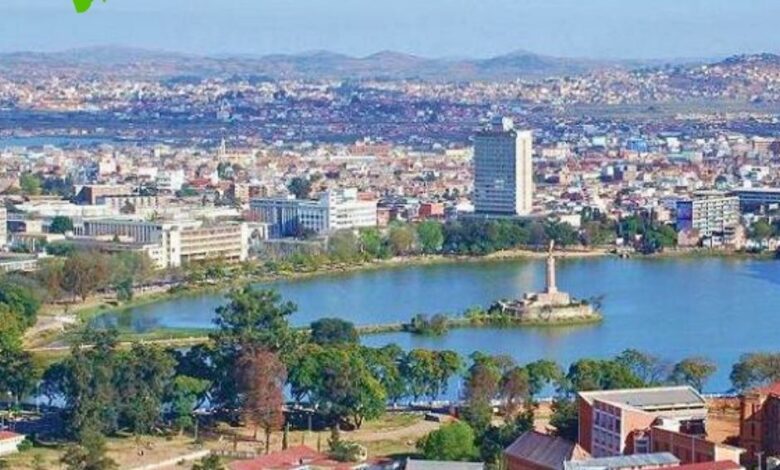
Madagascar has emerged as a high-stakes geopolitical battleground, as Russia, France, and the United States intensify their scramble for influence over the strategic “Red Island.”
Following a failed assassination plot against transitional president Colonel Michaël Randrianirina in late 2025, the country has become a focal point for foreign information warfare and resource competition.
While Moscow leverages pro-Russian narratives and security partnerships to displace traditional French influence, the United States is recalibrating its strategy to counter the Kremlin’s expanding footprint in the Indian Ocean.
The geopolitical friction reached a boiling point following the November 2025 survival of Colonel Michaël Randrianirina after an alleged assassination attempt.
This event served as a lightning rod for coordinated disinformation campaigns.
Within hours, digital platforms were flooded with narratives blaming French intelligence (DGSE) for the plot, illustrating how local political instability is being weaponized by foreign actors to shift national allegiances.
Under Randrianirina, Madagascar has signaled a “complete break” with its colonial past. Moscow has capitalized on this sentiment, positioning itself as a “heroic counterweight” to France. Russia’s influence is being cemented through military cooperation, soft power initiatives like Sputnik-led media training, and the visible presence of Russian flags at protests in Antananarivo—a pattern previously seen in the Sahelian “coup belt” nations like Mali and Burkina Faso.
France, the traditional power broker in Madagascar, finds itself on the defensive.
Long-standing grievances regarding sovereignty over the “Iles Éparses” (Scattered Islands) and accusations of interference in domestic politics have eroded Paris’s influence.
The current narrative identifies France as a “specialist in military coups,” a sentiment that has been amplified by coordinated social media actors across the continent.
Washington is viewing the “Madagascar scramble” through the lens of Indian Ocean security.
The US is concerned that a Russian-aligned Madagascar could grant Moscow a strategic foothold near key global shipping lanes. Consequently, the US has increased its engagement through humanitarian aid and democratic advocacy, attempting to offer a “stable alternative” to the high-risk partnerships offered by the Kremlin.
Beyond politics, the island’s vast reserves of rare earth minerals, graphite, and nickel are central to the competition.
Both Western and Russian interests are vying for mining concessions, viewing Madagascar as a critical link in the global supply chain for green energy and defense technology.
“digital mercenaries” and foreign bloggers (notably from Cameroon and other regions) seed pro-Russian content.
These actors frame every local event as a revolt against Western “neo-colonialism,” effectively shaping Malagasy public opinion before official diplomatic channels can react.