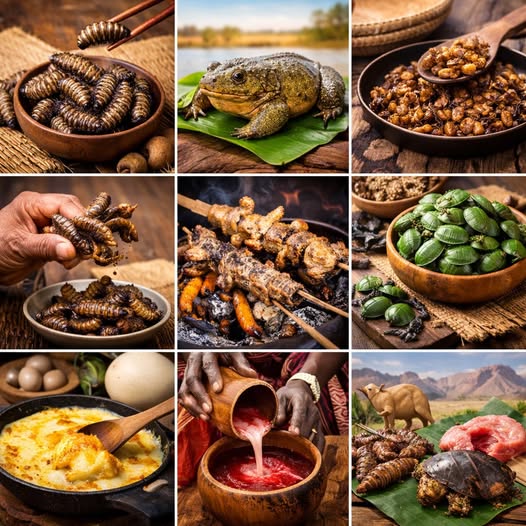
Africa is a continent of profounddiversity, where the culinary landscape is as vast as the Sahara , For the intrepid traveler, food is not merely sustenance; it is a gateway to understanding local ecosystems and ancestral traditions. While some may find these dishes strange, they represent a masterful adaptation to the environment and a celebration of indigenous resources.
Mopane Worms: Zimbabwe & South Africa
A staple in Southern Africa, these are not actually worms but the caterpillars of the Emperor Moth. According to National Geographic, they are a nutritional powerhouse, containing three times the protein of beef. Often sun-dried or smoked, they provide a crunchy texture with a flavor reminiscent of salty nuts.
Giant Bullfrog: Namibia
In Namibia, the entire frog—not just the legs—is a delicacy. However, timing is crucial. Local tradition warns that the frogs must only be eaten after the third rain or when they start croaking. The Namibian reports that eating them prematurely can lead to Oshikwambi poisoning, a temporary kidney failure, due to toxins in the skin.
Termites: Uganda & Western Kenya
When the rains fall, the termites fly. In East Africa, these insects are gathered and roasted on hot griddles. As noted by BBC Travel, termites are a significant source of fatty acids and protein. They possess a nutty, buttery flavor that many locals find irresistible.
Nsenene: Long-horned Grasshoppers (Uganda)
A seasonal highlight in Uganda, Nsenene are plucked of their wings and fried in their own natural oils. According to The Guardian, the demand is so high during the harvest season that prices skyrocket. The taste is often described as a cross between chicken and shrimp.
Crocodile Meat: Kenya & South Africa
While it may seem fearsome, crocodile meat is a lean, white meat highly prized in specialized eateries. Reuters has documented the rise of crocodile farming for both leather and meat. The flavor is a unique hybrid—tougher than fish but lighter than pork.
Stink Bugs: South Africa
In the Limpopo province, the Green Stink Bug is harvested and treated with care. They are boiled to remove their defensive scent and then sun-dried. The South African Journal of Science notes that these insects are rich in amino acids and provide a distinctively spicy aftertaste.
Ostrich Egg Omelet: South Africa
One ostrich egg is equivalent to about 24 chicken eggs. The Food Network highlights that these massive eggs are a communal treat. Cracking one requires a hammer, but the result is a rich, creamy feast that can feed an entire family.
Camel Meat: Somalia & Ethiopia
In the arid regions of the Horn of Africa, the camel is king. Beyond its milk, camel meat—especially the hump—is a prized source of energy. Al Jazeera reports that the hump consists of pure fat and is considered the most succulent part of the animal.
Blood and Milk: Kenya & Tanzania
The Maasai people practice a diet that is deeply connected to their cattle. As documented in The Lancet, the ritual consumption of raw cattle blood mixed with milk is a vital source of salt and iron, especially during ceremonies or periods of drought.
Terrapin: Seychelles
In the Seychelles, the fruit bat and the terrapin (freshwater turtle) have historically appeared on the menu. While conservation laws now protect many species, Seychelles Nation mentions that “Kari Sousouri” (Fruit Bat Curry) remains a controversial yet iconic part of the island’s creole heritage.
The Spearhead
“What is exotic to the visitor is essential to the local; truth in flavor lies in the context of the land.”
read more
Unveiling the Enigmas: 10 Most Unique Symbols in African National Flags