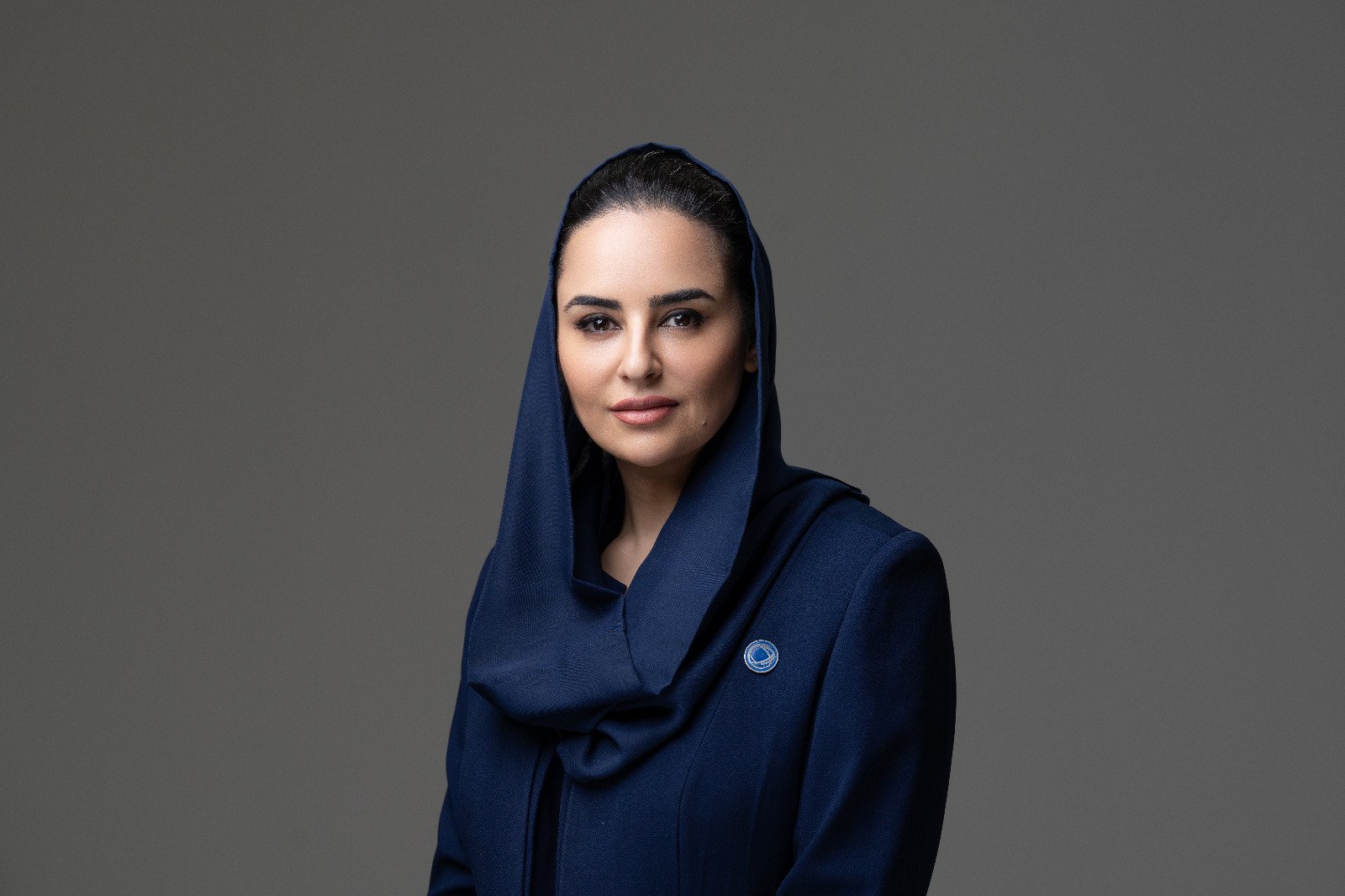
Ramy Zohdy — African Affairs Expert
Africa has never been far from the circles of conflict, not as a geographic fate or a historical curse, but as an open arena for complex political, economic, and social interactions. In this space, the legacies of colonialism intertwine with the fragility of state-building, uneven development pressures, identity conflicts, resource competition, and the interventions of external actors. At the heart of this turbulent landscape stands the African Union as a unifying institutional framework, bearing—or attempting to bear—a political and moral ambition to manage conflicts and prevent their escalation, relying on a system of legal, security, and diplomatic mechanisms. Yet, at the same time, it encounters the limits of reality, competing interests, and gaps in capacity.
Since the adoption of the African Peace and Security Council Protocol in 2002, the AU has sought to move from a reactive approach to a proactive one, using tools such as the continental early warning system, the Panel of the Wise, the African Standby Force, mediation mechanisms, and field missions. Recent years have subjected this system to severe tests amid escalating armed conflicts. Estimates from international research centers indicate that Sub-Saharan Africa alone accounted for nearly 40 percent of active armed conflicts worldwide in 2023 and 2024. Additionally, more than 35 coups or attempted coups have been recorded in Africa since 2000, with a notable number occurring over the past five years. Actual figures may be several times higher, as some incidents remain unreported or were thwarted before announcement, especially given that transparency measures and information dissemination are not consistently effective across all countries.
In certain cases, the African Union has achieved undeniable successes. The handling of the 2017 Gambian crisis, although not recent, remains a reference model for the effectiveness of political and diplomatic pressure supported by regional consensus—a model the AU has attempted to partially replicate in later crises. The AU also played a significant role in supporting complex transitional processes, such as the transition in Sudan before the outbreak of the recent war, where it led political mediations in coordination with IGAD and international partners, contributing to the design of negotiation frameworks, even though these later faltered due to intertwined internal and external factors.
In Somalia, the AU’s security role through AMISOM and subsequently ATMIS cannot be overlooked. African forces, whose numbers at times exceeded 18,000 troops, helped curb the capabilities of Al-Shabaab and secure Somali state institutions, despite high human and financial costs and ongoing threats. UN reports indicate that these joint operations contributed to reducing Al-Shabaab’s control over strategic urban areas—a security achievement inseparable from the collective African framework.
However, the African experience also reveals glaring structural failures, most notably the inability to prevent conflicts from escalating into full-scale wars, as occurred in Ethiopia during the Tigray conflict, and later in Sudan. All early warning mechanisms and preventive measures failed to prevent a slide into open military confrontation, which claimed tens of thousands of lives, displaced millions, and cast a heavy shadow over regional security.
In the Democratic Republic of Congo, despite multiple African initiatives—from the Luanda and Nairobi tracks to the most recent agreement at the end of 2025—fighting persists. More than 120 armed groups operate there, and the country hosts one of the largest internal displacement crises in the world, with over six million displaced persons.
The root of these failures lies not only in weak political will but also in funding and autonomy challenges. Official data indicates that more than 60 percent of the AU’s Peace and Security budget remains funded by international partners, primarily the European Union. This reality raises fundamental questions about the AU’s strategic maneuvering space and its ability to make decisive decisions independently of donor considerations or competing international power dynamics in Africa. Moreover, the African Standby Force, intended as a rapid intervention arm, remained for years largely theoretical and has yet to achieve full operational readiness in terms of unified command, sustainable financing, or clear rules of engagement.
The AU also struggles with the tension between the principle of non-intervention and the principle of non-indifference—a contradiction that founding documents attempted to address in theory but that remains a practical obstacle. In many cases, member states’ sovereignty considerations have prevented the AU from receiving a clear mandate, especially regarding internal conflicts with sensitive political dimensions or military coups. Responses have varied—sometimes firm, as in parts of West Africa, and sometimes hesitant or selective in other regions.
The complexity of African conflicts themselves cannot be ignored. Conflicts are no longer confined to traditional domestic actors; they now involve cross-border networks in which armed groups intersect with war economies, gold and rare mineral smuggling, arms trade, and direct or indirect links to international actors. This structural shift has rendered traditional mediation tools less effective and imposed a dual challenge on the AU: understanding the political economy of conflict, not just engineering top-down political settlements.
Nevertheless, the strategic value of the AU as the nearly sole legitimate African platform for crisis management cannot be underestimated. Its absence or marginalization would create a vacuum filled entirely by external powers, undermining the continent’s ownership of its security and political decisions. This underscores the need for a deep review of the AU’s experience—not for self-flagellation but to rebuild its approach on more realistic and bold foundations. This should begin with strengthening self-financing, activating mechanisms such as continental import levies, expanding member state contributions, and linking peace and security to the development agenda, recognizing that poverty and economic fragility are the true fuels of conflict.
The next phase also requires smarter partnerships with regional blocs such as ECOWAS, SADC, IGAD, and COMESA, based on clear role allocation and complementarity rather than competition. Greater investment in preventive diplomacy and national capacity-building for local conflict management before conflicts internationalize or militarize is also essential. In this context, major regional powers, foremost among them Egypt, play a pivotal role in supporting African stability through knowledge transfer, institution-building support, active participation in peacekeeping operations, and providing practical models linking security and development.
In conclusion, the African Union’s experience in conflict management over recent years is complex. It contains seeds of real success yet is burdened with undeniable failures. It reflects Africa’s struggle with itself—between the aspiration for complete independence from external tutelage and the reality of interdependence, between rhetoric of unity and practices of division. The real bet remains transforming the AU from a crisis management forum into a strategic actor capable of preventing conflicts—a goal achievable only through robust African political will that recognizes the cost of conflict, in lives, numbers, and lost development, far exceeds the cost of genuine institutional reform.
Peace That Protects the State, or a Truce That Legalizes Fragmentation?