Adds $253 million special bonus, South African gold miner returns $1.7 billion to investors

A leading South African gold miner will pay shareholders an additional $253 million special dividend after distributing $1.7 billion in returns, as robust gold prices and improved operational performance bolstered cash flow and strengthened its balance sheet.
Gold Fields reported a record financial year in 2025, nearly tripling profits to $3.57 billion thanks to higher gold prices and strong African operations.
The company returned $1.7 billion to investors, including a $253 million special dividend and $100 million in share buy-backs.
Group gold-equivalent production rose 18% to 2.44 million ounces, notably driven by a strong performance at South Deep in South Africa.
Operational costs increased amid inflation and higher royalties tied to gold prices, while Ghana’s proposed mining reforms are set to impact local operations.
Gold Fields Ltd. reported a near three-fold surge in annual profit for the year ended December 31, 2025, as record gold prices and stronger operational delivery across its African portfolio boosted cash flow and shareholder returns.
The Johannesburg-headquartered miner posted profit attributable to owners of $3.57 billion, up from $1.25 billion in 2024.
Adjusted free cash flow jumped to $2.97 billion, compared with $605 million a year earlier, while headline earnings rose to $2.58 billion.
Chief Executive Officer Mike Fraser said disciplined execution and favourable market conditions underpinned the performance.
“Improved operational performance, coupled with a higher gold price, led to a strong financial performance in 2025,” Fraser said. “We delivered production at the upper end of guidance and maintained cost discipline despite inflationary pressures.”
Group gold-equivalent production rose 18% to 2.44 million ounces, notably driven by a strong performance at South Deep in South Africa.
In 2025, gold prices surged by approximately 65%, ending the year near $4,318 per ounce. This historic rally was driven by extreme geopolitical upheaval, including trade tensions and conflicts, which cemented gold’s role as a premier safe-haven asset.
The rally extended into this year, with prices reaching an all-time high of nearly $5,600 on January 29 before easing.
For African producers, the surge translated into stronger export revenues, improved margins and enhanced fiscal contributions to host governments.
Beyond the base dividend, the company announced $353 million in additional shareholder returns, including a $253 million special dividend and $100 million in share buy-backs.
Total distributions amount to $1.7 billion, representing 54% of adjusted free cash flow.
Operationally, group attributable gold-equivalent production increased 18% year-on-year to 2.44 million ounces.
In South Africa, South Deep delivered 309,000 ounces, a 16% increase year-on-year and at the top end of guidance.
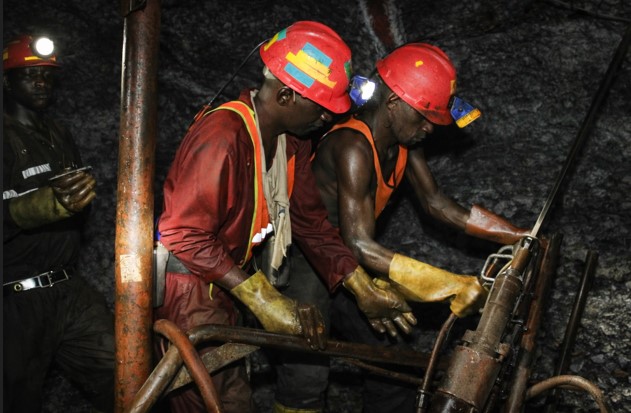
As a highly mechanized, long-life orebody, South Deep remains a cornerstone asset, with management focused on improving stope turnaround times and incremental efficiencies.
In Ghana, production at Tarkwa declined 12% as lower-grade stockpiles supplemented ore feed during a waste stripping campaign.
All-in sustaining costs rose 1% to $1,645 per ounce, while all-in costs increased 3% to $1,927 per ounce, reflecting inflation, higher royalties linked to elevated gold prices and increased capital expenditure.
Ghana has proposed mining policy reforms aimed at increasing local participation and state revenues, measures expected to influence ongoing lease renewal discussions.
Tarkwa’s mining lease expires in April 2027, and the company has updated its life-of-mine plan and mineral resource and reserve estimates, publishing an out-of-cycle declaration in November 2025.
At the same time, Gold Fields faces changes in its Ghana portfolio. The Damang mining lease, narrowly extended earlier this year, is set to expire in April 2026, after which operational control will transfer to the Ghanaian state.
The company has also indefinitely suspended its proposed merger of Tarkwa with AngloGold Ashanti’s neighboring Iduapriem mine.
The consolidation, announced in 2023 and expected to create Africa’s largest gold complex, failed to secure regulatory endorsement.
Despite these headwinds, Africa remains the world’s largest gold-producing region and continues to attract Canadian, Australian and Chinese miners seeking long-life assets and new discoveries.
The coming years are likely to clarify Gold Fields’ medium-term strategy. Investors will watch whether the company deepens its international diversification or recalibrates its African footprint.
For now, Fraser described 2025 as a year of “predictable delivery and disciplined execution,” reinforcing the company’s capacity to generate strong returns amid shifting regulatory and geopolitical dynamics.
South Africa International Visitors 2025: Entry Rules, Travel Tips, and What to Expect