African Development Bank Champions Climate-Smart Agriculture to Boost Food Security and Farmer Resilience

The African Development Bank (AfDB) is spearheading efforts to strengthen African agriculture against climate change by promoting climate-smart technologies. These innovations, including heat-tolerant seeds and drought-resistant crops, have enormous potential to increase food production, enhance climate resilience, and boost farmer incomes. However, adoption remains limited due to insufficient awareness and understanding of how these technologies work and how they can be scaled effectively.
Recently, the AfDB hosted an online Forum on Promoting Climate-Smart Agriculture for African Farmers’ Resilience to Climate Change, bringing together approximately 390 participants from 34 African countries and 10 non-regional nations. The event convened agriculture experts to share best practices, encourage agribusiness partnerships, and accelerate the adoption of climate-smart agricultural solutions.
Africa Faces Urgent Climate Risks
Africa is on the frontlines of global climate change. Without rapid adaptation, staple crop production—including wheat and maize—is projected to decline by 20% by 2050, according to research from the Gates Foundation, the Intergovernmental Panel on Climate Change (IPCC), and Sesi Technologies. This reduction threatens not only the continent’s food security but also its agricultural sector, which employs over half of sub-Saharan Africa’s workforce, putting millions of livelihoods at risk.
The AfDB emphasizes that widespread adoption of climate-smart agriculture can enhance the sector’s resilience. For instance, research by the Global Change Data Lab and the University of Oxford indicates that simple interventions—such as adjusting planting dates and selecting crop varieties suited to local climates—could not only prevent projected declines in West Africa but also increase yields by up to 13%.
TAAT Initiative Boosts Food Security and Climate Resilience
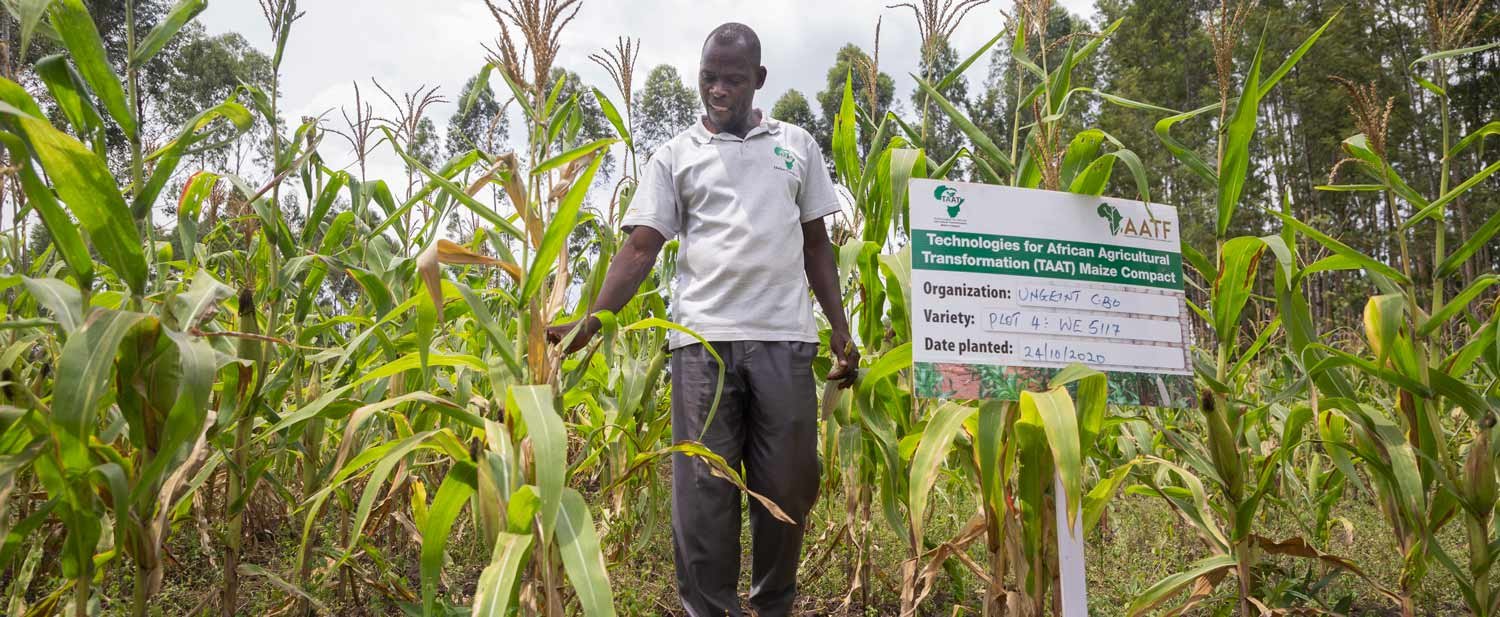
The AfDB’s Technologies for African Agricultural Transformation (TAAT) program is delivering high-impact, climate-smart technologies across Africa. TAAT provides drought-resistant and heat-tolerant seeds, improves agricultural practices, creates jobs, and enhances farmer incomes. In under a decade, TAAT has reached over 13 million farmers, increasing crop production by an estimated 25 million tons.
Farmers and Private Sector Key to Scaling Climate-Smart Solutions
Farmer organizations and private sector companies play a pivotal role in expanding the reach of climate-smart agriculture. Programs that bundle inputs, advisory support, credit, and climate information, often delivered digitally, help smallholder farmers adopt innovative practices.
Research in Ethiopia shows that farmers in cooperatives are more likely to adopt techniques such as mulching, river diversion, and integrated pest management. Adoption also influences non-members, spreading climate-smart practices across communities. In West Africa, companies like Ignitia, in partnership with telecom operators such as MTN, deliver GPS-based hyper-local weather forecasts via simple airtime subscriptions, helping farmers time activities like fertilization and reduce losses.
Raising Awareness of AfDB-Supported Innovations
The AfDB has deployed over 80 climate-smart technologies across Africa, including drought-tolerant maize, heat-resistant wheat, climate-resilient rice, improved livestock breeds, water-saving irrigation systems, soil fertility enhancers, and agroforestry seed systems. Many farmers using these innovations are unaware that they originate from AfDB-led initiatives, as technologies are delivered through local governments, cooperatives, private firms, and national research systems.
The recent online Forum showcased collaborative efforts among development institutions, research centers, and public and private sector partners committed to climate adaptation in African agriculture.
Africa Fertilizer Financing Mechanism Strengthens Community Resilience
The Africa Fertilizer Financing Mechanism (AFFM), housed at AfDB, mitigates risks for lenders while ensuring a steady supply of fertilizers and inputs to smallholder farmers. By combining financing strategies and credit guarantees, AFFM has supported trade credit guarantee projects in eight African countries. One such project leveraged funding 4.6 times, distributing 145,772 metric tons of fertilizer to 987,676 farmers, including 34.5% women beneficiaries, between 2019 and 2025. Over 171,363 farmers received training in good agricultural practices.
In Nigeria, TAAT distributed 6,500 tons of improved seeds and provided training through the African Emergency Food Production Facility, scaling wheat cultivation from 11,820 hectares in 2021 to nearly 400,000 hectares in 2025, with yields increasing by nearly 30% in targeted areas. The program facilitated over 29,600 metric tons of seed and 180,400 metric tons of fertilizer, benefiting 710,000 farmers and producing more than 2.1 million metric tons of food.
Economic Report: Resilient Growth in Africa Despite a Weaker Dollar and Falling Oil Prices