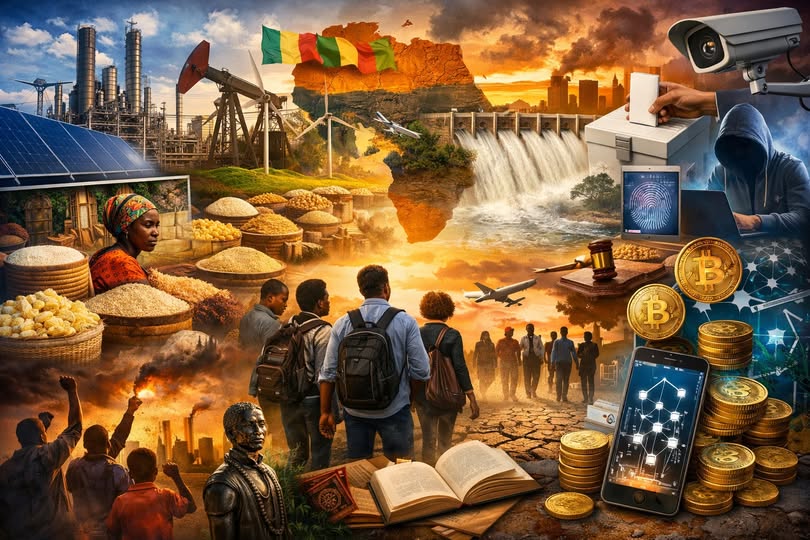
As March 2026 unfolds, the African continent is witnessing a period of intense civic engagement and geopolitical repositioning. Public consciousness is increasingly occupied by a blend of economic survival and the pursuit of energy sovereignty. This report outlines the ten most significant issues currently shaping African public opinion, drawing on data and reports from major regional and international institutions.
The African public square in March 2026 is a vibrant exchange of ideas that reflects a continent seeking structural change. Whether it is the pragmatic demand for lower fuel prices or the philosophical quest for identity, the “Daily Manifesto” of the African citizen is one of resilience. As these ten issues continue to evolve, they will undoubtedly dictate the political and social trajectory of the continent for the remainder of the year.
2 -The “Dangote Effect” and Energy Sovereignty
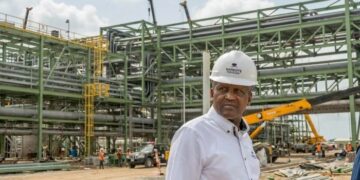
Nigeria’s successful transition to domestic fuel self-sufficiency has become a benchmark for oil-producing nations. According to Business Insider Africa, the Dangote Refinery’s capture of 92% of the local market has sparked widespread debate in countries like Angola and Ghana, where citizens are questioning their own governments’ reliance on imported refined products despite having vast crude reserves.
2 – Food Inflation and the “Plate Crisis”
In East Africa, the soaring cost of staple grains remains a primary concern. The African Development Bank (AfDB) recently highlighted that food inflation in Kenya and Ethiopia has reached critical levels, driving public activism and demands for a strategic shift away from import-dependent agricultural policies toward domestic food security.
3- The Sahelian Sovereignty Movement
The ongoing departure of Mali, Niger, and Burkina Faso from ECOWAS continues to polarize opinion. Reports from Al Jazeera English and France 24 indicate a deep divide; while some populist movements celebrate the move as a path toward true decolonization, regional business leaders express anxiety over the loss of the “Common External Tariff” and freedom of movement.
4 – Digital Privacy and the “Surveillance State”
The introduction of new biometric ID laws in Southern Africa has sparked a heated debate on digital rights. Amnesty International has raised concerns regarding the “Surveillance State,” with public discourse on social media platforms focusing on the potential for these data-gathering measures to be used for political monitoring rather than national security.
5 – The Great Dam Diplomacy
The Grand Ethiopian Renaissance Dam (GERD) remains a high-stakes issue. As noted by Reuters, renewed tripartite discussions have brought water-sharing agreements back to the forefront. Public opinion in Cairo and Addis Ababa remains highly nationalistic, reflecting deep-seated concerns over long-term water and energy security along the Nile.
6 – Youth Unemployment and the “Brain Drain”
The “youth bulge” is expressing acute frustration over stagnant labor markets. Data from the International Labour Organization (ILO) shows a disturbing trend across South Africa and Nigeria, where the conversation has shifted from local job creation to mass migration. The “brain drain” of skilled medical and tech professionals is now a top-tier political issue in Zimbabwe and Ghana.
7 – Climate Adaptation vs. Industrialization
Following record-breaking heatwaves across the Sahel, the African public is debating the fairness of the “Green Transition.” Reports from the United Nations Economic Commission for Africa (UNECA) suggest a growing public consensus that the continent must not sacrifice its industrial growth for global climate goals, especially given its minimal contribution to historical emissions.
8 -The Rise of Fintech and “Digital Currencies”
The adoption of Central Bank Digital Currencies (CBDCs) and the regulation of crypto-markets have taken center stage. Bloomberg Africa reports that in nations like Nigeria and South Africa, citizens are increasingly turning to digital assets as a hedge against currency devaluation, driving a demand for clearer regulatory frameworks and financial decentralization.
9 – Educational Reform and “Decolonizing the Curriculum”
In academic circles and university campuses, there is a renewed push for curricula that reflect African history and indigenous knowledge. This cultural resurgence, often covered by The Mail & Guardian, has moved from peripheral academic debate to a mainstream demand for an education system that better aligns with the continent’s social and economic realities.
10 – Post-Election Integrity and the “Sanctity of the Ballot”
With several nations transitioning out of major election cycles, the focus has turned to judicial independence. According to the Ecowas Network of Electoral Commissions (ECONEC), public discourse is increasingly centered on the role of technology in ensuring transparent vote counts, signaling a more sophisticated and demanding electorate across the continent.
read more :
Vanguards of the “Verdant Revolution”: here is top Ten Nations Redefining the African Horizon