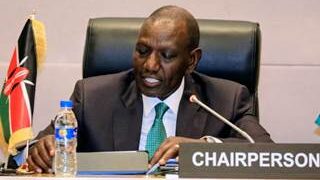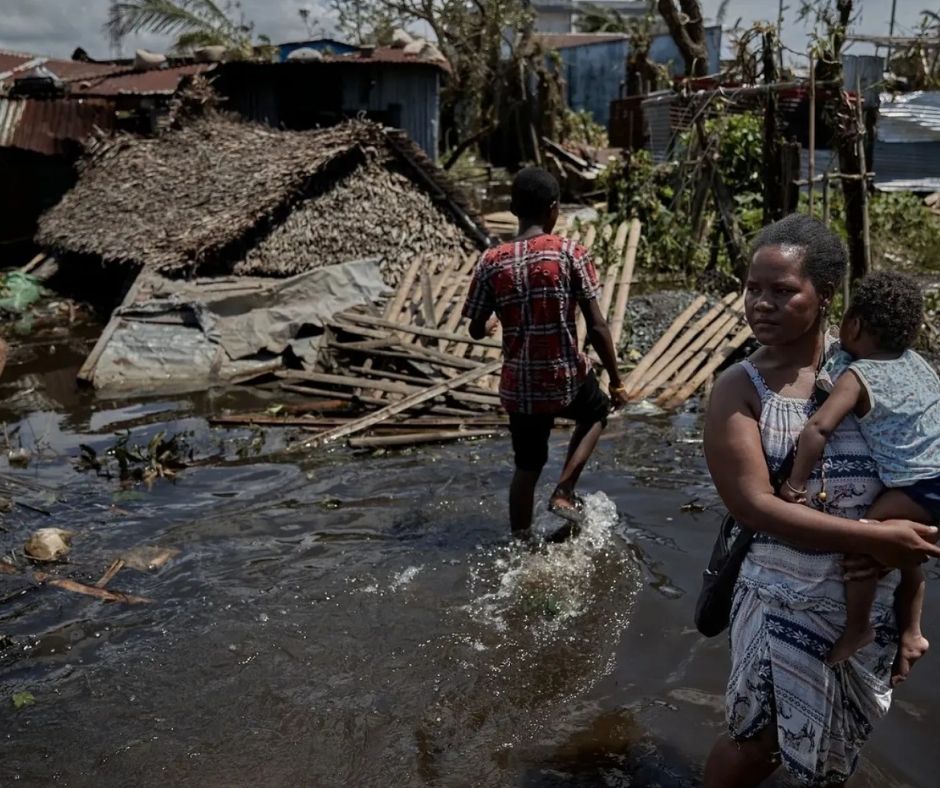
Mahmoud Ali Youssouf, Chairperson of the African Union Commission, has expressed deep concern and strong solidarity with the Government and people of the Republic of Madagascar following the widespread devastation caused by Cyclone Gezani, which national authorities officially declared a national disaster.
On behalf of the African Union, the Chairperson conveyed heartfelt condolences to families who lost loved ones during the disaster and expressed solidarity with all individuals injured, displaced, or otherwise affected by the tragic event.
The Commission commended the rapid response efforts undertaken by national authorities and local communities, highlighting their continued dedication and resilience while operating under extremely challenging humanitarian conditions.
Call for Urgent Continental and International Support
The Chairperson called on AU Member States, regional economic communities, international partners, humanitarian agencies, and private sector actors to urgently mobilize financial, material, and technical resources to support both immediate humanitarian relief and long-term reconstruction efforts.
He emphasized that coordinated continental and international solidarity will be essential to address urgent priorities, including emergency shelter, food security, healthcare delivery, water and sanitation services, and the rehabilitation of critical infrastructure damaged by the cyclones.
AU Commission Reaffirms Commitment to Recovery Efforts
The African Union Commission reaffirmed its readiness to work closely with the Government of Madagascar, relevant AU organs, and humanitarian partners to facilitate assistance and support resilient recovery and reconstruction initiatives. The Commission stressed the importance of coordinated action to ensure sustainable recovery and strengthen resilience against future climate-related disasters.
The African Union reiterated its unwavering commitment to supporting Madagascar’s path toward recovery, stability, and sustainable development, affirming that the continent stands united with the country during this difficult time.
Madagascar Faces Escalating Humanitarian Needs After Successive Cyclones
Madagascar remains highly exposed to tropical cyclones, which pose significant risks to children through displacement, disease outbreaks, interrupted education, increased protection risks, family separation, and reduced access to essential life-saving services such as healthcare and safe water.
In early 2026, the country was struck by two powerful storms in rapid succession. Tropical Cyclone FYTIA hit the north-western regions on 31 January, followed by Intense Tropical Cyclone GEZANI, which struck the eastern coast on 10 February. The back-to-back disasters significantly escalated humanitarian needs and strained national response capacity in a country where many children already face chronic vulnerability and limited access to essential services.
The situation has been further complicated by an ongoing Mpox outbreak in parts of Madagascar, increasing both health and protection risks for vulnerable populations.
The UNICEF is scaling up a multi-sector humanitarian response focused on delivering life-saving assistance to children and families in the most severely affected areas.
Tropical Cyclone FYTIA: Severe Damage in North-West Madagascar
Tropical Cyclone FYTIA formed in the Mozambique Channel on 28 January 2026 and rapidly intensified as it moved east toward Madagascar. The cyclone made landfall at approximately 04:00 on 31 January in Soalala District, Boeny Region, with sustained winds estimated at 150 km/h and gusts reaching up to 210 km/h near its centre.
The storm caused widespread destruction to housing and public infrastructure, including administrative buildings, schools, and health facilities. Heavy rainfall triggered flooding across additional inland districts as the system progressed across the country.
Response operations have faced major access constraints. Extensive road damage and flooding have limited access to the worst-affected areas largely to air transport, while river and maritime access has only gradually resumed.
Initial assessments reported that 164,714 people were affected, including 79,063 children, while approximately 40,000 people were displaced. A total of 18,600 homes were damaged or destroyed.
Education infrastructure suffered severe losses, with 184 classrooms destroyed, 65 partially destroyed, and 131 losing their roofs. Around 10 health facilities also sustained damage. Fifteen schools were converted into temporary shelters, underscoring the scale of displacement and pressure on basic services.
Cyclone GEZANI: Extensive Destruction Along the East Coast
Intense Tropical Cyclone GEZANI struck Madagascar’s east coast on 10 February 2026, making landfall near Tamatave, the country’s second-largest city and main port, with wind gusts exceeding 250 km/h.
Although the cyclone weakened as it crossed the island, it continued to generate torrential rains and widespread flooding before moving back into the Mozambique Channel.
The cyclone caused extensive damage to housing and critical infrastructure across three districts in Atsinanana Region, severely disrupting electricity and water networks, transportation routes, and essential public services.
As of 18 February, assessments indicated that 416,044 people were directly affected in Atsinanana Region, including 203,513 children and 20,800 displaced individuals. While many displaced families have begun returning home to rebuild, essential services remain largely non-functional.
Authorities reported that approximately 102,000 homes were damaged or destroyed. Electricity and water supply systems were completely cut, while the RN2— the main access road to the city—remained closed for three days. Both university hospitals sustained major damage, and multiple primary health centres experienced infrastructure impacts, including disruptions to vaccine cold-chain systems.
Education infrastructure also suffered heavy losses, with 23 classrooms destroyed, 90 partially damaged, and 963 classrooms losing their roofs, disrupting learning for nearly 60,000 children.
Additional impacts included damage to the central prison, requiring temporary arrangements for 46 detained boys aged between 13 and 17, and the destruction of a centre providing integrated services to child survivors of sexual violence.
Growing Humanitarian Needs and UNICEF Emergency Response
Humanitarian needs across cyclone-affected regions continue to rise sharply. Nearly 581,000 people—including approximately 274,080 children—are now estimated to require some form of humanitarian assistance as displacement, housing destruction, and disrupted essential services increase risks for vulnerable populations.
UNICEF has activated Level 1 emergency procedures to enable a rapid and coordinated scale-up of response operations in collaboration with government authorities and humanitarian partners.
The organization and its partners are delivering integrated life-saving support across multiple sectors, including water, sanitation and hygiene (WASH), healthcare, nutrition, education, child protection, social and behaviour change programming, and prevention of sexual exploitation and abuse and gender-based violence risks (PSEA/GBV), with priority given to the most affected and hardest-to-reach communities.
Continental Solidarity Amid Climate-Driven Disasters
As Madagascar confronts the compounded impacts of successive cyclones and ongoing health challenges, the African Union and international humanitarian partners continue to emphasize coordinated global solidarity as essential to supporting recovery, rebuilding critical services, and strengthening long-term resilience for communities and children across the country.
African Court on Human and Peoples’ Rights Elects Justice Blaise Tchikaya as New President