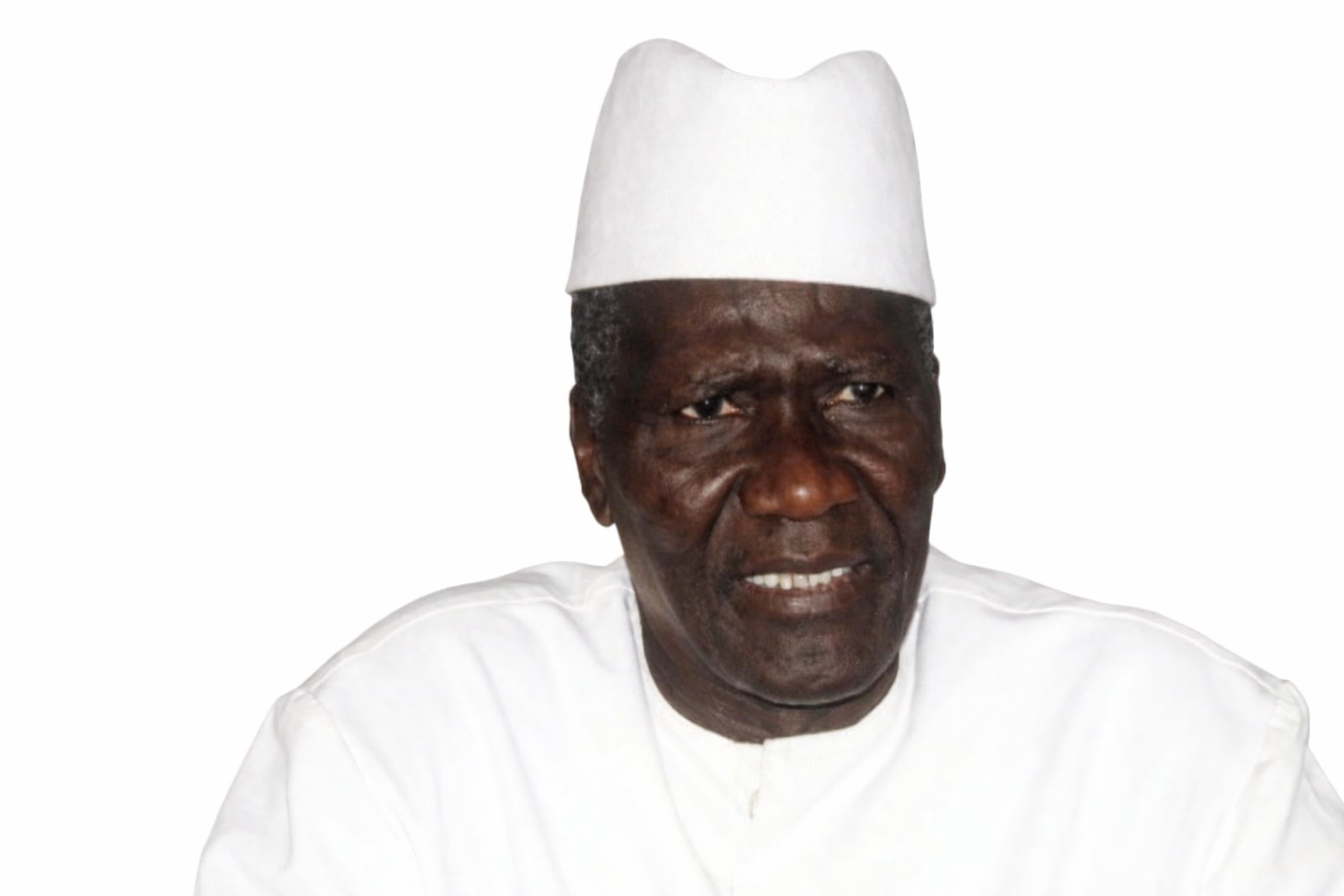
Afronews continues to shed light on the founding fathers of the Organization of African Unity (OAU), marking the 63rd anniversary of its establishment—an organization that laid the cornerstone for joint African action. At the forefront of these historic leaders stands Ahmed Sékou Touré, the first President of the Republic of Guinea and a close partner of Ghana’s founding president Kwame Nkrumah in the dream of achieving African unity and liberation from colonial rule.
Early Life and Social Roots
Ahmed Sékou Touré served as Guinea’s first president from 1958 until his death in 1984. He was among the foremost Guinean nationalists who led the struggle for independence from French colonialism. He was born on January 29, 1922, in the town of Faranah, into a modest rural family; both his father and mother were poor, illiterate farmers.
His mother named him “Sékou Touré,” meaning “Sheikh of the Order.” He began his early education in a Qur’anic school, growing up in a socially and religiously conservative environment typical of Guinea at the time.
Ahmed Sékou Touré belonged to the Mandinka ethnic group, which played a major role in resisting French occupation. He traced his lineage to the historic African leader Samory Touré, founder of the Wassoulou Empire and one of the most prominent figures of African resistance against French colonial expansion until the end of the nineteenth century.
Education and the Awakening of Political Consciousness
After leaving religious schooling, Sékou Touré enrolled at the Georges Poiret French School in Conakry. In 1936, after only one year of study, he was expelled for leading a student strike demanding adequate food for students. Following his expulsion, he relied on self-education and extensive reading to compensate for his interrupted formal studies.
Trade Union Activism and the Rise of Popular Leadership
Sékou Touré initially worked as a clerk at the French Niger Company, before joining the Guinean Postal and Telecommunications Service, where he held several positions, including mail distributor and accountant in the financial administration. During this period, he became deeply involved in labor and trade union activism and succeeded in founding the first postal and telecommunications workers’ union in Guinea.
Under his leadership, the union organized the first successful strike by postal and telecommunications workers in Guinea, which lasted 76 days and demanded higher wages and an end to arbitrary dismissals. This struggle significantly enhanced his standing as a labor leader. In 1945, he became Secretary-General of the Postal and Telecommunications Workers’ Unions, and later a leading member of the Guinean Confederation of Trade Unions.
From Trade Unionism to Political Leadership
By the mid-1940s, Sékou Touré’s activism expanded from trade union work into the political arena. He developed close relations with African leaders such as Félix Houphouët-Boigny of Côte d’Ivoire and Léopold Sédar Senghor of Senegal. Together, they contributed to the establishment of the African Democratic Rally (RDA), a movement that became active in French West Africa with the aim of liberating African countries from colonial domination.
Sékou Touré also founded the Democratic Party of Guinea (PDG), which soon emerged as the country’s largest political force. In 1956, during the era of the Fourth French Republic, he was elected as Guinea’s representative to the French National Assembly. He viewed this position as an important platform from which to defend Guinea’s right to independence. In 1957, he became Vice President of Guinea’s Executive Council (Cabinet).
The Historic Independence Speech and Confrontation with de Gaulle
Sékou Touré was known for his charismatic personality and exceptional oratory skills, enabling him to mobilize public sentiment and articulate national aspirations. This influence reached its peak during the visit of French President Charles de Gaulle to Conakry, when the latter was startled by crowds chanting “Independence” in the streets.
In a historic speech delivered on August 25, 1958, Sékou Touré firmly rejected any form of continued subordination to France. His words struck de Gaulle forcefully, prompting the French president to respond angrily: “Very well, you may have your independence. France will not oppose it—but there will, of course, be consequences.”
Independence and the Challenges of State-Building
Following the referendum held on September 28, 1958, the Guinean people voted overwhelmingly in favor of independence, making Guinea the only French colony in Africa to reject continued association with France. On October 2, 1958, Guinea was proclaimed an independent state, with Sékou Touré assuming the presidency of the government. He was later elected President of the Republic on January 17, 1961.
Guinea’s independence came under extremely difficult conditions. At the time, the newly independent state had only around 200 university graduates, an illiteracy rate of 95 percent, and an average annual income of approximately 40 US dollars for most farmers.
Commitment to African Unity
Sékou Touré was a staunch opponent of the idea of Franco-African integration, describing it as a misguided illusion that ignored fundamental differences between African and European societies. Instead, he strongly supported the liberation struggles of all African peoples and worked closely with Ghanaian President Kwame Nkrumah to promote the establishment of a politically unified Africa.
Together, they founded the Guinea–Ghana Union, which was later joined by Mali in 1960, forming what became known as the Union of Independent African States. Although internal disagreements later divided the continent into the Casablanca Group and the Monrovia Group, Sékou Touré continued to advocate tirelessly for African unity.
Toward the Organization of African Unity
Despite mounting challenges, Sékou Touré remained committed to unifying independent African states under a single banner. His ideas played a key role in efforts to reconcile the rival African blocs, culminating in meetings hosted in Addis Ababa. These initiatives laid the groundwork for the creation of the Organization of African Unity (OAU).
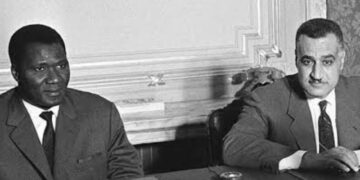
Sékou Touré maintained a strong relationship with Egyptian leader Gamal Abdel Nasser, and together with other founding fathers, they played a decisive role in establishing an African regional organization to defend shared continental interests. The OAU Charter was approved by the heads of 30 African states on May 22, 1963, and the organization was officially inaugurated on May 25, 1963, with Addis Ababa designated as its headquarters.
Death and Legacy
Ahmed Sékou Touré passed away in 1984 during a surgical operation in Cleveland, Ohio, United States, at a time when he was serving as Chairman of the Islamic Peace Committee of the Organization of the Islamic Conference. Despite the decades that have passed since his death, African peoples continue to remember his ideas, his struggle against colonialism, and his enduring commitment to the vision of African unity, which remains a central aspiration of the continent.
Kwame Nkrumah … From the Struggle for Ghana’s Independence to the Dream of African Unity