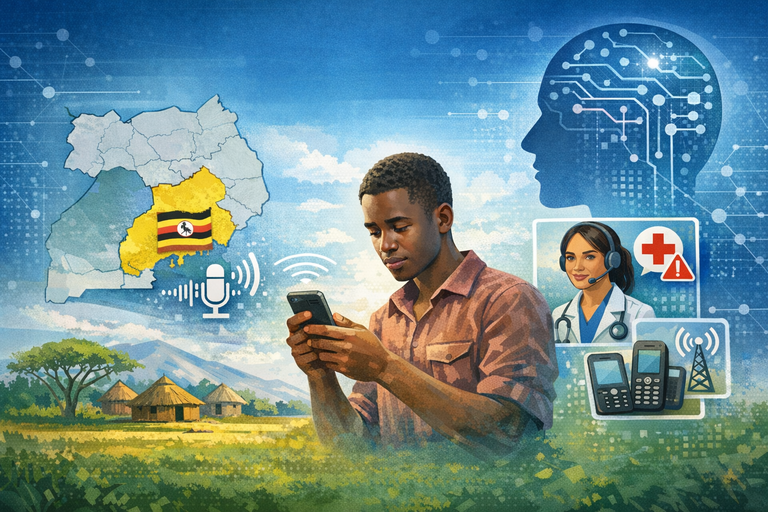
The Guardian highlighted that the project, spearheaded by the AI Lab at Makerere University, is not just a technological trial but a necessary response to a “mental health timebomb” in Uganda.
The report stated that with approximately 14 million Ugandans suffering from mental health conditions and only about 50 psychiatrists nationwide, the traditional clinical model has reached a breaking point.
The article pointed out that the team, led by Professor Joyce Nakatumba-Nabende, is focusing on the “decolonization of AI.”
It explained that current global chatbots like ChatGPT are primarily trained on Western, English-speaking datasets, which makes them ineffective in African contexts.
Professor Nakatumba-Nabende clarified that the project is meticulously labeling thousands of hours of audio from mental health facilities to teach the algorithm how a patient in Luganda might describe “anxiety” through metaphors or indirect cultural references.
The Guardian further elaborated on the technical deployment, noting that the researchers are working on a “low-resource” model.
It added that this would allow the chatbot to function on basic mobile phones via SMS or USSD codes, ensuring that the poorest populations in rural Uganda are not left behind by the digital divide.
The report also emphasized the role of international partners, stating that organizations like the Wellcome Trust are funding the research to ensure ethical safeguards. It stressed that the AI is being programmed with a “human-in-the-loop” system, meaning the algorithm is designed to immediately alert a human supervisor if it detects high-risk triggers, such as signs of self-harm or severe psychosis.
Furthermore, The Guardian highlighted the social dimension, observing that many patients find it easier to “confide in a machine” than a human due to the fear of judgment or the stigma associated with “Madness” (known locally as Eddalu).
It noted that the chatbot acts as an anonymous bridge that could eventually encourage more people to seek professional medical intervention.
The Guardian concluded by acknowledging the significant hurdles remaining, warning that the lack of clear data protection laws in many African countries poses a risk to patient privacy.
It underscored that while AI is a “game-changer,” it must be integrated into a broader, well-funded national healthcare strategy rather than being seen as a standalone fix.