Arab and Islamic Countries Condemn U.S. Ambassador to Israel , Warn of Threat to Regional Stability

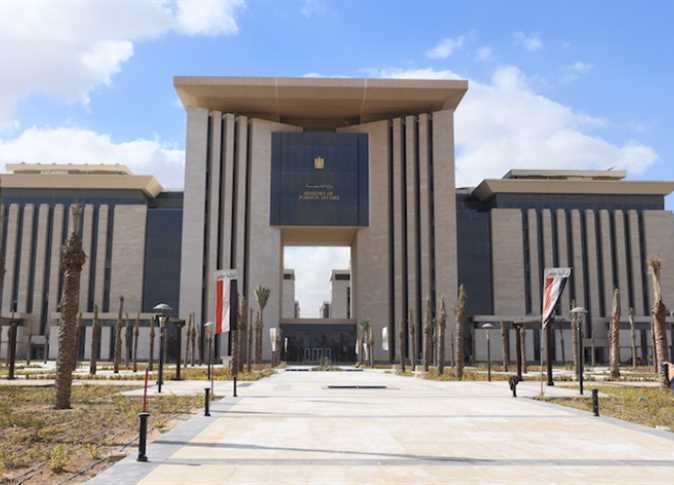
The Ministries of Foreign Affairs of 14 Arab and Islamic countries issued a joint statement expressing strong condemnation and deep concern over recent remarks made by the United States Ambassador to Israel, who suggested that it could be acceptable for Israel to exercise control over territories belonging to Arab states, including the occupied West Bank.
The statement was jointly released by the Ministries of Foreign Affairs of the Arab Republic of Egypt, the Kingdom of Saudi Arabia, the Hashemite Kingdom of Jordan, the Kingdom of Bahrain, the United Arab Emirates, the State of Qatar, the Republic of Indonesia, the Islamic Republic of Pakistan, the Republic of Türkiye, the Syrian Arab Republic, the State of Palestine, the State of Kuwait, the Lebanese Republic, and the Sultanate of Oman. The declaration was also supported by the Organization of Islamic Cooperation (OIC), the League of Arab States (LAS), and the Gulf Cooperation Council (GCC).
Strong Rejection of “Dangerous and Inflammatory” Statements
The participating countries affirmed their categorical rejection of the ambassador’s remarks, describing them as dangerous and provocative statements that represent a clear violation of international law and the principles enshrined in the Charter of the United Nations.
According to the joint statement, such comments pose a serious threat to regional security and stability and risk escalating tensions at an already sensitive time in the Middle East.
The ministries emphasized that any suggestion legitimizing Israeli control over Arab territories undermines established international legal frameworks governing occupied lands and contradicts long-standing international consensus on the Palestinian issue.
Contradiction with U.S. Peace Vision and Gaza Conflict Plan
The statement highlighted that the ambassador’s remarks directly contradict the vision previously presented by U.S. President Donald J. Trump, as well as the Comprehensive Plan to End the Gaza Conflict. Both initiatives, the ministries noted, are based on de-escalation efforts and the creation of a political pathway toward a comprehensive settlement that guarantees the Palestinian people the establishment of an independent state.
The ministries stressed that the proposed framework aims to promote tolerance, peaceful coexistence, and diplomatic solutions. In contrast, statements seeking to legitimize control over the lands of others were described as undermining these objectives, fueling regional tensions, and serving as incitement rather than contributing to peace efforts.
Reaffirmation of Legal Status of Occupied Palestinian Territories
The joint statement reaffirmed that Israel holds no sovereignty over the Occupied Palestinian Territory or any other occupied Arab lands. The participating countries reiterated their firm rejection of any attempts to annex the West Bank or separate it from the Gaza Strip.
They also expressed strong opposition to continued settlement expansion in the Occupied Palestinian Territory, emphasizing that such actions violate international law and further complicate prospects for a negotiated settlement.
Additionally, the ministries underscored their categorical rejection of any threats to the sovereignty of Arab states.
Warning Against Escalation and Expansionist Policies
The statement warned that the continuation of Israeli expansionist policies and unlawful measures would further inflame violence and deepen conflict across the region, ultimately undermining opportunities for lasting peace.
The countries called for an immediate halt to what they described as incendiary rhetoric and actions that could aggravate instability.
Commitment to Palestinian Self-Determination and Two-State Solution
Concluding the statement, the ministries reaffirmed their unwavering commitment to the inalienable right of the Palestinian people to self-determination and to the establishment of an independent Palestinian state based on the borders of 4 June 1967.
They also reiterated their call for an end to the occupation of all Arab lands, stressing that achieving a just and comprehensive peace remains dependent on adherence to international law and internationally recognized resolutions.
Egypt condemns Israeli Gaza ceasefire breaches, West Bank settlement expansion at UNSC