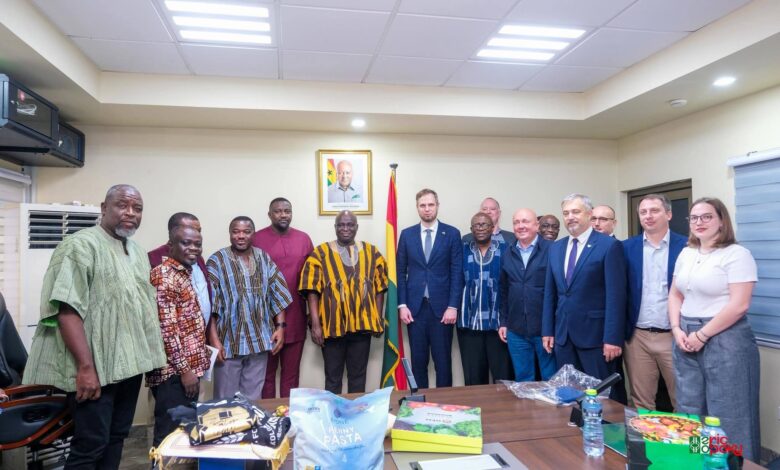
In a significant shift from traditional grain trade to localized industrial cooperation, Ghana and Ukraine are in advanced negotiations to establish a wheat flour processing plant in Accra.
This strategic move, discussed between Ghana’s Agriculture Minister Eric Opoku and Ukraine’s Deputy Minister Denys Bashlyk, aims to mitigate Africa’s deepening dependence on food imports and secure its supply chains against global volatility.
The proposed facility is a cornerstone of a 2025 agreement designed to position Ghana as a regional hub for Ukrainian agricultural products, marking a transition from simple commodity exchange to value-added manufacturing.
The urgency of this partnership is underscored by a staggering 57% surge in Ghana’s wheat imports over the last four years, reaching approximately 1.09 million tonnes in 2025. Driven by an evolving national diet that increasingly prioritizes processed foods like bread and noodles, this reliance has left the country acutely vulnerable to international shocks.
The disruptions caused by the protracted Russia-Ukraine conflict, which historically spiked global grain prices, have served as a catalyst for Ghana’s “Feed Ghana Programme,” an initiative focused on domesticating the value chain and reducing the national import bill.
For Ukraine, the project represents a sophisticated expansion of its “Food from Ukraine” initiative. Despite the ongoing conflict at home, Ukraine managed to export over 20 million tonnes of wheat in 2024, and it is now seeking to diversify its market reach beyond traditional European and Asian corridors. By investing in local processing capacity rather than just shipping raw grain, Kyiv is building deeper, more resilient economic ties with West African markets. Beyond the industrial plant, the collaboration extends to supporting local farmers through the distribution of five million seed packets and significant investments in storage infrastructure.
Analysts view this Ukrainian-Ghanaian venture as part of a broader trend where African nations are increasingly leveraging their geopolitical position to demand “value-chain integration” from their trade partners. As Ghana steps up to become an agricultural gateway, the project reflects a growing Continental consensus: food security is no longer just about availability, but about ownership and local control. In the evolving Great Game for African influence, the ability to stabilize bread prices and modernize agricultural infrastructure is proving to be as potent a tool as military aid or mineral concessions.
Read more
Ghana Defends African Talent with High-Stakes London Energy Summit Withdrawal