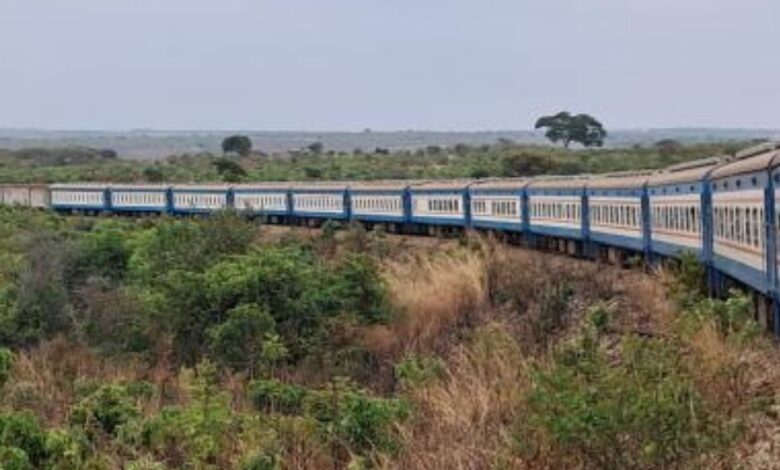
The global race for dominance over Africa’s strategic wealth has intensified as a coalition of Chinese mining, shipping, and logistics firms announced a $1.24 billion investment to overhaul the Tazara railway, a vital link between Zambia’s copper belt and Tanzania’s Dar es Salaam port, This initiative, detailed by Bloomberg and Adekunle Agbetiloye, represents a strategic resurrection of the 1,860-kilometer line originally built in the 1970s through Chinese engineering.
Under the current agreement, the state-owned China Civil Engineering Construction Corporation (CCECC) will hold a commanding 80% stake in the joint venture, partnering with major copper producers such as CMOC Group and Zijin Mining, alongside logistics giants like COSCO Shipping Holdings.
This Chinese maneuver functions as a direct geopolitical counter-move to the Western-backed Lobito Corridor, a rail project supported by the United States and the European Union aimed at connecting Central Africa’s mineral riches to Angola’s Atlantic coast.
As noted by The Financial Times, this competition highlights a desperate struggle to secure supply chains for critical minerals essential to high-tech and green energy industries. By securing a 30-year concession from Zambia and Tanzania, the Chinese consortium intends to transform regional logistics, drastically reducing road congestion and accelerating the export of copper and other minerals through a modernized rail network.
The investment also signals a pivotal shift in China’s Belt and Road Initiative, moving toward a model where private firms operate on strictly commercial terms rather than relying solely on traditional state-to-state loans.
According to financial disclosures from Jiayou International Logistics, which is investing approximately $62.2 million, the project will focus on acquiring advanced locomotives and containers to ensure high-capacity freight services.
While the project still awaits final regulatory approval from Chinese authorities, it stands as a testament to the “new era” of African infrastructure, where railways are no longer just transport routes but are the primary arteries of global influence and economic sovereignty.
read more
Zero-tariff : China agrees access for 53 African nations after U.S extends AGOA