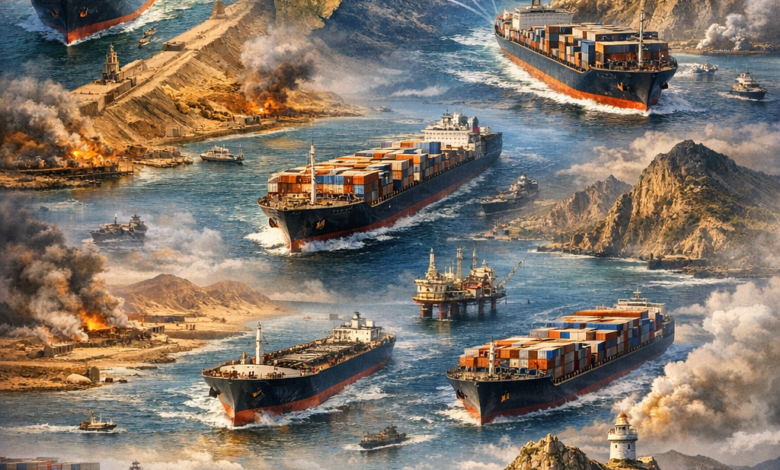
Strategic waterways across Africa exert a definitive chokehold on the velocity of global commerce, serving as the indispensable bridges between the Atlantic, Indian, and Mediterranean basins. According to The World Bank, nearly 90% of African trade is seaborne, making these maritime corridors not just local assets, but systemic pillars of the international supply chain. Any disruption in these zones immediately tightens a chokehold on energy markets and manufacturing timelines worldwide.
The Suez Canal: The Global Pivot
The Suez Canal remains the preeminent maritime passage, facilitating approximately 12% of global trade volume. The Suez Canal Authority reports that this Egyptian-managed waterway handles over $1 trillion in goods annually, offering the shortest sea link between Asia and Europe.
The Bab el-Mandeb: The Gateway of Volatility
Located between the Horn of Africa and the Arabian Peninsula, the Bab el-Mandeb Strait serves as the southern gateway to the Red Sea. The U.S. Energy Information Administration emphasizes that this strait is a vital transit point for oil and natural gas exports from the Persian Gulf. Current geopolitical tensions, particularly the Iran war fallout, have placed a strategic chokehold on this passage, forcing shipping giants like Maersk and MSC to divert vessels around the Cape of Good Hope, significantly increasing freight costs and carbon emissions.
The Strait of Gibraltar: The Mediterranean Sentinel
At the northern tip of Africa, the Strait of Gibraltar acts as the primary entrance to the Mediterranean Sea. The International Maritime Organization estimates that over 100,000 vessels traverse this narrow passage annually. It remains a critical node for European-African integration; yet, any regulatory or security friction here exerts a logistical chokehold on the flow of grain and minerals, impacting food security in the Maghreb and energy stability in Southern Europe.
The Cape of Good Hope: The Resilient Alternative
While not a strait in the narrow sense, the Cape of Good Hope has regained its status as a vital global detour. Bloomberg Shipping Data indicates a 40% increase in traffic around the Cape during periods of Red Sea instability. While this route avoids the immediate chokehold of narrow straits, it imposes a different kind of pressure: the temporal chokehold of extended journeys, adding 10 to 14 days to transit times and straining global vessel capacity.
read more