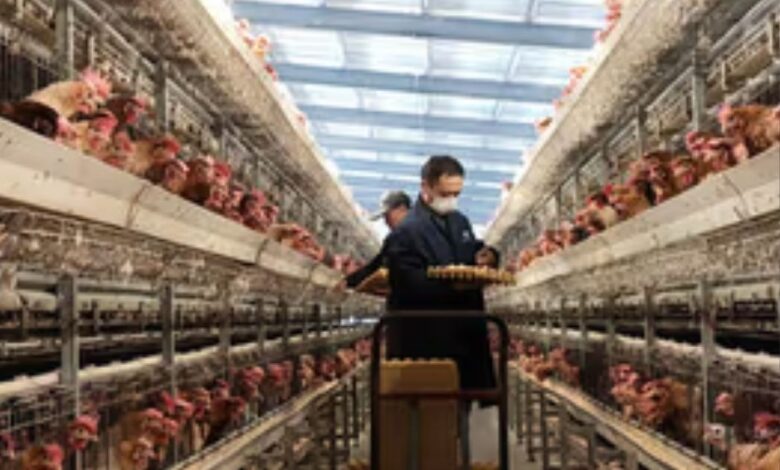
Nigeria’s ambitious $900 million poultry partnership with Chinese investors is encountering a significant domestic setback as local farmers mount a coordinated campaign against the foreign-backed initiative. While government officials have framed the deal as a transformative pathway to modernize the agricultural sector through technology transfer and industrial-scale production, the Poultry Association of Nigeria (PAN) warns that the project risks dismantling the country’s indigenous farming ecosystem. The proposal aims to establish six integrated mega-farms across Nigeria’s geopolitical zones, with a projected output of six million eggs daily—a volume that local producers fear will flood the market and marginalize smaller domestic operations.
According to data from the Food and Agriculture Organization (FAO), Nigeria’s poultry industry is already a vital pillar of the national economy, valued at approximately $4.2 billion and serving as the primary protein source for millions. However, industry stakeholders, led by Lagos PAN Vice President Foluso Adams, argue that the government’s focus is misplaced.
They contend that the real crisis facing the sector is structural rather than a lack of supply, citing the soaring costs of maize and soy-based feed which currently account for the majority of production expenses. Farmers are now calling on the administration to shift its $900 million investment toward strengthening local capacity, specifically by providing affordable credit and stabilizing feed prices rather than inviting heavily financed foreign competition that could turn the domestic sector into what Adams describes as a “toy business.”
The tension highlights a broader struggle in Nigeria’s economic policy: the difficult balance between attracting foreign direct investment and protecting the sustainability of local industries.
Market analysts note that while the Chinese partners are expected to provide the bulk of the financing, the initial pilot phases will still draw on Nigerian public funds, leading to further questions about the long-term sovereignty of the food supply chain. As the debate intensifies, there are growing demands for strict regulatory oversight and comprehensive industry consultation before any further implementation occurs. Ultimately, the Nigerian farming community is sending a clear message to the government: true food security must be grown from local soil and sustained by empowering indigenous investors who are already the backbone of the nation’s agricultural resilience.
read more:
Nigeria’s Energy Paradox: A Nation Drowning in Crude while Choking on Record Fuel Prices