Egypt denies reports of offering Red Sea access to Ethiopia for flexibility over GERD

A responsible Egyptian source on Tuesday categorically denied reports claiming Cairo was prepared to grant Ethiopia maritime access to the Red Sea in exchange for flexibility in Addis Ababa’s position on the Grand Ethiopian Renaissance Dam (GERD).
The source said the reports were “entirely unfounded” and had no basis in fact, reaffirming that Egypt’s position on water security and the Ethiopian dam remains firm and unchanged.
Egypt’s stance, the source stressed, is rooted in adherence to international law, rejection of unilateral measures, and the prevention of harm to Egypt’s water share, while preserving the full rights of the two downstream countries in line with established legal principles.
The source also underscored that the governance and security of the Red Sea are the exclusive responsibility of its littoral states, describing the waterway as a strategic corridor directly linked to their national security.
“No other states have the right to participate in any arrangements or understandings concerning the Red Sea,” the source added.
The denial came in response to a report by UAE-based The National news outlet, which cited unnamed sources in Cairo as saying Egypt had conveyed a proposal to Ethiopian Prime Minister Abiy Ahmed last week, offering to work with African allies to secure Addis Ababa’s maritime access if it showed flexibility in the Nile water dispute.
The report claimed the proposal included an implicit warning that Egypt could use its regional political and military leverage to restrict Ethiopia’s access to ports in Sudan, Somalia, and Djibouti if the offer were rejected.
According to the report, the proposal was also shared with Washington, where US President Donald Trump has expressed willingness to mediate in the decade-long dispute over the dam built on the Blue Nile, the Nile’s main tributary.
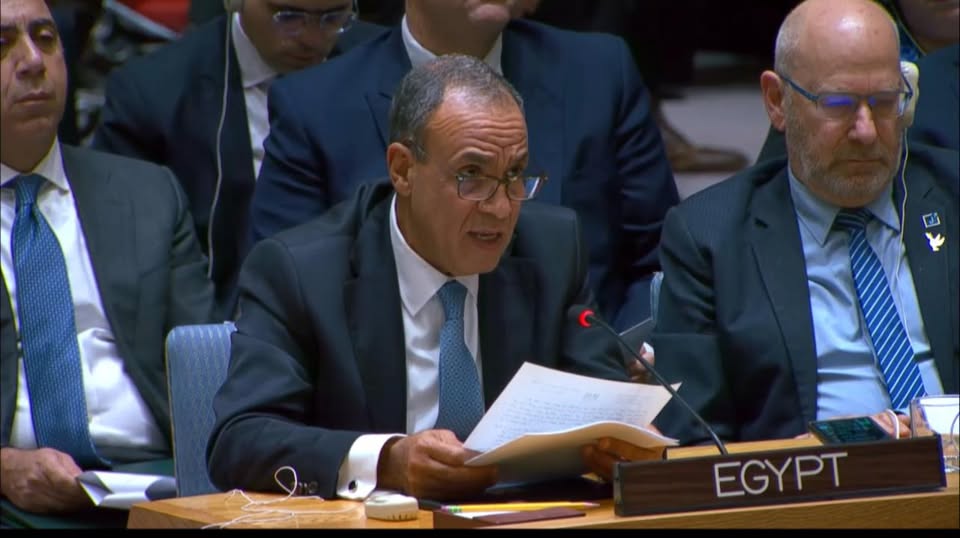
Days earlier, Foreign Minister Badr Abdelatty reaffirmed Egypt’s long-standing position that governance and security of the Red Sea are the exclusive responsibility of its littoral states.
Speaking at a press conference in Cairo, Abdelatty stressed that no non-coastal state has the right to participate in arrangements concerning the Red Sea, describing it as a strategic corridor directly linked to the national security of its bordering nations.
He added that the established regional framework does not permit landlocked countries to engage in security or governance mechanisms related to the waterway.
Egypt has consistently maintained that the Red Sea must remain under the authority of its coastal states alone, while continuing to call for a legally binding agreement on the filling and operation of the GERD to safeguard downstream water security.
In a recent interview with Al Jazeera, FM Abdelatty warned that Cairo will use all means permitted under the UN Charter, including the right to legitimate self-defence, if its water security, an issue he described as existential, is harmed.
Abdelatty said international law clearly regulates transboundary rivers through binding rules such asprior notification and the obligation not to cause harm.
He said Ethiopia has deliberately acted outside these principles by taking unilateral steps, spreading misinformation, and falsely claiming it is ready for dialogue.
“We have tried negotiations for more than 13 years,” he added. “Unfortunately, there has been neither seriousness nor good faith from the Ethiopian side, which used the negotiations to impose unilateral policies.”
American President Donald Trump ripped last month the United States’ decision to “finance” the Grand Ethiopian Renaissance Dam (GERD), while acknowledging the Nile’s critical importance to Egypt.
Previous US-led negotiations on the GERD in 2020 failed to produce a binding agreement, leaving the dispute in diplomatic deadlock for several years.The $4 billion GERD, now fully operational, has long been a source of tension.
Egypt, which relies on the Nile for nearly all of its freshwater, considers any reduction in flow an existential threat.
Powder keg in horn of Africa , Tigray accuses Ethiopia of breaching peace