By Ramy Zohdy – African Affairs Expert
For over a decade, particularly as Ethiopia’s ambition to play a leading regional role in the Horn of Africa—and perhaps aspire to continental leadership despite limited capacities and resources, and a lack of a clear methodology—has grown, a unique model has emerged. This model can be described as the “economy of grandiose projects,” more propagandistic than real, which has become the governing framework for public policy in Ethiopia.
However, this ambition has collided with a complex reality, given Ethiopia’s lack of most prerequisites for such leadership. Perhaps the simplest is having a balanced and competent management of relations with neighboring countries—a historical failure. Ethiopia’s neighbors have never experienced stability in their relations with it: through direct or indirect wars with Somalia, Eritrea, and Kenya; prolonged skirmishes with Sudan; as well as enduring internal tribal and ethnic conflicts between the diverse nationalities and the central state.
Within this turbulent context, the so-called “illusionary mega-project economy” did not emerge from the needs of Ethiopian society, nor from a scientific diagnosis of structural imbalances and requirements. Rather, it originated from a political logic based on symbolic displays of power and sovereignty, using this symbolism as a tool for passive societal control and for maintaining, or monopolizing, governance through exclusion, marginalization, and political, social, and economic isolation.
Thus, national projects in Ethiopia have shifted from potential tools for development into symbolic substitutes for a social state. From means of wealth redistribution, they have become mechanisms to reproduce authority. Development, in official discourse, has been reduced to visible, massive, politically marketable projects, while genuine social, redistributive, cumulative, long-term, and human-centered development has been neglected.
Herein lies the central paradox of the Ethiopian experience: development is no longer a complex, multidimensional process but a one-dimensional narrative, measured by megawatts produced, runway lengths, concrete volumes, and ceremonial inaugurations—rather than by the actual impact on citizens struggling to secure the basic principles and necessities of dignified life.
The most prominent example of this is the Grand Renaissance Dam, which has become a symbol of compounded failure. The dam epitomizes wasted energy, time, and effort. Officially, the project cost is reported as $4.8 billion, while realistic estimates put it at $7–8 billion. More than 60% of the population still lacks reliable electricity, and transmission losses reach 25–30%. The structural problem is not the generation of electricity but producing energy without a national distribution infrastructure capable of utilizing it, while attempting to export electricity in the absence of a stable regional market. The project is funded largely through quasi-mandatory domestic government bonds, burdening the middle class without documented returns, either for citizens or bondholders. Even now, the project has yet to achieve tangible productive operation or completion.
Worse, the dam has become a permanent tool of nationalist mobilization, criminalizing any rational economic discussion or logical internal opposition, stripping the project of its developmental nature, and placing it in the realm of ambiguous projects that exacerbate tensions with neighboring countries.
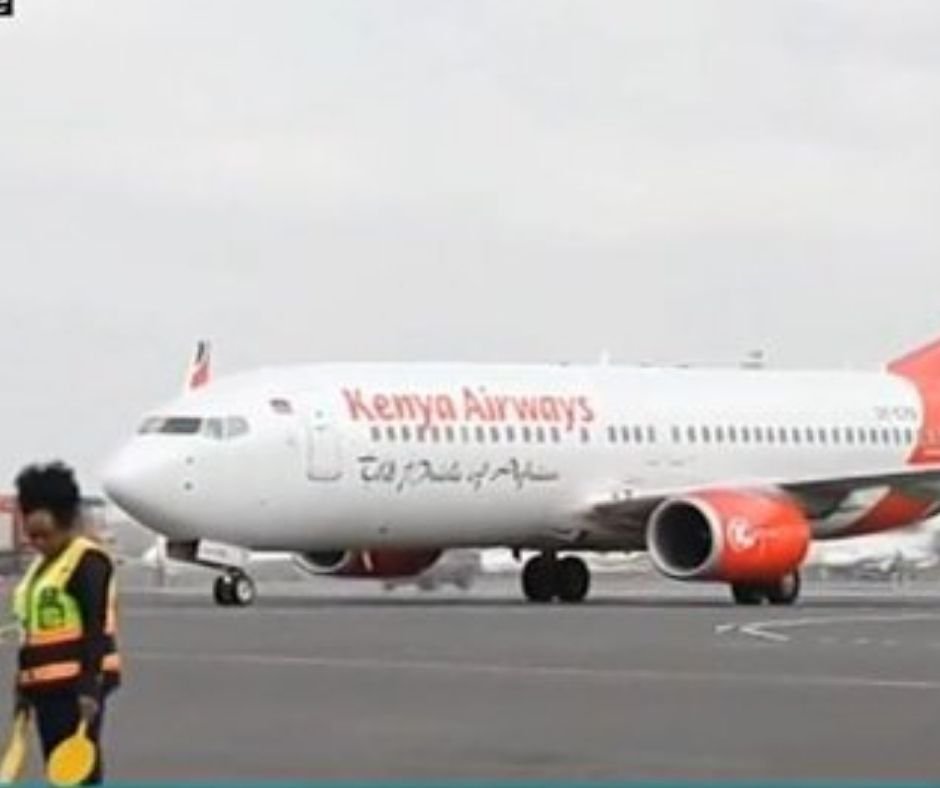
The same pattern applies to the grandiose airport initiatives while Ethiopia’s economy struggles to take off. The government, led by Prime Minister Abiy Ahmed, officially announced the “Bishoftu International Airport” project, with an estimated cost of $10 billion and a theoretical capacity of 110 million passengers annually—potentially making it one of the world’s largest airports. Yet the fundamental question remains: how can a country where the average annual income per capita does not exceed $1,000, struggling with chronic trade deficits, debt repayment difficulties, and internal armed conflicts, build an airport exceeding the capacity of those in major industrialized nations?
Key challenges include the absence of a broad tourism economy, weak domestic purchasing power, near-total reliance on transit, and inflated operational and maintenance costs. Consequently, the airport becomes a high-cost showcase project that serves the state’s image more than society.
Similarly, Ethiopia’s railways and major roads are hollow infrastructure projects with little economic substance. The Addis Ababa–Djibouti railway, for example, cost over $4 billion, financed by Chinese loans, alongside multi-billion-dollar domestic expressway networks. Yet these infrastructures have not generated surrounding production zones, nor linked to agricultural or industrial projects, becoming instead a maintenance and financing burden amid weak revenues. Roads, without a supporting local economy, do not generate development; they accelerate crisis transmission.
Industrial zones demonstrate a similar issue, where export-oriented activities lack social or economic equity. Ethiopia has established over 12 industrial zones, with investments exceeding $5 billion, yet deep imbalances are evident in worker wages, which are among the lowest globally. Local labor stability is limited, technology transfer is almost nonexistent, and the result is a fragile export economy that does not create a middle class or social stability, relying instead on cheap labor rather than added value.
Agriculture and water projects also reveal abundant resources but poor outcomes. Despite more than 12 river basins and vast agricultural areas, Ethiopia remains one of the largest global recipients of food aid, suffering chronic malnutrition and widespread internal displacement. Small farmers are marginalized, water resources are politicized, and symbolic projects are prioritized over food security.
We thus face projects without a people. The “Renaissance” narrative, politically fabricated since the early 2000s and accelerating after 2015, promoted a developmental model based on mega-projects as the “engine out of poverty.” Yet reality shows a continuous erosion in citizens’ living standards. These projects have become tools to consolidate political legitimacy, not redistribute wealth, within a systematic developmental misinformation framework—exaggerating figures, suppressing accurate data, and demonizing any criticism as a threat to national security—creating what can be called a “state that is media-concealed, socially incapable, and popularly rejected.”
Why, then, have these projects failed despite their magnitude? The main reasons can be summarized: lack of governance and transparency, politicization of economic decision-making, neglect of the social dimension, reliance on financing without domestic production, and transforming development into propaganda rather than a social contract. The problem is not the dam, the airport, or the road—it is the model of a state that sees projects as a substitute for human development.
When airports are built before people, and dams are sanctified before trust is built, “Renaissance” becomes a massive, illusory political narrative—devoid of social substance or real economic benefit.