By Al-Ahram Weekly
CAIRO – Just last week, the International Monetary Fund (IMF) approved Egypt’s combined fifth and sixth economic reviews, unlocking around $3.2 billion in loans. The IMF praised Egypt’s reform programme, commended the pound’s recent gains under a flexible exchange rate, and projected a faster rebound in Suez Canal revenues.
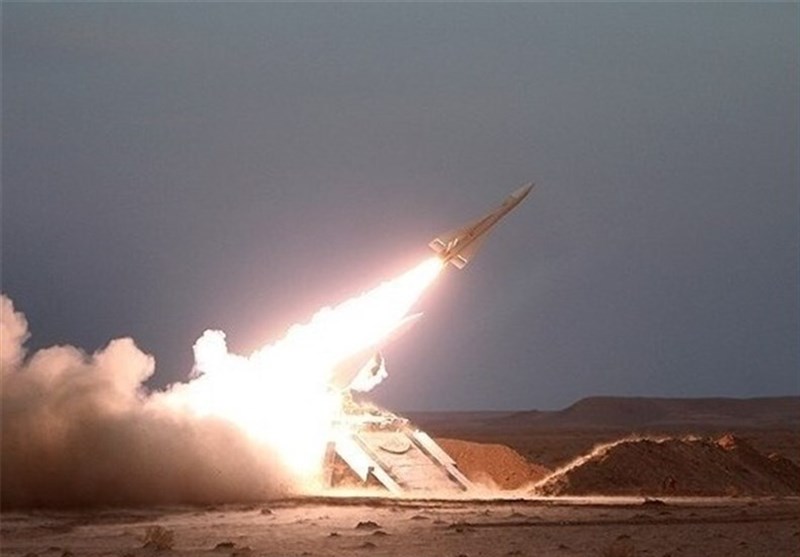
Then came the US-Israeli strikes on Iran and Tehran’s retaliatory attacks on American bases in the Gulf states. Suddenly, the economy’s fortunes seemed to shift. The global economy now faces the risk of a setback if the confrontation drags on, with oil prices and trade flows already under pressure.
Islam Abdel-Bari, a professor of economics at the Arab Academy for Science, Technology, and Maritime Transport, stated that the largest cause of worry is the closure of the Strait of Hormuz as around 20 per cent of global oil supplies pass through it daily. Given its strategic weight, he hinted that any closure of the strait could push oil prices to $100 per barrel and possibly higher. Some estimates suggest $120, though Abdel-Bari considers this exaggerated, noting that $100 is a more likely ceiling, especially since the crisis is unlikely to last long due to the scale of the global stakeholders affected.
The danger of a surge in oil prices lies in its inflationary impact: each one per cent increase in prices raises global inflation by 0.4 to 0.5 per cent, according to IMF estimates. This would place significant pressure on the world economy and Egypt is no exception.
In a speech delivered at the annual Iftar banquet organised by the Armed Forces on Sunday evening, President Abdel-Fattah Al-Sisi acknowledged that Egypt is bracing for the consequences of the war, the closure of the Strait of Hormuz, and the impacts on the Suez Canal. He noted that “the canal has suffered financial losses, and navigation has not returned to normal since the outbreak of the Gaza war on 7 October 2023.”
“Closing the Strait of Hormuz will affect oil flows and prices, and the Egyptian state and government must study all possible scenarios,” the President stressed, adding that the government is working to secure the necessary reserves but also conceding that the duration of the crisis remains uncertain.
Regionally, Egypt is among the least politically exposed to the conflict, and its external position has improved with IMF backing, according to Nematallah Shoukry, head of HC Securities. However, she pointed out on her LinkedIn account that Egypt’s economy faces risks from rising oil prices, reduced Israeli gas inflows, costly liquefied natural gas (LNG) imports, travel disruptions, and slower Suez Canal revenues, and emphasized that the impact of the war will hinge on how long it lasts.
ENERGY SECURITY: Egypt faces two sets of fears on oil and gas prices: the impact of rising prices on the state budget and the challenge of securing domestic needs after Israel froze exports of gas. With shipping through the Strait of Hormuz disrupted, Brent crude jumped 10 per cent to $79.9 a barrel on Sunday, rallying as much as 13 per cent to $82 in intra-day trading on Monday.
Mohamed Abu Basha, a macroeconomic analyst at investment bank EFG Hermes, reiterated that the extent of the impact depends on how long the war lasts. If it continues for two weeks or more, prices could retreat to pre-war levels, limiting the damage. According to Abdel-Bari, Egypt is a net energy importer, with natural gas imports rising nearly 70 per cent between 2024 and 2025. “Energy subsidies in the fiscal year 2025-2026 budget are set at LE150 billion, based on an oil price of $75 per barrel. A rise to $100 would disrupt fiscal planning, as each $1 increase adds about LE4 billion to the budget. A $20 to $25 increase could add nearly LE100 billion to the deficit,” he warned.
The Ministry of Finance is reportedly considering hedging oil purchases using contracts to secure prices and shielding the budget from sudden spikes. In effect, this acts as insurance, ensuring Egypt pays a predictable cost for part of its imports even if global prices surge.
The ministries of petroleum and of electricity and renewable energy have both highlighted that they have taken proactive measures to secure supply. Egypt has been implementing a package of measures designed to secure domestic natural gas and petroleum product supplies, according to a statement by the Ministry of Petroleum and Mineral Resources (MoPMR) released after the Israeli strikes on Iran.
Through proactive measures taken throughout 2025, the ministry has worked to secure additional capacities and quantities of LNG for extended periods to meet the needs of the electricity sector, industry, and the public. This has been achieved by diversifying supply sources alongside domestic production, contracting LNG shipments from various origins, and entering into long-term agreements and supply contracts with international companies.
An integrated infrastructure has been established and equipped to receive LNG imports, including the leasing and operation of floating storage regasification units (FSRUs), serving as a primary pillar for national energy security. The cabinet affirmed on Saturday that the reserves of petroleum products remain at “safe” levels. To cover the shortfall resulting from halting Israeli gas imports, Cairo is expediting LNG cargoes from contracts signed last year and will bring forward three shipments a month starting in March, according to Bloomberg.
The news agency also noted that Cairo plans a tender next month to buy 19 to 21 extra cargoes for June to September to meet peak summer demand. Medhat Youssef, former vice chairman of the Egyptian General Petroleum Corporation (EGPC), played down fears of inadequate supply as the current cold weather has reduced electricity consumption, which in turn has lowered demand for natural gas. He observed that the Ministry of Petroleum’s moves to halt natural gas exports to Syria and Lebanon, suspend LNG exports by foreign partners, as well as direct all imported LNG to the Egyptian grid will greatly contribute to securing the present situation.
POUND UNDER PRESSURE: The Egyptian pound weakened towards the LE50 per dollar mark in Monday’s trading, its lowest level in about 10 months compared to LE46.82 on 16 February. This came on the back of foreign investors exiting the market as well as rising demand for foreign currency to finance accelerated imports of strategic commodities. Foreign investors have begun pulling out of Egyptian treasury bills and bonds since last week in the countdown to the attacks on Iran.
Shoukry explained that wars typically trigger foreign portfolio outflows from treasuries as an immediate reaction to heightened regional political risk, noting that this would lead to the temporary depreciation of the pound. “The scale of these outflows and the extent of the pound’s depreciation will depend on how long the war lasts and its significance to the region,” she remarked.
She alluded to the June 2025 Israel-Iran war, which lasted 12 days, saying that this “began with foreign outflows from Egyptian treasuries, but by its end those outflows had reversed into inflows.” Estimates put the value of recent outflows at around $2.5 billion between Thursday and Monday this week. Experts believe that Egypt is well positioned to manage the pressure and eventually welcome investors back, thanks to stable foreign reserves of $52 billion. Confidence in the exchange-rate regime and the ability to exit when needed, they argue, will persuade investors to return once things settle down.
Mohamed Abu Basha, a macroeconomic analyst at EFG Hermes, also expects the pound to recover quickly if the war proves short-lived. “Even if it climbs to LE49 or higher, such levels have been seen before, including last April when Trump announced tariffs on imports,” he recalled. He added that past geopolitical shocks, such as the Gaza war or the US-Israeli strikes on Iran last June, had only temporary effects when brief. He foresees the current war to end within two weeks, citing upcoming US congressional elections in November as a limiting factor. US President Donald Trump told the UK newspaper The Daily Mail on Sunday that the war against Iran would last four weeks.
CUSHIONING THE EGX30: The Egyptian Stock Exchange’s main index, the EGX30, opened on Sunday with a sharp 5.6 per cent loss, narrowing to 2.5 per cent by the close at just under 48,000 points. Heavy sell-offs marked the session as investors liquidated holdings and shifted towards safe havens. Yet, by Monday, the index had managed to end in the green, gaining 0.6 per cent. Experts caution that the EGX30 could still fall towards 47,000 points in the short run due to regional tensions.
The debut of futures trading on Sunday played a pivotal role in stabilising the market. As stocks plunged by 5.6 per cent in early transactions, investors turned to newly introduced futures contracts to hedge their positions instead of selling outright. This shift helped the market rebound from the initial shock of the war and close significantly higher, marking the first time Egyptian investors had access to a tool capable of cushioning against sudden volatility.
NO CANCELATIONS: Tourism has been booming in Egypt, with 2025 witnessing a strong revival on the back of the opening of the Grand Egyptian Museum (GEM) last year, a performance many believe will not happen again this year if the war lasts longer. Several bookings from the Arab countries, especially in the Gulf, have been postponed due to airspace closures and suspended flights to regional destinations. The first negative impact of the war has been the delay of some reservations from the Arab tourism market, whose travelers traditionally prefer spending Ramadan and the Eid Al-Fitr holidays in Egypt, particularly in Cairo, to enjoy the festive Ramadan atmosphere across Egypt’s historic sites. According to local media outlets, tourist bookings to Egypt from Europe are currently “intact” with no cancelations reported. More than 70 per cent of Egypt’s annual tourist arrivals come from the continent.
BACK TO LOSSES? Abdel-Bari emphasized that the Suez Canal, as a vital source of foreign currency, remains highly vulnerable to regional instability. Past disruptions in the Red Sea and Houthi attacks on shipping from Yemen have demonstrated how shipping lines have quickly rerouted in response to security risks.
Revenues from the canal rose 14 per cent after the Gaza ceasefire, underscoring the canal’s sensitivity to regional calm. “Any closure of the Strait of Hormuz would negatively affect global trade flows and canal income,” he warned.
Mohamed Abu Basha added that traffic through the canal had been disrupted after Iran announced the closure of the Strait, prompting several shipping lines, including global giant Maersk, to divert vessels from the Suez Canal to the Cape of Good Hope. Despite recent progress in bringing vessels back through the canal, expectations of a rebound in revenues to the neighbourhood of $8 billion is now far-fetched.
In summary, the ongoing war between the US and Israel on the one side and Iran on the other could have major negative repercussions for Egypt’s economy if it continues, threatening government ambitions for stronger reserves, higher growth, and lower interest rates as inflation declines.
-
A version of this article appears in print in the 5 March 2026 edition of Al-Ahram Weekly.
On the Political and Economic Repercussions of a U.S. / Israeli War on Iran