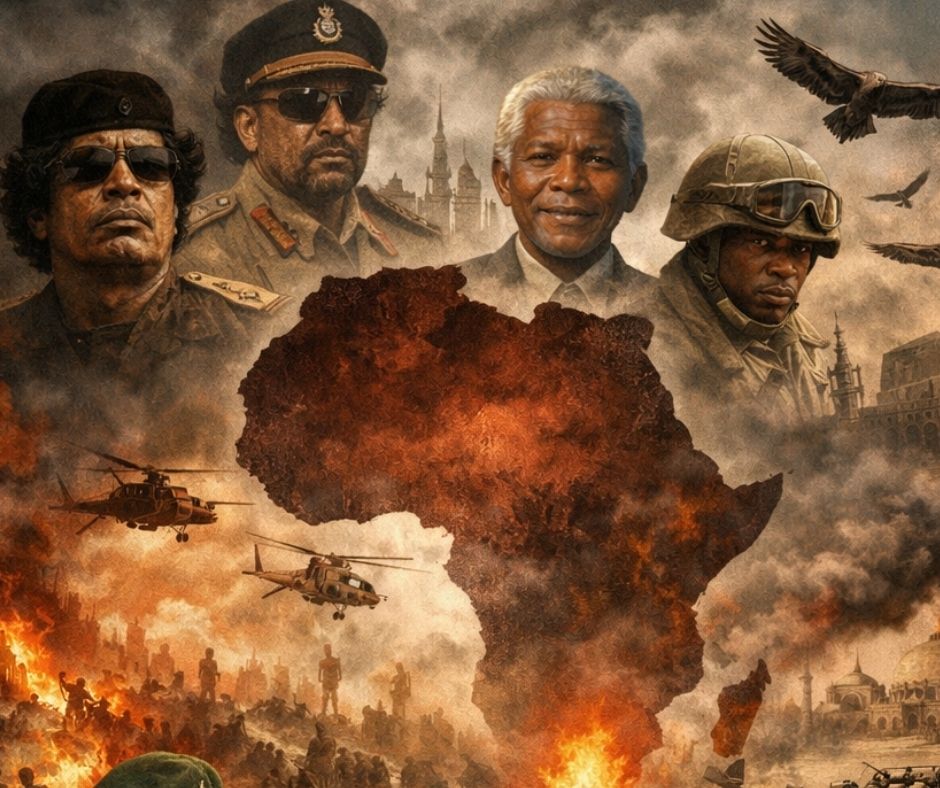
The narrative of Africa is often a dualism between immense potential and the devastating toll of systemic instability. While the continent moves toward integration, the scars of past and present hostilities remain a critical area of study for global analysts. Understanding these conflicts is essential to comprehending the current geopolitical landscape of the region.
Here is the list of the ten most intense and consequential conflicts in modern African history:
1. The Second Congo War (1998–2003)
Often referred to as “Africa’s World War,” this conflict involved nine African nations and approximately 20 armed groups. According to the International Rescue Committee (IRC), the war and its aftermath resulted in an estimated 5.4 million deaths, primarily due to disease and starvation. This conflict remains the deadliest global struggle since World War II, reshaping the power dynamics of Central Africa.
2. The Nigerian Civil War (1967–1970)
Also known as the Biafran War, this conflict was a pivotal moment in West African history. Human Rights Watch and various historical archives document the devastating blockade that led to a humanitarian catastrophe. Estimates suggest that between 1 million and 3 million people perished, most from famine, as the secessionist state of Biafra sought independence from Nigeria.
3. The Rwandan Genocide and Civil War (1994)
In a span of just 100 days, approximately 800,000 Tutsis and moderate Hutus were systematically murdered. The United Nations (UN) has extensively documented this tragedy, which was the culmination of a long-standing civil war. The genocide fundamentally altered the Great Lakes region and led to a complete restructuring of Rwandan society and military policy.
4. The Sudanese Civil Wars (1955–1972, 1983–2005)
Sudan endured decades of strife between the northern government and southern rebels. The Council on Foreign Relations (CFR) notes that the second civil war alone resulted in roughly 2 million deaths and the displacement of 4 million people. This protracted struggle ultimately led to the independence of South Sudan in 2011, though peace remains elusive in both nations.
5. The Ethiopian Civil War (1974–1991)
This conflict began with the overthrow of Emperor Haile Selassie and the rise of the Derg military junta. According to Amnesty International, the period known as the “Red Terror” and the subsequent insurgencies resulted in hundreds of thousands of deaths, compounded by the catastrophic famine of the mid-1980s that drew worldwide attention.
6. The Angolan Civil War (1975–2002)
Immediately following independence from Portugal, Angola became a Cold War proxy battleground. Reports from The Reuters Archive and historical analysts highlight how the involvement of the USSR, Cuba, South Africa, and the US fueled a 27-year war. An estimated 500,000 people died, and the country’s infrastructure was largely decimated by landmines and urban warfare.
7. The Sierra Leone Civil War (1991–2002)
Infamous for the trade in “blood diamonds,” this war was characterized by extreme brutality against civilians. The Special Court for Sierra Leone, backed by the UN, documented widespread atrocities, including the use of child soldiers. The conflict claimed over 50,000 lives and left a generation grappling with the psychological and physical scars of mutilation.
8. The Algerian War of Independence (1954–1962)
A seminal decolonization struggle, this war pitted the National Liberation Front (FLN) against French colonial rule. While figures vary, French and Algerian historians estimate that between 400,000 and 1.5 million Algerians lost their lives. This conflict served as a blueprint for revolutionary movements across the African continent.
9. The Libyan Civil War and its Aftermath (2011–Present)
The Arab Spring-inspired uprising against Muammar Gaddafi evolved into a fragmented and ongoing struggle. The International Crisis Group has detailed how the subsequent power vacuum turned Libya into a hub for regional instability and human trafficking. The conflict has had a profound “domino effect” on the security of the Sahel region.
10. The Tigray War (2020–2022)
One of the most intense recent conflicts, the war between the Ethiopian federal government and the Tigray People’s Liberation Front (TPLF) resulted in a massive humanitarian crisis. Researchers from Ghent University and other human rights monitors estimate the death toll—from combat, famine, and lack of healthcare—at several hundred thousand, marking it as one of the deadliest conflicts of the 21st century.
Read more
Will Africa Define the 21st Century? Here Are the Ten Pillars Shaping the Continent’s Future