The International Monetary Fund has disbursed about $33.2 million to Burkina Faso after completing the fourth review of the country’s Extended Credit Facility programme, signalling continued confidence in the fragile Sahel economy despite persistent security and humanitarian strains.
The Washington-based lender also approved a new Resilience and Sustainability Facility valued at roughly $124.3 million, which will run through September 2027 and focus heavily on climate adaptation and agricultural stability.
The latest payout follows the Fund’s review of the 48-month ECF arrangement first approved in September 2023. IMF officials said the economy has shown notable strength, largely driven by a sharp rise in global gold prices and by reforms in the mining sector championed by the government of Captain Ibrahim Traoré.
According to the Fund, the mining boom has transformed the country’s external position, shifting the current account from deficit to a projected surplus of 1.1 percent of GDP in 2025 and 0.8 percent in 2026
“Burkina Faso’s economy has proven resilient amid security and humanitarian challenges,” said Kenji Okamura, noting that improved governance measures and stronger domestic revenue mobilisation have helped create fiscal space while keeping inflation contained and debt on a sustainable path.
Beyond macroeconomic stability, the newly approved RSF aims to strengthen climate resilience in one of the world’s most climate-vulnerable regions.
With roughly 80 percent of the population dependent on subsistence farming, the funding is expected to support agricultural adaptation measures and improve disaster risk financing, reducing the country’s periodic reliance on emergency food imports.
However, the IMF signalled that governance reforms remain a work in progress. Authorities have completed six of eleven priority recommendations under the Governance Diagnostic Assessment, including steps to strengthen the integrity of mining licence procedures.
Looking ahead, the Fund projects economic growth of about 5 percent in 2026, although this outlook remains closely tied to improvements in the domestic security environment.
After several years of suspension, political parties in Burkina Faso have been formally dissolved by the military government, which has also seized all their assets in a move analysts say is a major blow for democracy in the West African nation.
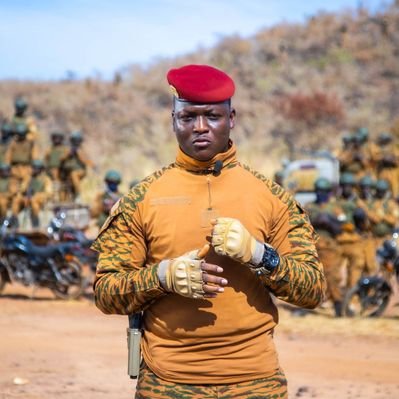
In a decree issued the government, led by Captain Ibrahim Traore, scrapped all laws which established and regulated political parties, accusing them of failing to comply with guidelines.
The troubled West African nation is struggling with violence from armed groups linked to ISIL (ISIS) and al-Qaeda. It is one of a growing number of West and Central African nations to have undergone coups in recent years.
Traore seized power in September 2022, eight months after an earlier military coup had already overthrown the democratically elected President Roch Marc Kabore.
Despite strong criticism by rights groups and opposition politicians of his authoritarian approach, 37-year-old Traore has successfully built up an online cult-like following among pan-Africanists, with many likening him to the late Burkinabe revolutionary leader, Thomas Sankara
Only African reps on (GPCI): Cairo and Johannesburg ranked among most powerful cities