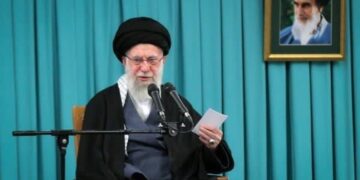
The recent escalation in the Middle East, culminated by the assassination of Iran’s Supreme Leader, Ayatollah Ali Khamenei, has sent shockwaves through the global diplomatic landscape. For the Kremlin, the event serves as a paradoxical milestone: it is simultaneously a devastating blow to President Vladimir Putin’s carefully constructed network of anti-Western alliances and a potential geopolitical windfall that could breathe new life into Russia’s flagging campaign in Ukraine
The Washington Post reports that while the immediate optics suggest a diminished Russian influence, senior strategists in Moscow are already weighing the “war dividends” of a prolonged American entanglement in the region. The newspaper noted that the strike on Iran is merely the latest in a series of setbacks for Putin, who has watched idly over the past 15 months as three of his primary regional anchors—in Syria, Venezuela, and now Iran—were dismantled, the latter two by direct U.S. military or political intervention.
The newspaper highlighted a growing sense of vulnerability among Russia’s partners. For years, Putin positioned Russia as a reliable “security guarantor” for regimes resisting Western pressure. However, the inability of Moscow to intercept or even substantively deter the U.S. campaign against Tehran has exposed the physical limits of Russian power. The Post pointed out that this perceived weakness is causing ripples in the Caucasus and Central Asia, where former Soviet republics are increasingly looking toward Turkey, China, or the European Union for more credible security arrangements.
“It is clear that Russia and China were not able to do anything to protect their most vital ideological ally in the Gulf,” a Russian academic close to senior diplomats told The Washington Post on the condition of anonymity. The newspaper hinted that this failure might fundamentally alter Moscow’s bargaining chips with other global partners who now view the Russian “security umbrella” as largely decorative in the face of advanced U.S. kinetic capabilities.
Despite the strategic dismay, The Washington Post emphasized that the Kremlin sees a silver lining. As the war in Ukraine enters its fifth grueling year, Russia’s primary objective is to sap Western resolve and divert military resources away from Kyiv. The newspaper suggested that a protracted U.S. campaign in the Middle East would inevitably force Washington to prioritize the Strait of Hormuz over the Donbas.
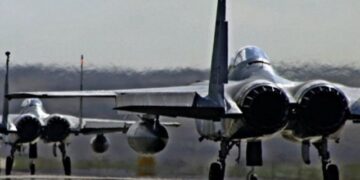
The Post alerted its readers to the fact that critical weapon systems, particularly sophisticated air defense units and long-range surveillance assets, could be rerouted to the Middle East. For the government in Kyiv, which faces nightly barrages of Russian drones and missiles, this diversion could be catastrophic. Analysts remarked that Putin is banking on a “bandwidth crisis” in the West, where European allies, already fatigued by the economic toll of the Ukrainian conflict, would be unable to fill the void left by a distracted United States.
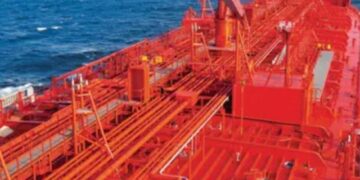
Perhaps the most immediate benefit for Moscow lies in the global energy market. The Washington Post shone a light on the surging oil prices following retaliatory strikes on refineries in the Persian Gulf. For a Russian wartime budget under severe strain from Western sanctions, $100-per-barrel oil is not just a preference—it is a lifeline.
The newspaper added that Kirill Dmitriev, the Kremlin’s special economic envoy, has already begun leveraging these rising prices. In a bold move, Putin recently threatened to reroute gas supplies entirely away from Europe, capitalizing on the volatility. The Post warned that while a blockade of the Strait of Hormuz would cripple Western economies, Russia’s energy exports to China and India would likely remain insulated, providing Moscow with a massive competitive advantage in the global South.
Beyond the economics, The Washington Post discussed the psychological impact of the assassination on the Russian leadership. The newspaper underlined that Putin has long been haunted by the fate of authoritarian leaders like Moammar Gaddafi. The precision with which the U.S. removed the Iranian leadership is a “chilling reminder” of the changing international norms regarding state-sponsored eliminations.
However, analysts cited by The Post believe that Putin relies on Russia’s status as a nuclear superpower as his “ultimate insurance policy.” Unlike Tehran or Caracas, Moscow possesses the means for global escalation, which the Kremlin believes will prevent a “regime change” scenario from ever being exported to Russian soil.
In the wake of the strikes, the newspaper observed Putin’s flurry of diplomatic activity, including calls to Bahrain and Qatar. The Washington Post analyzed this as an attempt by Russia to position itself as the only remaining bridge between the West and the remnants of the Iranian leadership. Yet, as the newspaper concluded, this role is largely performative. With its resources tied down in Ukraine and its credibility as a protector shattered, Russia remains a diminished player—hopeful for a long war in the Middle East to save its own failing campaign in Europe, but increasingly unable to dictate the terms of the peace.
On the Political and Economic Repercussions of a U.S. / Israeli War on Iran