Jomo Kenyatta emerged as a pivotal figure in the African liberation struggle, transitioning from a political martyr in colonial prisons to the formidable founding father of the Kenyan Republic. By eschewing radical nationalization in favor of a free-market doctrine and his signature Harambee philosophy, he orchestrated a stable, pro-Western state that became an economic zenith in the region. His legacy is defined by a meticulous effort to dismantle racial segregation and foster a unified national identity, bolstered by strategic historical alliances—most notably with Egypt—which served as a catalyst for Kenya’s military and diplomatic sovereignty.
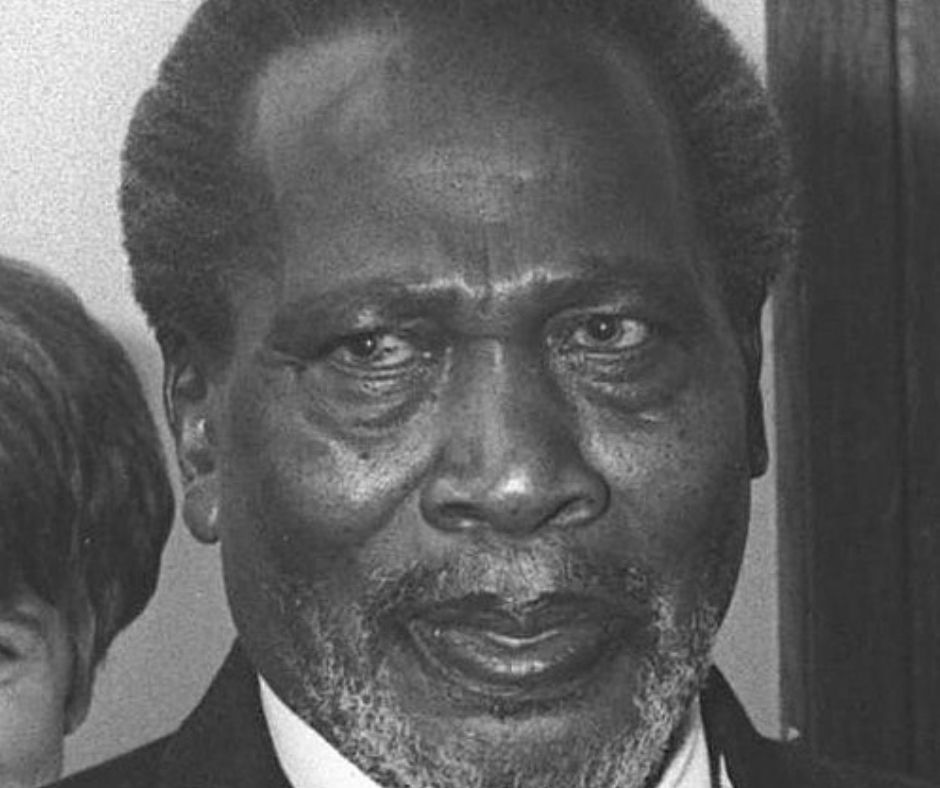
Jomo Kenyatta (20 October 1894 – 22 August 1978), original name Kamau Ngengi, was a Kenyan anti-colonial activist and politician who governed Kenya as its first President from 1963 to his death in 1978. He was the country’s first president and played a significant role in the transformation of Kenya from a colony of the British Empire into an independent republic.
Early life
Kenyatta was born as Kamau, son of Ngengi, at Ichaweri, southwest of Mount Kenya in the East African highlands. His father was a leader of a small Kikuyu agricultural settlement.
Kamau ran away from home to become a resident pupil at the Church of Scotland mission. He studied the Bible, English, mathematics, and carpentry and paid his fees by working as a houseboy and cook for a European settler.
Career
Kenyatta worked as editor of the Kikuyu Central Association (KCA) journal between 1924 and 1929, and by 1928 he had become the KCA’s general secretary. In 1929, he travelled to London to lobby for Kikuyu land affairs.
Kenyatta returned to Kenya in September 1946 to take up leadership of the newly formed Kenya African Union, of which he was elected president in June 1947. From the Kenya African Teachers College, which he directed as an alternative to government educational institutions, Kenyatta organized a mass nationalist party.
In October 1952, Kenyatta was arrested and driven to Nairobi, where he was taken aboard a plane and flown to Lokitaung, northwest Kenya, one of the most remote locations in the country. Eventually, they charged him and five senior KAU members with masterminding the Mau Mau, a proscribed group. The Judge sentenced them to seven years’ hard labour, to be followed by indefinite restriction preventing them from leaving a given area without permission.
Kenyatta’s imprisonment transformed him into a political martyr for many Kenyans, further enhancing his status.
Kenyatta was released in August 1961, and, at the London Conference early in 1962, he negotiated the constitutional terms leading to Kenya’s independence.
Kenyatta became the first president of Kenya under a new constitutional amendment. In this office he headed a strong central government, and successive constitutional amendments increased his authority. Kenyatta early on rejected socialist calls for the nationalization of property and instead preached a doctrine of personal and entrepreneurial effort, symbolized by his slogan “Harambee,” or “Pulling together.” Besides relying heavily on a free-market economy, he encouraged foreign investment from Western and other countries.
In foreign policy, Kenyatta’s government was consistently friendly toward the West. Always—in spite of his imprisonment by the British authorities—one of the more pro-British of African leaders, Kenyatta made Kenya the most stable black African country and one of the most economically dynamic.
Political Relations with Egypt
The relations between Egypt and Kenya started prior to Kenya’s independence when Egypt, under late President Gamal Abdel Nasser, supported the “Mau Mau” Uprising of Kenya via an intensified diplomatic and media campaign against the British occupation of Kenya. Egypt, therefore, established a radio station to support the Kenyan people in their struggle for liberation. The “Voice of Africa” was the first ever Kiswahili-based radio station that was broadcast from an African nation “Egypt” to support Kenya get independence.
Egypt made the “Mau Mau Uprising” an African cause and sought to secure the release of Kenyan leader Jomo Kenyatta who was detained by authorities of the British occupation in 1961. Cairo was the first capital to host Kenyan liberation fighters, providing them with all possible aid to activate their movement inside Kenya. Those national leaders included: Oginga Odinga, Tom Mboya, James Gichuru, Joseph Murumbi, among others, as well as members of the Kenya African National Union (KANU) and the Kenya African Democratic Union (KADU) as both parties opened offices in Cairo during that time. Egypt’s efforts in support of the Kenyan liberation march resulted in Kenya’s independence in 1963.
In 1964, Kenya became a republic and began diplomatic ties with Egypt, opening an embassy in Cairo. Receiving credentials of the first ambassador of Kenya to Egypt, late President Nasser showed admiration of the struggle of the people of Kenya for freedom and independence led by Jomo Kenyatta who became the first president of the country. Late President Nasser expressed Egypt’s willingness to fully cooperate with Kenya and other African countries to promote Africa’s power and develop the Continent’s resources, contributing to boosting its unity.
In 1964, Egypt hosted the Second Conference of the now-defunct Organization of African Unity, and on the sidelines of the Conference, President Gamal Abdel Nasser reiterated Egypt’s willingness to promote military cooperation with Kenya. Late President Jomo Kenyatta said he would like to rid of the British forces stationed in Kenya, asking for Egypt’s assistance towards building the national army of Kenya. In truth, President Nasser assigned then Minister of Information Mohamed Fayek to travel to Nairobi, the Kenyan capital, and during the visit, an agreement was reached on training of parachute battalion and dispatching Egyptian experts into Kenya for training of Kenyan army, after ridding of the English officers, in addition to dispatching Kenyan officers for training in Egypt.
In 1967, Egypt and Kenya co-implemented the Hydromel Project which aimed to study the metrology and water situation of the Nile Equatorial Lakes Basin, design plans for water resources’ development, and study the Nile water balance. In accordance with the project, stations were established in major lakes, including Lake Victoria, Lake Albert, and Lake Kyoga. The project was funded by donor countries, the United Nations Development Program (UNDP) and the World Meteorological Organization (WMO).
Kenyatta’s Presidential Accomplishments
Kenyatta’s goal was to quickly bring all races together in the country. He abolished racial segregation in social clubs and schools. He worked hard to create a Kenyan national culture and identity. And although English was the official language in government, Swahili remained as the preferred language among Kenyans.
Unlike many of his contemporaries and nationalists in other African countries, Kenyatta chose not to immediately expel foreigners’. As a matter of fact, he even offered them the opportunity to become citizens of Kenya. By so doing, Kenya became one of the most attractive spots in Africa for foreign direct investment. The revenues generated from such schemes were pumped into free basic education and universal health care for children.
Read more
Heavy Rainfall and Flooding Claim Lives and Ground Aviation in Kenya