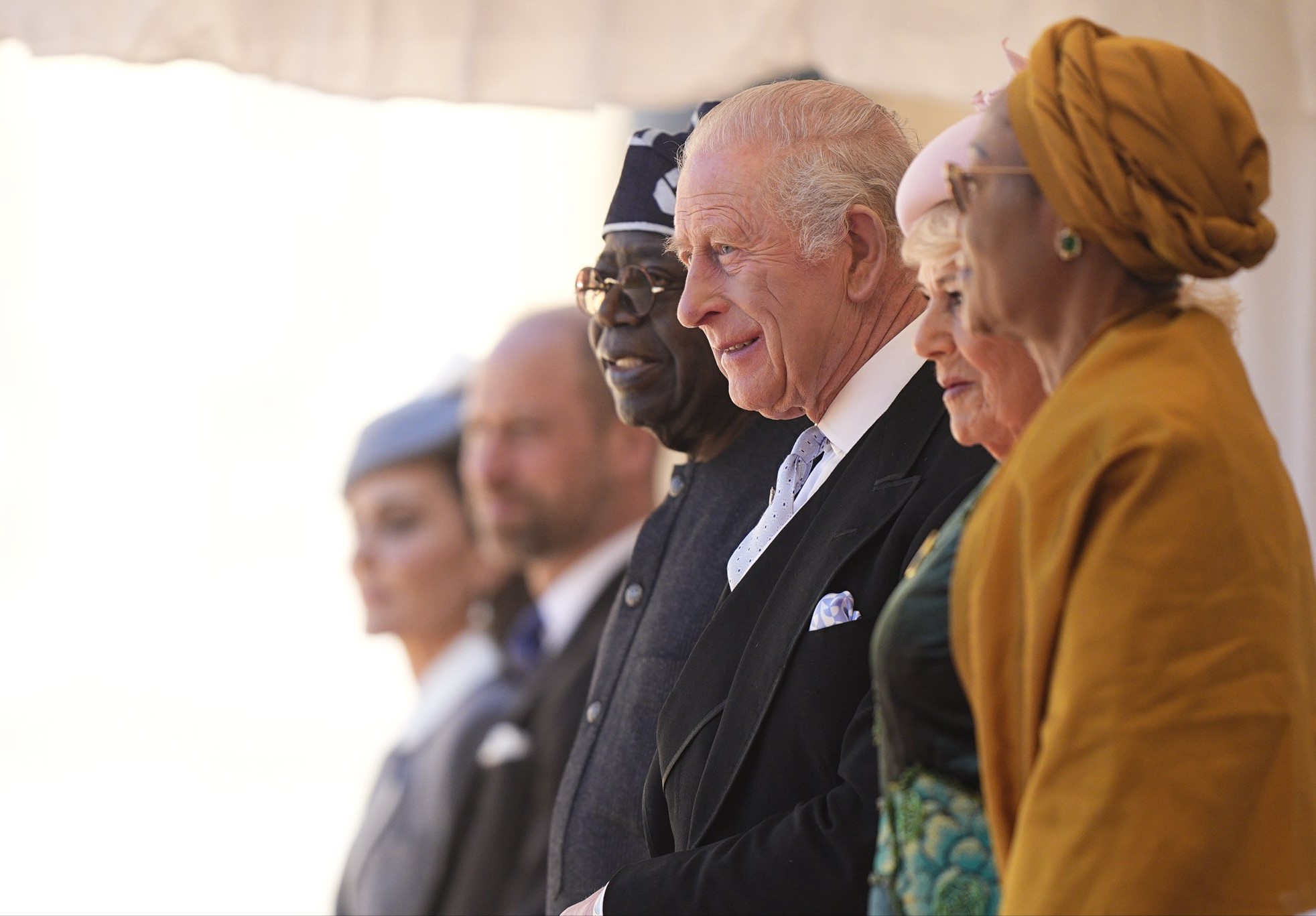
King Charles III hosted Nigerian President Bola Ahmed Tinubu at Windsor Castle on Wednesday, marking the first state visit by a Nigerian leader to the United Kingdom in 37 years. This high-profile diplomatic encounter aims to cement bilateral ties at a time when trade between the two nations has reached record highs. The visit, characterized by full ceremonial honors, underscores Britain’s strategic ambition to remain a global hub for African business and to reinforce its “Growth Mission” through strengthened partnerships with the continent’s largest economies.
The visit began with a formal reception by the Prince and Princess of Wales, followed by a grand carriage procession and a royal salute. Despite his ongoing cancer treatment, King Charles has maintained a rigorous diplomatic schedule, welcoming several world leaders over the past nine months. The presence of President Tinubu in London is particularly significant given the massive Nigerian diaspora in the UK, which now exceeds 300,000 people. This cultural bridge is exemplified by figures like Kemi Badenoch, the first Black woman to lead a major British political party, whose Nigerian heritage highlights the deep, intertwined roots of the two nations.
A unique aspect of this state visit is its timing during the holy month of Ramadan. As a practicing Muslim, President Tinubu is currently fasting, leading to a break from traditional protocol as the customary royal lunch was omitted from the schedule. However, the spiritual and cultural exchange continues as the President’s wife, Oluremi Tinubu, a Christian, is set to visit Lambeth Palace to meet with the Archbishop of Canterbury. This blend of faiths within the Nigerian leadership reflects the diverse social fabric that both London and Abuja are keen to celebrate.
Beyond the pageantry, the British government, led by Deputy Prime Minister David Lammy, is focusing on the “Active Sovereignty” of this partnership. The UK is positioning itself as the primary destination for African investment and innovation, using this visit to signal that Nigeria remains its most vital strategic ally in West Africa. As the two-day visit unfolds with a state banquet at Windsor, the underlying message is clear: the relationship is no longer just about historical ties, but about a shared economic future in an increasingly competitive global landscape.
read more