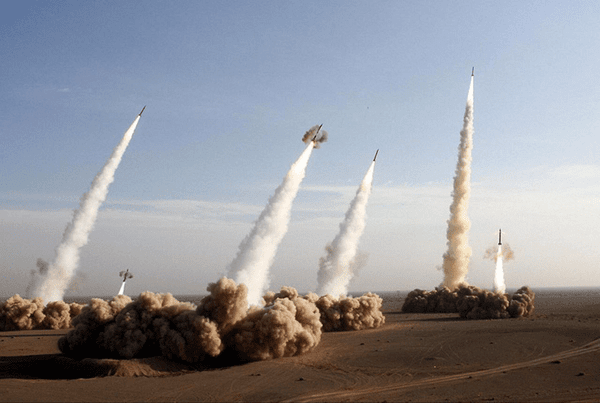
In a dramatic escalation that has sent shockwaves across the Middle East, the United States and Israel launched a coordinated strike on Iran’s Natanz nuclear facility this Saturday. The site, located roughly 220 kilometers southeast of Tehran, stands as the central pillar of Iran’s atomic ambitions. While initial technical assessments from the Atomic Energy Organization of Iran suggest no immediate radioactive leakage or danger to nearby residents, the strike marks a perilous threshold in a conflict that increasingly targets the very “Logos” of regional power.
The International Atomic Energy Agency (IAEA) is currently investigating the extent of the impact. Director General Rafael Grossi has issued an urgent plea for military restraint, warning that any miscalculation involving nuclear infrastructure carries a risk of catastrophic proportions. For the people living in the shadow of Natanz, this is not just a military headline; it is a profound social anxiety—a fear of an invisible “veil of blindness” that could be cast by environmental contamination.
This is not the first time Natanz has been caught in the crossfire. Earlier in this twelve-day war, several buildings at the complex were hit, and past incursions have targeted Fordo and Isfahan. Despite claims from the Trump administration that the program had been “totally obliterated,” the persistence of these strikes suggests a cycle of conflict that refuses to be extinguished.
Beyond the aerial bombardment, a more clandestine social and military drama is unfolding. Reports suggest the Trump administration is currently strategizing options to physically seize Iran’s enriched uranium. This potential mission, involving the secretive Joint Special Operations Command, represents a high-stakes gamble in counter-proliferation.
One source noted that while no final decision has been made, the planning centers on an elite military intervention to extract nuclear materials. For the global community, this move introduces a terrifying uncertainty: a shift from containment to active seizure, which could rewrite the laws of international engagement and social stability for decades to come.
While President Trump took to Truth Social to claim that military objectives are nearing completion and a “winding down” is in sight, the reality on the ground tells a different story. The administration is currently requesting an additional $200 billion from Congress to sustain the war effort, while simultaneously bolstering its firepower.
Associated Press reports confirm the deployment of three additional amphibious assault ships and roughly 2,500 Marines to the region, joining over 50,000 troops already stationed across the Middle East. This surge in military presence stands in stark contrast to the rhetoric of peace, creating a social climate of intense apprehension as the region braces for the next move in this nuclear chess game.
As the UN watchdog monitors the projectile impacts at the Bushehr Nuclear Power Plant and the ruins of Natanz, the world waits in a state of “restless vigil.” The social fabric of the Middle East is being stretched to its breaking point, with death and destruction climbing fast. In this environment, the search for truth becomes as difficult as the search for safety.
read more
Israel Eyes Strategic Base in Somaliland to Outflank Iranian Proxies