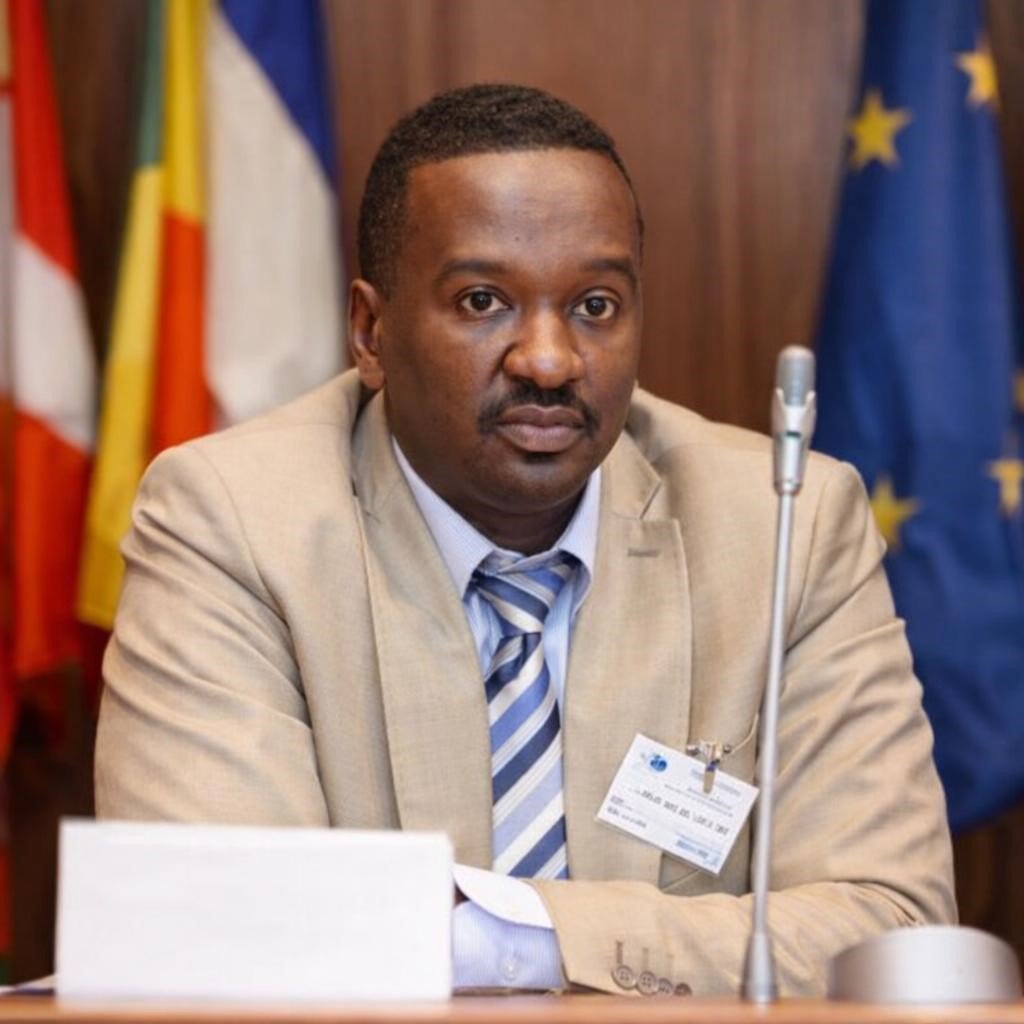
By – Dr. Abdelnasser Solum Hamed
In internal wars, the central dispute is rarely about stopping the fighting itself; it is about defining the kind of peace that follows. Will it be a peace that preserves the state and addresses the root causes of violence, or a truce that transforms the country into an entity permanently governed through crisis management? From this perspective, the article by General Abdel Fattah al-Burhan, published on the Turkish platform Almanac Diplomatique, cannot be read as a conventional negotiating position, nor as a situational political message directed outward. Rather, it constitutes a political intervention aimed at redefining the very terms of the war–peace debate before engaging in any settlement.
The article does not begin with the question, “How do we stop the fighting?” but with a more profound and consequential one: how can the normalization—and international accommodation—of fragmentation be prevented? By reframing the issue in this manner, the discussion shifts from immediate humanitarian measures to a deeper debate over the nature of the state, the boundaries of legitimacy, and the meaning of peace in a context defined by dual power.
At its core, the article rests on a clear foundational premise: Sudan’s crisis is not a political contest between rival actors, but a crisis of sovereignty produced by the existence of an armed force operating outside the state’s chain of command. This analytical framing sharply constrains the range of viable solutions. Once the war is defined as a sovereignty crisis, peace ceases to be an agreement between equivalent parties and instead becomes a process of re-unifying decision-making authority and restoring the state’s monopoly over the use of force.
Within this framework, the article fundamentally reinterprets the concept of a ceasefire. In dominant humanitarian approaches, a truce is often portrayed as a neutral suspension of violence that opens space for political dialogue. By contrast, the article treats a ceasefire as a non-neutral political instrument—one that redistributes time, space, and resources. Under conditions of dual power, an unconstrained truce does not resolve the conflict; it freezes it, transforming open confrontation into a managed conflict that enables repositioning and the consolidation of control within civilian spaces.
In this sense, the article approaches ceasefires through the lens of conflict management rather than conflict resolution. It warns that an unconditioned truce may generate an illusion of stability—temporarily reducing violence while preserving its structural causes and deferring its eruption to a later, more complex phase. This argument does not minimize the humanitarian cost of continued violence; rather, it questions whether short-term relief achieved through unconstrained truces ultimately multiplies civilian suffering by entrenching the very conditions that reproduce war.
Accordingly, skepticism toward a ceasefire should not be interpreted as a rejection of peace, but as a structural objection to a truce that risks legalizing duality rather than ending it. This explains why demands for withdrawal from civilian areas, force regrouping, and the removal of heavy combat capabilities are framed not as negotiable bargaining positions, but as practical indicators of restored state authority. Their deeper political function is to prevent what may be described as functional recognition—the gradual normalization that occurs when an armed actor is treated as a de facto authority within cities, even in the absence of formal acknowledgment.
At the heart of the article lies the insistence that a ceasefire is not an end in itself, but a tool whose legitimacy depends on its ability to correct the structural imbalance that produced the war. The central question, therefore, is not the timing of a truce, but its political function: does it rebuild the state’s center of authority, or does it entrench dual power under humanitarian cover? In this regard, the article cautions that an unconstrained truce may inadvertently evolve into a mechanism for normalizing de facto authorities—through joint management of civilian spaces, gradual administrative normalization, and eventual political codification.
Comparable experiences—from Lebanon’s post–civil war entrenched armed duality to Libya’s fragmented governance after 2011—demonstrate that ceasefires which fail to dismantle parallel centers of coercive power rarely produce stability. Instead, they institutionalize managed instability, trading the appearance of calm for the long-term erosion of state authority. In each case, the failure to dismantle parallel coercive structures transformed peace from a solution into a governing illusion.
This approach does not reject peace; it redefines it as a process aimed at dismantling the causes of violence rather than merely suspending its consequences. It places the international community before a practical test: any initiative that fails to alter the architecture of control on the ground or to end duality within cities and institutions does not prevent conflict—it manages and postpones it.
Implicitly, and without direct attribution, the article suggests that certain international approaches have objectively contributed to prolonging the war. The insistence on unconstrained ceasefires, coupled with tolerance for the absence of withdrawal and regrouping, has generated negative incentives that favor conflict management over conflict resolution. While such truces may temporarily reduce violence, they transform time into a pressure factor on the state rather than on the armed actor operating outside it.
In this sense, the article is not a defense of a particular institution, but of a foundational principle of state-building: sustainable stability cannot exist under conditions of dual power. However rigid this principle may appear, historical experience repeatedly demonstrates that its neglect produces weakened, negotiative states trapped in temporary settlements and incapable of enforcing the rule of law. Peace, in this conception, is not a declaration but an exercise in institutional engineering that begins with rebuilding the center.
From a negotiation perspective, the article also redefines both the point of departure and the scope of bargaining. Instead of asking, “When do we stop the fighting?” it asks, “How do we stop it without legalizing fragmentation?” This shift redistributes pressure onto mediators and compels initiatives to demonstrate that they do not reproduce duality under humanitarian rhetoric.
It also recalibrates sovereignty from a rhetorical slogan into a practical criterion of evaluation: does the initiative strengthen the state or weaken it? Does it unify authority or fragment it? Sovereignty, in this sense, becomes a benchmark rather than a pretext for obstruction.
The choice of a Turkish platform for publication is no less significant than the article’s substance. The forum itself forms part of the message, signaling a diversification of recognition channels and an effort to cultivate a broader audience for an approach grounded in the belief that stability is not achieved by balancing chaos and order, but by decisively tipping the scales in favor of the state.
In the background of the article lies a cautionary awareness of past settlements that exchanged an end to violence for the legitimation of dual power, only to reproduce war in different forms. These experiences are not explicitly invoked, but they operate as a political memory that constrains the present and instills skepticism toward solutions that appear pragmatically appealing in the short term yet prove strategically costly once institutionalized.
Time remains the most formidable challenge. Conditioning a ceasefire on dismantling parallel power structures entails betting on a window of decisive action within an environment of attrition. Yet the article consciously embraces this wager, grounded in the conviction that the cost of disciplined delay is lower than that of a gray settlement that merely postpones an inevitable explosion.
Notably, the article deliberately refrains from outlining the post-war phase. It offers no detailed roadmap for political transition. This absence reflects a deliberate prioritization rather than an omission: there can be no politics without a state, and no transition without a center capable of enforcing the law.
Ultimately, the article does not pose a choice between war and peace, but between two models of the state: one that negotiates its sovereignty in the name of realism, and another that reconstructs its authority in order to make peace sustainable. In Sudan, the question is no longer whether to stop the war, but whether peace will rebuild the state—or quietly legitimize its disintegration under the name of realism.
The article does not advocate the continuation of war; it calls for a peace that does not reproduce war in a deferred form.
And the overarching sovereign question remains: can sustainable peace be built in a state governed by a balance of dual power, or will any settlement that fails to restore a unified center of authority remain nothing more than a temporary truce that merely postpones the inevitable rupture?
- Dr. Abdelnasser Solum Hamed
Senior Researcher & Director, Sudan & East Africa Program – FOXS Sweden
Senior Researcher in Crisis Management and Counter-Terrorism