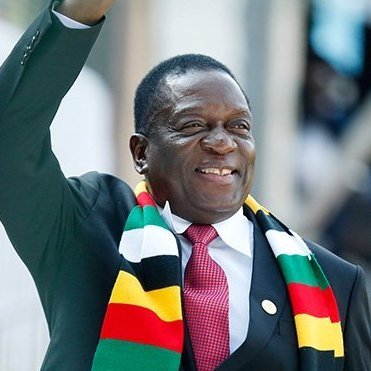
Zimbabwe’s cabinet recently gave its approval to draft legislation that aims to amend the constitution, potentially returning the country’s political situation to a familiar, concerning trajectory.
Zimbabwe’s cabinet has approved draft legislation proposing to amend the constitution.
The amendment seeks to extend the presidential term from five years to seven and to shift the presidential election process to parliamentary voting.
These changes could potentially allow current President Emmerson Mnangagwa to remain in power until 2030.
The proposed legislation has sparked debates regarding its implications for Zimbabwe’s democratic principles.
The proposed change is intended to extend the presidential term from five years to seven, allowing President Emmerson Mnangagwa to continue in power until 2030, as opposed to 2028.
Justice Minister Ziyambi Ziyambi, during a press briefing, stated that the bill would now be sent to the Speaker of Parliament and published in the official gazette before parliamentarians begin formal discussion.
In addition to prolonging presidential terms, the proposed legislation also suggests a substantial change in how Zimbabwe elects its president, as seen on Reuters.
Under the new rule, the president would be elected by parliament rather than by public vote.
The development comes amid an increasing succession fight within the governing ZANU-PF party over who should succeed Mnangagwa when his term finishes.
In January 2025, reports suggested that both a ZANU-PF legislator and an opposition Member of Parliament were prepared to present a resolution to change the constitution to prolong Mnangagwa’s tenure.
The current drive looks to represent a significant shift in a long-running debate.
The Zimbabwean leader explicitly distanced himself from politicians demanding indefinite power in October 2024, emphasizing his support for Zimbabwe’s two-term constitutional limit.
Mnangagwa won his second term in August 2023, when election authorities said he had won 52.6% of the vote, beating opposition leader Nelson Chamisa, who received 44%, according to official Zimbabwe Electoral Commission data.
However, the opposition challenged the results, and foreign observers concluded the vote fell short of democratic norms.
Back in 2017, former president of the Southern African country, Robert Mugabe, let go of Emmerson Mnangagwa, who at the time was the vice president of the country.
Born in 1942, Zimbabwe’s current president, Emmerson Mnangagwa, took office in 2017, after the debacle with Robert Mugabe and a subsequent coup.
He replaced controversial President Robert Mugabe, who had reigned for 40 years and refused to vacate his position.