The persistent shadow of political violence in the Horn of Africa reached a critical flashpoint as Somali President Hassan Sheikh Mohamud narrowly escaped a targeted mortar attack in the southern city of Baidoa.
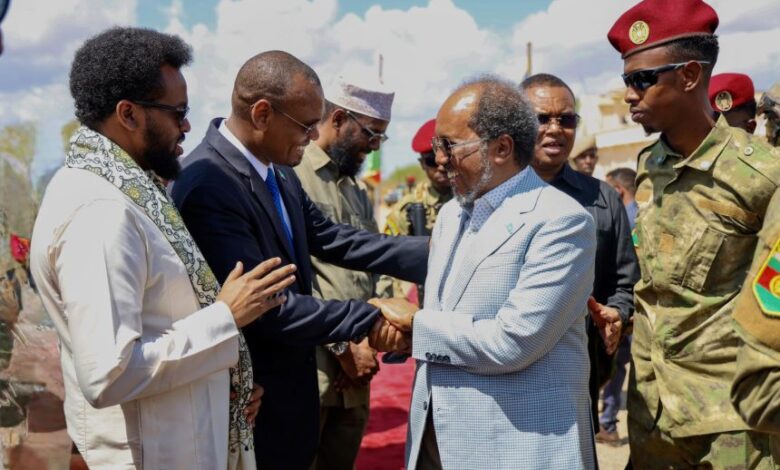
According to Official Police Statements and Somali Government Spokespeople, a barrage of shells was launched shortly after the President alighted from his aircraft, just as he began greeting army units and high-ranking dignitaries.
While the President and his entourage remained unharmed, the brazen nature of the assault—reported by Reuters and local outlets—underscores the volatile security landscape that continues to challenge Somalia’s federal authority.
This latest incident is not an isolated event but rather the latest chapter in a long history of targeted hostility against Mohamud.
Since his first term began in 2012, Hassan Sheikh Mohamud has survived several sophisticated assassination attempts, primarily attributed by National Security Intelligence to the Al-Shabaab militant group.
In September 2012, just two days after his initial election, suicide bombers struck the Jazeera Palace Hotel in Mogadishu while the President was holding a press conference.
Historical Archives from Al Jazeera and the BBC document how Mohamud remained unperturbed, continuing his address even as explosions rocked the building—a moment that defined his early reputation for stoic resilience.
The pattern of violence continued into his subsequent years in power. In February 2015, a massive attack on the Central Hotel in Mogadishu targeted a gathering of senior government officials; although the President was not present, UN Security Reports categorized the strike as a direct message to his administration.
Furthermore, throughout 2022 and 2023, following his reelection, the Somali National Intelligence and Security Agency thwarted multiple plots involving improvised explosive devices and sniper ambushes during his regional tours, particularly in areas like Baidoa and Kismayo, which remain strategic hubs in the fight against insurgency.
The 2026 mortar attack in Baidoa highlights what military analysts from the African Union describe as a shift in militant tactics toward standoff attacks—using long-range projectiles to strike high-security zones.
As the President continues his mission to stabilize the federal state and integrate regional army units, these attempts on his life are seen by analysts as desperate efforts to derail Somalia’s fragile democratic progress. Despite the repeated peril, the administration’s response, as noted in recent Villa Somalia communiqués, remains focused on security sector reform, signaling that such acts of terror will not dictate the nation’s political trajectory.
Read more
The Stalled Pulse of Mogadishu: How the Strait of Hormuz Crisis is Paralyzing Somalia’s Lifeline