In the sprawling expanse of the African continent, the United States maintains a complex and often reticent military presence. Under the aegis of the United States Africa Command (AFRICOM), the American military apparatus has evolved from an exiguous concern into a pivotal pillar of its global security architecture. As of March 2026, this influence is being redefined not by permanent mass, but by nimble and technologically superior engagement.
The Geography of Influence: From Djibouti to the Coastal Pivot
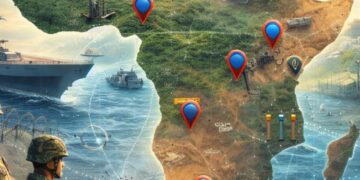
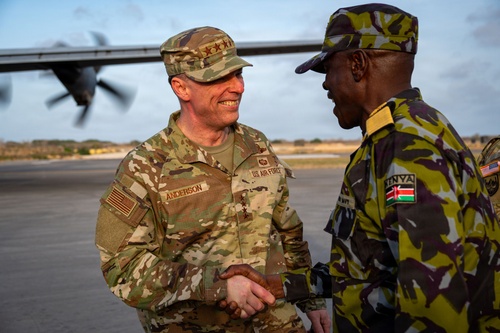
At the heart of the American military presence remains Camp Lemonnier in Djibouti. This is the only perennial U.S. base on the continent, acting as a crown jewel for surveillance. Strategically positioned at the Bab al-Mandab Strait, it serves as the nerve center for the recently concluded Exercise Justified Accord 26 (February 2026). This multinational maneuver, involving 1,500 personnel across Kenya, Djibouti, and Tanzania, underscores Washington’s commitment to burden-sharing with African partners to ensure a state of constant alacrity.
However, the map of influence has shifted significantly since the 2024 withdrawal from Niger. With the loss of Air Base 201 in Agadez, the U.S. has pivoted toward Coastal West Africa. Strategic outposts in Ghana and Côte d’Ivoire now serve as the new frontier against the creeping expansion of Sahelian instability. This recalibration will be further solidified in the upcoming Exercise Flintlock (April 2026), hosted in Abidjan, which aims to harmonize unconventional warfare tactics across 30 nations.
The Mission: Beyond the Kinetic
The tasks performed by U.S. forces in Africa are multifarious, extending far beyond direct combat. The American military mission in Africa is built on three main pillars:
1. Counter-Terrorism and Degradation
The paramount mission remains the containment of violent extremist organizations (VEOs). According to AFRICOM Official Press Releases (Feb 2026), the U.S. continues to execute incisive over-the-horizon strikes against ISIS-Somalia and Al-Shabaab. These operations, particularly in the Golis Mountains, demonstrate a persistent ability to curtail extremist reach without a massive troop presence.
2. Capacity Building and Maritime Security
A significant portion of AFRICOM’s energy is spent on Security Force Assistance. A prime example is the Cutlass Express 26 exercise conducted in February 2026 off the coast of Seychelles. This mission integrated the first use of the “Lightfish” unmanned surface vessel, training African navies to use autonomous technology to protect their territorial waters from piracy and illegal fishing.
3. Humanitarian Assistance and Disaster Relief
The U.S. military provides indispensable logistical support during health crises. These “soft power” missions are intended to build an enduring rapport with the African populace, acting as a buffer against the influence of rival powers.
Strategic Rivalries: The Shadow of Great Power Competition
In the current 2026 geopolitical climate, the mission is increasingly viewed through the lens of competition with Russia’s “Africa Corps” and Chinese maritime ambitions. The U.S. seeks to present itself as the partner of choice—offering a relationship based on transparency rather than rapacious lending or authoritarian stability.
Read more:
Militarization of Africa: A Deep-Dive into the Global Strategic Scramble