The Architect of Absolute Power: How Gnassingbé Purged His Inner Circle to Rule Togo Indefinitely

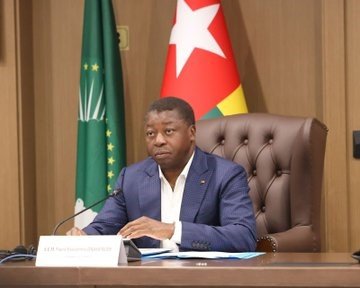
President Faure Gnassingbé has successfully executed a silent “institutional coup” in Togo, dismantling the traditional power structures of his 19-year reign to consolidate absolute executive authority.
By rewriting the constitution to transition from a presidential to a parliamentary system—appointing himself as the “President of the Council of Ministers”—Gnassingbé has effectively bypassed term limits and reshuffled his inner circle, sidelining old-guard loyalists in favor of a technocratic and military elite.
This strategic recalibration not only secures his family’s 57-year dynasty but also insulates the regime from both domestic opposition and regional democratic pressures, marking a new era of “hyper-personalized” governance in West Africa.
The Constitutional Pivot
The core of the reshuffling lies in the 2024/2025 constitutional overhaul. By becoming the “President of the Council of Ministers,” Gnassingbé is no longer subject to direct universal suffrage or traditional presidential term limits. All executive power now flows through this new office.
Dismantling the “Old Guard”
The report highlights how the President has moved away from the “Barons” of the ruling UNIR party—those who served his father, Eyadéma Gnassingbé. This shift minimizes the influence of traditional power brokers who might challenge his decisions.
The Rise of the Technocrats
Gnassingbé has populated his new inner circle with young, loyal technocrats and experts who prioritize economic reforms (such as port expansion and phosphate production) and “business-friendly” governance to maintain favor with international lenders like the IMF.
Military Integration
Despite “demilitarizing” the public face of politics, the military remains the ultimate guarantor of his power. The reshuffle has seen a strategic rotation of military commanders to ensure no single general becomes powerful enough to stage a coup, while aligning Togo closer to new security partners like Russia.
Strategic Autonomy
The “inner circle” is now designed to navigate a “transactional world.” This includes diversifying alliances (moving toward Russia and the US simultaneously) to ensure the regime’s survival regardless of Western pressure regarding human rights or democratic backsliding.
Suppression of Dissent
The new inner circle has overseen a strict crackdown on the opposition, using judicial power and state detention to fragment critics, making large-scale protests (like those of 2017) increasingly difficult to organize.