The Caracas Incursion: Trump Signals a New Era of Unilateralism in Latin America , new York times , goes deep

NEW YORK — In an extraordinary escalation of American foreign policy, President Donald Trump confirmed in an exclusive interview with The New York Times that U.S. special operations forces successfully captured Venezuelan President Nicolás Maduro and his wife, Cilia Flores, during a massive military incursion on January 3, 2026.
The operation, which involved over 150 aircraft and precision airstrikes across Caracas, has fundamentally altered the geopolitical landscape of the Western Hemisphere, marking the most significant U.S. military intervention in Latin America since the 1989 invasion of Panama.
According to The New York Times, the operation targeted key military installations, including the La Carlota Airport and the legislative building in Caracas.
Eyewitness accounts and verified footage described a city under siege, with thick plumes of smoke rising from government compounds as U.S. forces executed a “surgical” strike to seize the Venezuelan leadership. While President Trump hailed the mission as a “brilliant operation” conducted by “great troops,” the human cost has drawn immediate international scrutiny.
Citing anonymous senior Venezuelan officials, the Times reported that at least 40 people, including civilians and military personnel, were killed during the raids.
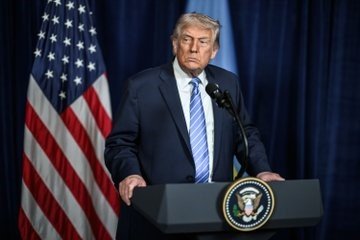
Speaking to reporters aboard Air Force One, President Trump justified the action by describing Venezuela as a “sick neighbor” that required urgent intervention to prevent regional contagion.
He explicitly linked the operation to U.S. national interests, specifically citing the need to secure oil resources and lower energy prices.
“We’re going to run it, fix it, and we’ll have elections at the right time,” Trump stated, dismissing concerns over nation-building while asserting that the United States would effectively manage Venezuela’s recovery.
This blunt admission of economic and strategic motives has sparked intense debate, with domestic critics accusing the administration of prioritizing oil over democratic stability.
The legal and diplomatic fallout of the abduction is profound. Maduro, now in custody at the Metropolitan Detention Center in Brooklyn, faces a litany of charges in a New York court, including narco-terrorism conspiracy.
The New York Times noted that this unprecedented move against a sitting head of state shatters decades of diplomatic protocol regarding sovereign immunity.
While the Trump administration argues that Maduro’s status was illegitimate, legal experts warn that the move sets a precarious precedent that could embolden unilateral actions globally.
Across Latin America, the reaction has been a mixture of alarm and cautious celebration.
While some Venezuelan exiles and opposition supporters celebrated the fall of a regime they view as dictatorial, regional leaders, including Colombia’s Gustavo Petro, condemned the strikes as an act of aggression against the entire continent.
The Times analysis suggests that while the operation may have achieved its immediate tactical goal, the “day after” remains shrouded in uncertainty.
With Maduro’s inner circle—including Defense Minister Vladimir Padrino López—vowing a “wall of resistance,” the threat of a protracted insurgency looms large over the Caribbean coast.
The ‘Putinization’ of Washington: Trump’s Venezuelan Conquest and the Death of the Rules-Based Order