Friday, March 20, 2026
  • about us
  • Privacy Policy
afronews
Advertisement
  • Home
  • News
  • Egypt & Africa
  • World & Middle East
  • business
  • Sport
  • Culture
  • Influential African figures
  • Opinion
No Result
View All Result
afronews
  • Home
  • News
  • Egypt & Africa
  • World & Middle East
  • business
  • Sport
  • Culture
  • Influential African figures
  • Opinion
No Result
View All Result
afronews
No Result
View All Result
Home Culture

The Luminous Tapestry: Traditions of Eid al-Fitr (Lesser Biram) Across Non-Arab Africa

by Adham mohamed
March 20, 2026
in Culture
A A
The Luminous Tapestry: Traditions of Eid al-Fitr (Lesser Biram) Across Non-Arab Africa

While the spiritual essence of the faith remains universal, the African continent infuses the celebration of Eid al-Fitr, historically known in many regions as the Lesser Biram, with a vibrant palette of local customs. This transition from the month of fasting to the feast is not merely a religious milestone but a grand festival of the spirit where ancient heritage meets modern devotion, transforming the streets into a theater of communal identity.

 The Grand Processions of the Sahel

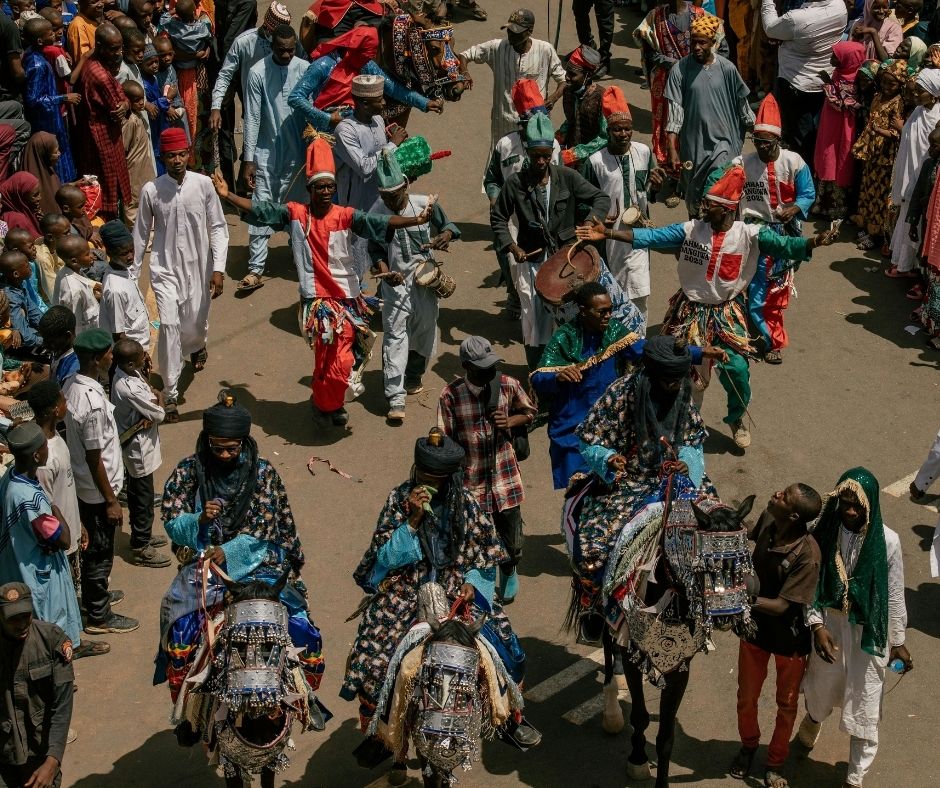
In West African nations such as Nigeria, Senegal, and Mali, the celebration of the Lesser Biram is marked by the “Durbar” (The Fanfare). In northern Nigeria, this tradition sees thousands of riders in magnificent regalia, mounted on horses adorned with colorful quilted armor. This equestrian parade, led by local traditional rulers, serves as a bridge between a noble past and a celebratory present. The rhythmic beating of the talking drums and the long brass trumpets create an acoustic landscape that is uniquely African, signaling the end of the fast with regal authority.

The Culinary Soul of the Celebration

Food in Sub-Saharan Africa is the primary language of hospitality during this festive season. In East Africa, particularly along the Swahili coast of Kenya and Tanzania, families gather over large platters of Pilau (spiced rice) and Biryani. In West Africa, the ubiquitous Jollof Rice takes center stage. Unlike the major feast involving animal sacrifice, the Lesser Biram focuses on “Zakat al-Fitr,” where grains and staples are distributed to the “Miskeen” (the needy) before the morning prayer, reflecting the deep-rooted African value of Ubuntu—the belief that communal well-being is the ultimate wealth.

 The Aesthetics of Identity

The “Eid Outfit” across the continent is a profound cultural statement. Moving away from simpler garments, non-Arab Africans embrace the “Bazin Riche” in Senegal or the “Agbada” and “Dashiki” in Nigeria and Ghana. These garments, often hand-dyed in brilliant indigos and golds, are stiffened with starch until they resonate with every movement. For women, the intricate art of Henna is a mandatory ritual of beauty. These patterns are more than decorative; they are symbolic narratives of joy and protection, woven onto the palms of the celebrants to mark the arrival of the new moon.

 Communal Spirituality and the Open Gate

One of the most profound aspects of the Lesser Biram in Africa is the “Baraza” or the open-house tradition. In many communities, doors are literally left open, and any passerby—regardless of their specific background—is invited to share a meal and a blessing. In Ethiopia, the Harari communities celebrate with unique hymns that blend traditional African melodies with sacred supplications. This fluidity ensures that the holiday is a time of reconciliation, where old disputes are settled under the shade of the community courtyard, reaffirming that the light of faith is best reflected through the lens of human kindness.


read more

” Fragile Shield”: Africa’s Economic Hub Grapples with Aftershocks of Middle Eastern Volatility


Tags: #AfricanCulture#AfricanTraditions#CulturalHeritageAfrica#DurbarFestival#EidAlFitrAfrica#EidCelebrations#EidInAfrica#MuslimFestivals#UbuntuPhilosophy#WestAfricaCultureEid al-FitrEid al-Fitr in AfricaFood in Sub-Saharan Africathe "Durbar" (The Fanfare)the celebration of Eid al-Fitr
Share234Tweet147Send

Related Posts

Nigeria’s Energy Paradox: A Nation Drowning in Crude while Choking on Record Fuel Prices
Culture

Nigeria’s Energy Paradox: A Nation Drowning in Crude while Choking on Record Fuel Prices

March 20, 2026
Poetry in Stone: Statue of ‘Poet of Hope’ Fouad Haddad Inaugurated in Islamic Cairo
Culture

Poetry in Stone: Statue of ‘Poet of Hope’ Fouad Haddad Inaugurated in Islamic Cairo

March 17, 2026
Continental Page-Turner: Egypt Leads Pack as Africa Rewrites Global Reading Map—Are Africans Real Bookworms?
Culture

Continental Page-Turner: Egypt Leads Pack as Africa Rewrites Global Reading Map—Are Africans Real Bookworms?

March 15, 2026
A Culinary Odyssey: 10 Bizarre African Delicacies to Challenge Your Palate
Culture

A Culinary Odyssey: 10 Bizarre African Delicacies to Challenge Your Palate

March 13, 2026
Unveiling the Enigmas: 10 Most Unique Symbols in African National Flags
Culture

Unveiling the Enigmas: 10 Most Unique Symbols in African National Flags

March 12, 2026

the most visited

” Fragile Shield”: Africa’s Economic Hub Grapples with Aftershocks of Middle Eastern Volatility

” Fragile Shield”: Africa’s Economic Hub Grapples with Aftershocks of Middle Eastern Volatility

March 19, 2026
The Fragile Ballot: Ethiopia’s 2026 Election as a Catalyst for National Fragmentation

” Abiy Paradox” How Ethiopia’s “Messianic” Governance Fueled wide-spread Implosion with vainglorious national dialogue

March 20, 2026
afronews

© 2025 afro news website - your eye on africa news.

menu

  • Home
  • News
  • Egypt & Africa
  • World & Middle East
  • business
  • Sport
  • Culture
  • Influential African figures
  • Opinion

Follow Us

No Result
View All Result
  • Home
  • News
  • Egypt & Africa
  • World & Middle East
  • business
  • Sport
  • Opinion
  • Culture
  • Influential African figures
  • Privacy Policy
  • about us

© 2025 afro news website - your eye on africa news.