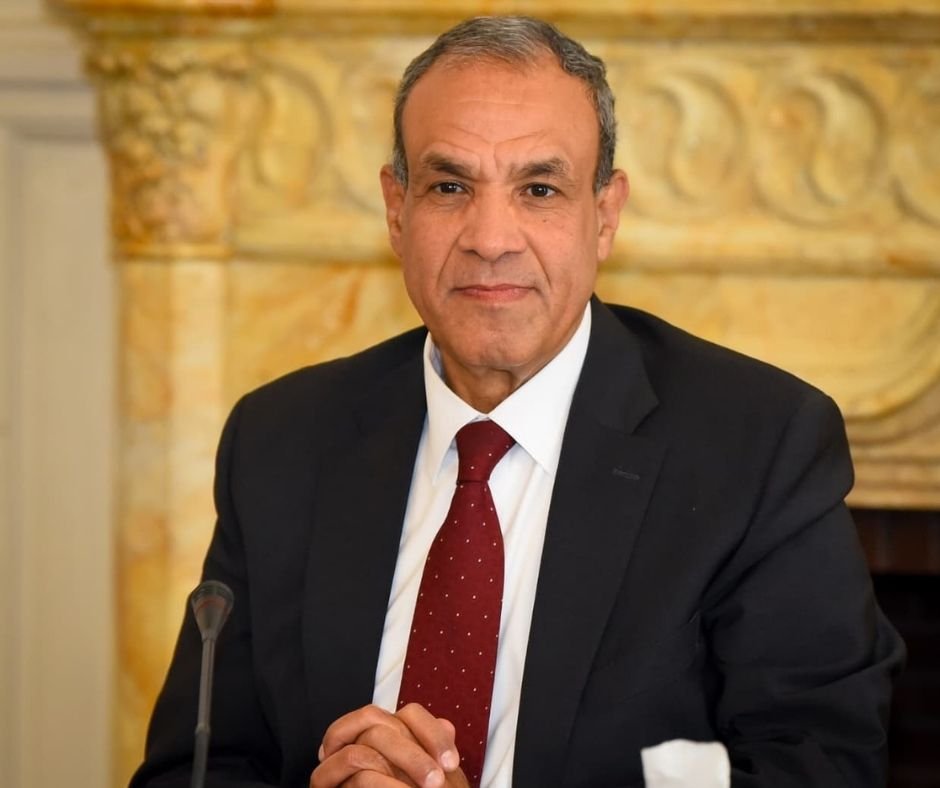
Egyptian Foreign Minister Badr Abdelatty held a phone call with his Iranian counterpart, Abbas Araghchi, to discuss regional developments and ongoing efforts to de-escalate tensions in the Middle East, the Egyptian Ministry of Foreign Affairs said.
The call comes as regional and international actors intensify diplomatic efforts to contain escalation and promote dialogue amid heightened tensions across the region.
According to the ministry, Araghchi commended Egypt’s active and sustained role in promoting de-escalation, highlighting Cairo’s diplomatic initiatives and constructive engagement aimed at advancing understanding and dialogue on Iran’s nuclear file.
In a statement issued on Tuesday, the ministry added that the Iranian foreign minister also briefed Abdelatty on the latest developments in a recent round of talks between the United States and Iran, hosted by Oman.
FM Abdelatty expressed Egypt’s full support for the negotiations and for all efforts aimed at de-escalating tensions, strengthening dialogue, and addressing concerns through diplomatic and political channels, the statement said.
He stressed the importance of continuing the negotiation track between Washington and Tehran to reach a peaceful and consensual settlement that takes into account the concerns of all parties, underscoring that dialogue remains the primary option to avoid escalation and to support regional security, stability, and development
The first round of indirect negotiations between the United States and Iran was held in Muscat on Friday, marking the first talks between the two sides since Israel’s 12-day war with Iran in June 2025, which the United States briefly joined.
Following the talks, Araghchi said Tehran would never relinquish uranium enrichment, stressing that Iran would not be pressured by US military deployments or the threat of war.
Egypt has stepped up diplomatic engagement on the Iranian file in recent months, positioning itself as a key regional advocate for de-escalation and negotiated solutions amid rising tensions between the United States and Iran over Tehran’s nuclear programme.
Cairo has maintained sustained consultations with regional and international partners, repeatedly stressing that political and diplomatic tracks, rather than military action, are the only viable means to prevent the widening of regional crises and safeguard Middle East stability.
As part of this approach, FM Abdelatty has kept up high-level contacts with Arab and international counterparts.
Egyptian officials warned that failure to de-escalate could trigger interconnected crises across the region, particularly amid heightened military posturing following US President Donald Trump’s decision to deploy additional naval and air forces toward Iran and Tehran’s subsequent threats of retaliation.
Alongside regional coordination, Cairo has pursued direct mediation efforts. These included hosting talks in September that led to the Cairo agreement between Iran and the International Atomic Energy Agency (IAEA), establishing a framework for cooperation.
Egyptian FM : Africa suffers from “historical injustice” and UNSC needs sweeping reform