He stood firm against racism , echoed spirt of Africa’s anti-apartheid , anti colonialism head of AU commission says
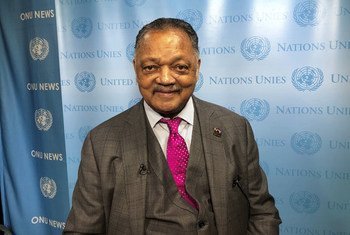
The Rev. Jesse L. Jackson, a protege of the Rev. Martin Luther King Jr. and two-time presidential candidate who led the Civil Rights Movement for decades after the revered leader’s assassination, died Tuesday.
He was 84.
As a young organizer in Chicago, Jackson was called to meet with King at the Lorraine Motel in Memphis, Tennessee, shortly before King was killed, and he publicly positioned himself thereafter as King’s successor.
Santita Jackson confirmed that her father, who had a rare neurological disorder, died at home in Chicago, surrounded by family.
He is a man whose name became synonymous with the fight for justice, equality, and human dignity. From the marches of The Civil Rights Movement to the halls of power, he carried forward a mission rooted in service, activism, and the belief that every voice matters.
He lift a legacy of life lessons behind, the causes he championed, and the impact he had on generations of leaders around the world and everyday people alike.
He spoke tirelessly for the poor and marginalized on issues from voting rights to housing.
Jackson also gave numerous speeches as the leader of the Coalition and as a presidential candidate in the 1980s. Later, he did the same for the Black Lives Matter movement.
Here are some notable and defining words from Jackson.
‘I Am — Somebody’ Though not written by Jackson, this poem became synonymous with him. He turned a verse into a rallying cry at rallies in the 1960s and even on a 1972 episode of “Sesame Street.” The poem goes:
“I may be poor, / But I am Somebody. / I may be young, / But I am Somebody. / I may be on welfare, / But I am Somebody.”
Diploma in one hand, voter registration in the other With his PUSH Excel education initiative, Jackson gave a speech in Chicago in the 1970s on equity in education and voting rights.
“Senior high school graduation must be seen as a passage of rites into adulthood. On that graduation day or night, we must put a diploma in one hand symbolizing knowledge and wisdom, and put a voter registration card in that other hand symbolizing power and responsibility.”
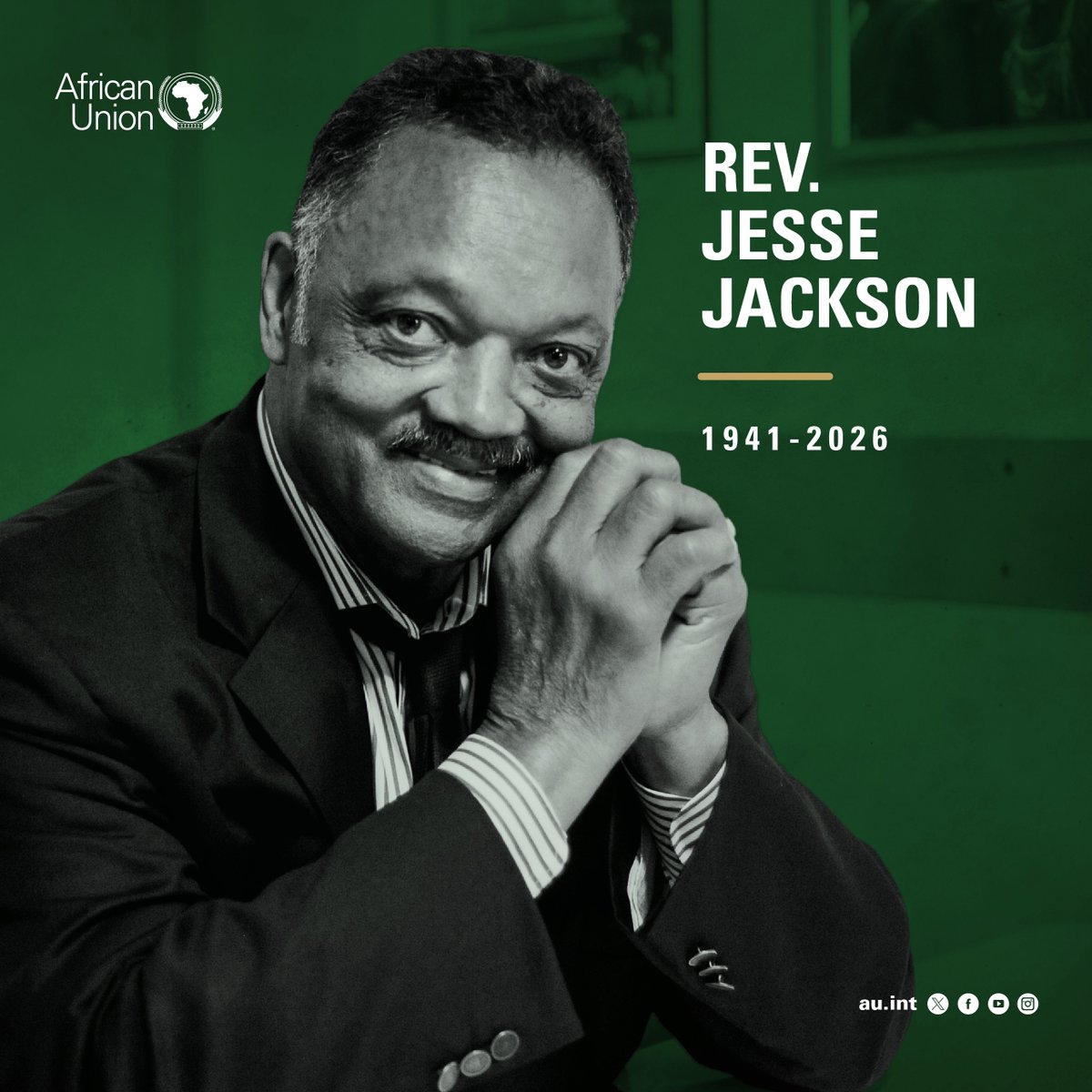
The Chairperson of the African Union Commission, H.E. Mahmoud Ali Youssouf, has joined leaders across the world in mourning the passing of the Hon. Rev. Jesse Louis Jackson, who died at the age of 84. He described him as a towering figure whose life’s work resonated profoundly with Africa’s historic and ongoing struggles for justice, dignity, equality, and liberation.
The Chairperson underscored that Rev. Jackson’s decades-long advocacy for civil rights, economic justice, and political inclusion closely aligned with the African Union’s mandate to promote human rights, combat racial discrimination, and advance the global African agenda — including the recognition of the African diaspora as the continent’s Sixth Region.
As founder of the Rainbow/PUSH Coalition and a close associate of leaders such as Martin Luther King Jr., Rev. Jackson stood at the forefront of the struggle against systemic racism and injustice.
His activism echoed the spirit of Africa’s anti-colonial and anti-apartheid movements and reinforced the global fight against racial oppression in all its manifestations.
Rev. Jackson long promoted a strong, interconnected relationship between African Americans and the African continent. He famously popularized the term “African American” in the 1980s, helping to affirm identity, heritage, and historical consciousness among people of African descent.
He consistently viewed the diaspora not only as a cultural community, but as a vital economic and political partner for Africa’s development and global influence.
In his words and actions, the Atlantic Ocean was not a divide but a bridge — connecting peoples bound by history, resilience, and shared aspirations.
He advocated moving beyond a legacy of neglect toward mutually beneficial engagement between Africa and its diaspora.
The Chairperson further noted that Rev. Jackson expressed enduring solidarity with African liberation movements and lent moral support to the struggle against apartheid, contributing to the broader international mobilization that dismantled institutionalized racial segregation in Southern Africa.
His calls for fairness in global governance, inclusive economic systems, and restorative justice resonate strongly with the African Union’s contemporary priorities, including reparative justice for the historical injustices of slavery, colonialism, and apartheid.
“Rev. Jesse Jackson’s life reflected the inseparable bond between Africa and its diaspora,” the Chairperson stated. “His unwavering commitment to justice and human dignity strengthened the Pan-African vision and advanced the shared quest for decolonisation, equality, and reparation.”
The Chairperson conveyed his heartfelt condolences to Rev. Jackson’s wife, Jacqueline, his family, the Government and people of the United States of America, and the global civil rights community.
Eulogies are pouring in after his death :
President Donald Trump
“I knew him well, long before becoming President. He was a good man, with lots of personality, grit, and ‘street smarts.’ He was very gregarious – Someone who truly loved people! … Jesse was a force of nature like few others before him.”
Former President Barack Obama and Michelle Obama
“Reverend Jackson helped lead some of the most significant movements for change in human history. … Reverend Jackson also created opportunities for generations of African Americans and inspired countless more, including us. Michelle got her first glimpse of political organizing at the Jacksons’ kitchen table when she was a teenager. And in his two historic runs for president, he laid the foundation for my own campaign to the highest office in the land.”
Former President Bill Clinton and former Secretary of State Hillary Rodham Clinton
“We were friends for almost fifty years since we met in 1977 at the 20th anniversary of the integration of Little Rock Central High. … Reverend Jackson championed human dignity and helped create opportunities for countless people to live better lives. Throughout it all, he kept marching to the music of his conscience, his convictions, and his causes.”
United Nations Secretary-General Antonio Guterres
“The Reverend Jackson lent his powerful voice to the U.N. to work against racism, against apartheid, and for human rights, including taking part in a number of events here at U.N. headquarters.” — in a statement from U.N. spokesman Stephane Dujarric.
Bobby Rush, former Illinois congressman and former Black Panther
“The Reverend taught me so many things through the enormity of his leadership, his passion, and his endless sacrifices for ‘the least of these.’ … He taught everybody that we are SOMEBODY, and his spirit will endure forever.”
Former Attorney General Eric Holder
“As our nation faces the greatest attack on the right to vote since the Jim Crow era, Reverend Jackson’s life and work remind us that progress does not happen by accident — it requires citizens willing to organize and fight for it.”
National Civil Rights Museum
“He was a frequent presence during our April 4th commemorations of Dr. King’s assassination at the Lorraine Motel, not as a guest, but as a witness to history and a steward of King’s unfinished work. His words, presence, and leadership during those solemn remembrances reminded us all of the price of freedom and the urgency of our continued struggle.” — The National Civil Rights Museum is located on the site of the former motel where King was assassinated
NAACP
“Reverend Jesse Jackson was not only a civil rights icon—he was family to the NAACP. His work advanced Black America at every turn. He challenged this nation to live up to its highest ideals, and he reminded our movement that hope is both a strategy and a responsibility. His historic run for president inspired millions and brought race to the forefront of American politics.” — NAACP Chairman Leon W. Russell, Vice Chair Karen Boykin Towns and President & CEO Derrick Johnson
South African President Cyril Ramaphosa
“His campaigns for an end to apartheid included disinvestment from the apartheid economy and challenging the support the regime enjoyed in certain circles and institutions internationally.
“We are deeply indebted to the energy, principled clarity and personal risk with which he supported our struggle and campaigned for freedom and equality in other parts of the world.”
https://x.com/i/status/2023779941699969049
AU summit successfully maps out key priorities for Africa’s development, officials say