Israel’s Recognition of Somaliland Sparks a New Regional Crisis … as Netanyahu’s Policies Ignite Tensions in the Horn of Africa

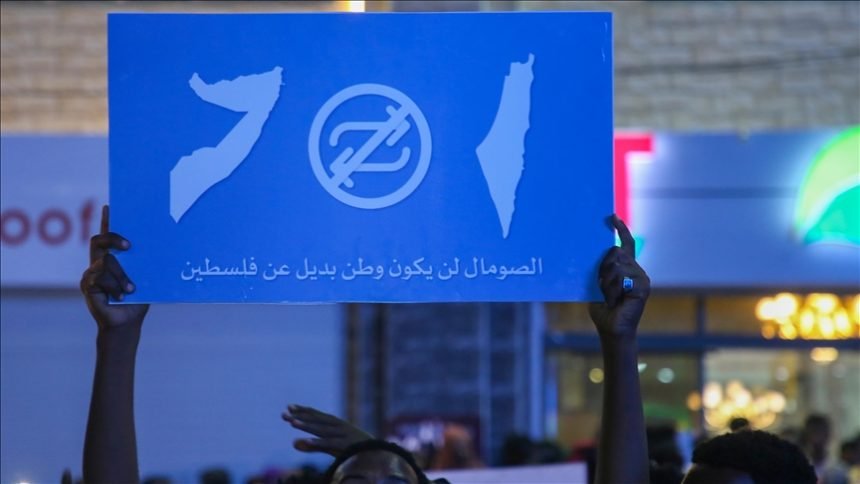
Israeli Prime Minister Benjamin Netanyahu’s announcement recognizing Somaliland as a “sovereign and independent state” has triggered widespread anger across African, Arab, and Islamic circles, amid growing warnings that the move could ignite a new flashpoint in the Horn of Africa and pose a direct threat to Somalia’s unity and the region’s stability.
Widespread African and Arab Condemnation
Israel’s recognition of Somaliland has provoked strong official reactions, with critics describing the move as blatant interference in Somalia’s internal affairs, a clear violation of international law and the UN Charter, and an attempt to impose a new fait accompli in a region already suffering from prolonged conflicts and fragile security conditions.
In response to the Israeli announcement, the foreign ministers of Egypt, Turkey, Somalia, and Djibouti issued a unified stance reaffirming their full support for Somalia’s unity, sovereignty, and territorial integrity. They categorically rejected any unilateral measures that could undermine Somali sovereignty or erode the foundations of stability in the country.
The ministers also stressed their support for Somalia’s legitimate state institutions and rejected any attempts to impose parallel entities or create a new reality that contradicts Somalia’s unity and threatens its political and security stability.
Egyptian Foreign Ministry: A Dangerous Precedent Threatening International Peace
According to a statement by Egypt’s Ministry of Foreign Affairs, contacts held by Foreign Minister Dr. Badr Abdel Aaty with his counterparts in Turkey, Somalia, and Djibouti underscored that recognizing the independence of parts of sovereign states constitutes a dangerous precedent that threatens international peace and security and violates established principles of international law and the UN Charter.
The statement emphasized that respect for the unity, sovereignty, and territorial integrity of states is a cornerstone of international stability and must not be undermined under any pretext. It also stressed the rejection of any attempts to impose a new reality or establish parallel entities that contradict international legitimacy and undermine prospects for security, stability, and development.
Arab League: An Attack on the Sovereignty of an Arab and African State
Arab League Secretary-General Ahmed Aboul Gheit said the Israeli step represents a direct attack on the sovereignty of an Arab and African state. He noted that the move comes from an occupying power that commits daily grave violations against the Palestinian people and neighboring countries while disregarding international legitimacy resolutions.
Aboul Gheit added that the move aims to destabilize the region in coordination with third parties, outside any commitment to the internationally recognized rules governing state recognition.
African Union: Somaliland Is an Integral Part of Somalia
For his part, African Union Commission Chairperson Mahmoud Ali Youssouf firmly rejected any initiative or measure aimed at recognizing Somaliland as an independent entity, stressing that the region remains an integral and inseparable part of the Federal Republic of Somalia. Any infringement on Somalia’s territorial unity, he said, poses a direct threat to stability across the African continent.
Experts Warn of Serious Security Repercussions
African affairs experts and analysts have warned that Israel’s recognition of Somaliland could have grave repercussions for security and stability in the Horn of Africa, potentially opening the door to a new wave of conflicts and encouraging separatist movements across the region.
Former Egyptian Diplomat: Israeli Presence Is Not New
In this context, Ambassador Salah Halima, former Assistant Foreign Minister and Vice Chairman of the Egyptian Council for African Affairs, said Israel’s pursuit of a presence in Somaliland is not new. He pointed out that the region occupies a highly strategic location within Somalia, overlooking the entrance to the Red Sea and the Gulf of Aden, extending toward the Bab el-Mandeb Strait and the Suez Canal.
Illegal Presence and Violation of International Law
In statements to Afronews , Ambassador Halima said Israel already maintains a presence in the northern Red Sea through the port of Eilat, which he described as an illegal presence, arguing that Eilat is historically Egyptian territory known as Umm Rashrash.
He added that Israel is now seeking to replicate this scenario in Somaliland through unilateral actions that violate international law and the UN Charter by undermining Somalia’s unity and territorial integrity in exchange for political and material gains.
Risks of Militarizing the Red Sea
The former diplomat warned that Israel’s recognition, as outlined in its official statement, includes security and political dimensions, effectively paving the way for an Israeli military presence in both the northern and southern Red Sea. Such a development, he said, would pose a direct threat to security and stability in a region of vital importance to Egyptian, Arab, and African national security.
He stressed the need to address these developments from a comprehensive geopolitical perspective that views the Horn of Africa as an inseparable part of the Red Sea security framework, rather than as a narrowly defined geographic area.
International Coordination Behind a Fragmentation Agenda
Ambassador Halima asserted that Israel’s move is not unilateral, but rather part of broader coordination and consultations with a quartet of regional and international actors previously involved in the fragmentation of states in the region—such as Yemen and Sudan—and now Somalia, through the creation of parallel entities based on ethnic, tribal, religious, or sectarian lines.
The “New Middle East” and Forced Displacement Scenarios
He further argued that Israel, as a settler-colonial and expansionist state, may have linked this move to so-called “New Middle East” plans and ongoing developments in the West Bank and Gaza. He suggested that recognition of Somaliland could also be connected to Israel’s confrontation with Iran and the Houthis, as well as potential efforts to push toward the forced displacement of Palestinians to the region—particularly amid reports that Somaliland may sign the Abraham Accords following recognition.
Criticism of Somaliland’s Leadership
Ambassador Halima described the move by Somaliland’s leadership as a grave mistake, especially given the current international climate rejecting Israeli policies. He cited the condemnation of Israeli leaders, including Prime Minister Netanyahu and the defense minister, as alleged war criminals sought by the International Criminal Court, as well as Israel’s condemnation as a state by the International Court of Justice over the Palestinian issue.
Expected Arab and African Moves to Contain the Crisis
Halima said the joint Egyptian–Turkish–Somali–Djiboutian position is likely to gain further backing from the Arab League, the African Union, and many countries worldwide—particularly Arab and African states bordering the Red Sea. He stressed the urgency of activating this collective framework to contain the crisis.
He also warned that Ethiopia or other states could take similar steps if a strong Arab and African response fails to halt this trajectory.
African Expert: Risks of Fragmentation and Armed Confrontation
Dr. Mohamed Torshin, an expert in African affairs, said Israel’s recognition of Somaliland as an independent state would have far-reaching and complex consequences for security and stability in the Horn of Africa.
He explained that the move could encourage other actors to recognize Somaliland, while simultaneously prompting influential international powers to support the Somali government in Mogadishu—potentially leading to a large-scale military confrontation to reassert central sovereignty over the region.
African Rejection Expected
Dr. Torshin predicted that Israel’s move would not be accepted within the regional environment, as it would fuel new separatist tendencies across Horn of Africa states, posing a real threat to regional security and stability.
He emphasized that the African Union is expected to categorically reject the move, warning that any acceptance would open the door to major crises within the continent and undermine one of the AU’s core principles: respect for the unity of states and inherited borders.
Somalia -Somaliland Crisis Intensifies .. Israel is warned against exporting its conflicts