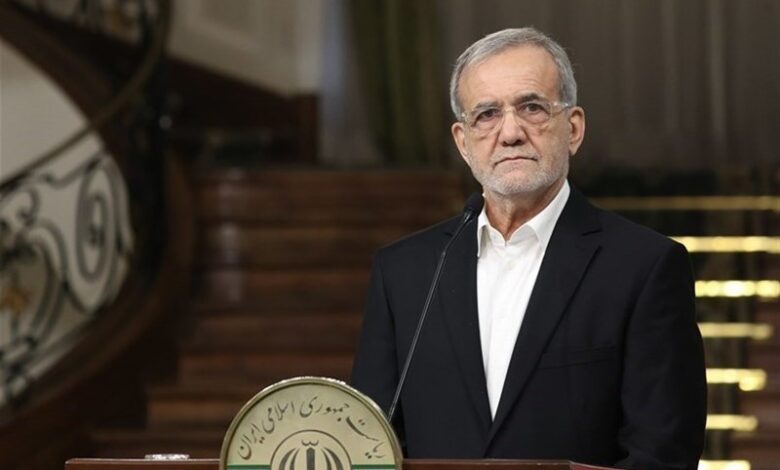
In a historic and volatile shift, Israel and Iran have transitioned from a “shadow war” into a direct, high-stakes exchange of fire, sending shockwaves across a fragile Middle East. As missiles illuminated the regional skies, Iranian President Masoud Pezeshkian took the extraordinary step of issuing a formal apology to neighboring nations, expressing profound regret for the spillover effects and the “involuntary turmoil” caused by the escalating hostilities. This dual reality—of strategic strikes on one hand and a rare diplomatic plea for patience on the other—signals a desperate attempt by Tehran to maintain regional alliances even as it locks horns with its primary adversary in a conflict that many fear has reached the point of no return.
Israel and Iran traded attacks on Saturday as the war entered its second week, while Tehran issued an apology to neighbouring states for its “actions”, in an apparent bid to ease regional anger at Iranian strikes on Gulf Arab civilian targets. The U.S.-Israeli war on Iran has already spilled beyond Iran’s borders, as Tehran has responded by hitting Israel and Gulf Arab states hosting U.S. military installations and Israel has attacked Lebanon’s Iran-backed Hezbollah armed group.
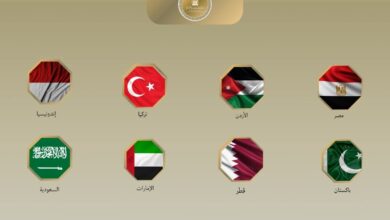
The UAE, Kuwait, Qatar, Bahrain and Saudi Arabia have all reported drone and missile attacks over the past week. Iranian President Masoud Pezeshkian said Iran’s temporary leadership council had approved suspending attacks on nearby countries – unless an attack on Iran came from those nations. “I personally apologise to neighbouring countries that were affected by Iran’s actions,” he said.
How far Pezeshkian’s statement reflects a decision to back off by Iran, or why, is not yet clear, with some strikes still reportedly directed at Gulf states on Saturday morning. Iran had mended fences with its Gulf neighbours in recent years, including with former regional arch rival Saudi Arabia – a diplomatic campaign that imploded as the Revolutionary Guards launched a blitz of drones and missiles over the past week.
Gulf states voiced immediate outrage that their civilian infrastructure – hotels, ports and oil facilities – were struck despite their having had no part in the U.S.-Israeli attacks. While Gulf states host U.S. military bases, they had told Washington they would not allow these to be used for any attacks on Iran.
Iran’s apparent strategy of maximum chaos has driven up the costs of the conflict by raising energy prices, hurting global business and logistics links and shaking trust in the stability of a critical region for the world’s economy. It is too soon to say whether Pezeshkian’s comments mean Iran has decided to curtail that strategy in deference to future ties with Gulf neighbours, or if they should be read as a warning that Tehran remains ready to strike across the region.
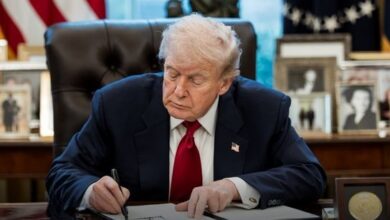
Pezeshkian’s remarks come as diplomatic prospects for an end to hostilities appear bleak, with U.S. President Donald Trump demanding Tehran’s “unconditional surrender”. “There will be no deal with Iran except UNCONDITIONAL SURRENDER!” Trump wrote on his Truth Social platform on Friday.
“After that, and the selection of a GREAT & ACCEPTABLE Leader(s), we, and many of our wonderful and very brave allies and partners, will work tirelessly to bring Iran back from the brink of destruction, making it economically bigger, better, and stronger than ever before,” he added.
The U.S.-Israeli attacks have killed at least 1,332 Iranian civilians and wounded thousands, according to Iran’s U.N. ambassador, Amir Saeid Iravani. Iranian attacks have killed 11 people in Israel, and at least six U.S. service members have been killed.
Russian President Vladimir Putin expressed his condolences to Pezeshkian over the numerous civilian casualties resulting from “the armed Israeli-American aggression against Iran” and called for an immediate halt to hostilities, the Kremlin said. Russia is expected to back Iran’s “legitimate rights against aggression” by using its international capabilities, Pezeshkian told Putin over the phone, Iran state media reported.
Early on Saturday, the Iranian army said its navy had carried out drone strikes against targets in Israel as well as U.S. gathering points and bases in Abu Dhabi and Kuwait, in an apparent response to the U.S. attack on its ship IRIS Dena that killed dozens of sailors. The Islamic Revolutionary Guard Corps said it struck three positions of separatist groups in Iraq’s Kurdistan region at 4:30 a.m. local time. A spokesman for the armed forces warned that if separatist groups in the Kurdistan region take any action against Iran’s territorial integrity, “we will crush them.”
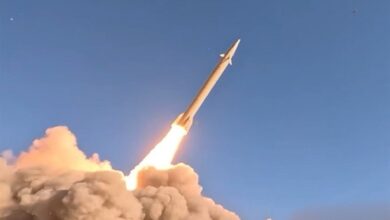
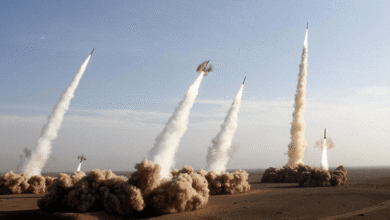
The Israeli military earlier said it had identified missiles launched from Iran towards Israel. Explosions could be heard as Israeli defences activated to shoot down incoming Iranian fire. Shortly after the barrage, the Israeli army said it had begun a wave of strikes targeting infrastructure in Tehran. Israel also attacked neighbouring Lebanon, where it said it was hitting Iranian and Hezbollah targets.
Tehran’s Mehrabad Airport was struck, the semi-official Tasnim news agency reported. There was no immediate comment from Iran’s Guards or Lebanon’s Iran-backed Hezbollah militants. The war has roiled global markets and oil prices have hit multi-year highs with the Strait of Hormuz effectively shut. About one-fifth of global oil moves daily through the strait.
Washington will provide reinsurance for losses up to $20 billion in the Gulf region to bolster confidence for oil and gas shippers, the U.S. International Development Finance Corp said. Trump has said the U.S. Navy could escort ships in the Gulf. But Iran’s Revolutionary Guards challenged him to do so, with spokesperson Ali Mohammad Naini saying Iran “welcomes” and is “awaiting” any U.S. presence in the strait, state media said.
Trump also reiterated his demand to have a say in selecting Iran’s new supreme leader, a notion rejected by Iravani. The ambassador said new leadership would be selected “in accordance with our constitutional procedures and solely by the will of the Iranian people – without any foreign interference. “Iran has described the conflict as an unprovoked attack and the killing of Khamenei as an assassination.
read more
On the Political and Economic Repercussions of a U.S. / Israeli War on Iran