” Fragile Shield”: Africa’s Economic Hub Grapples with Aftershocks of Middle Eastern Volatility

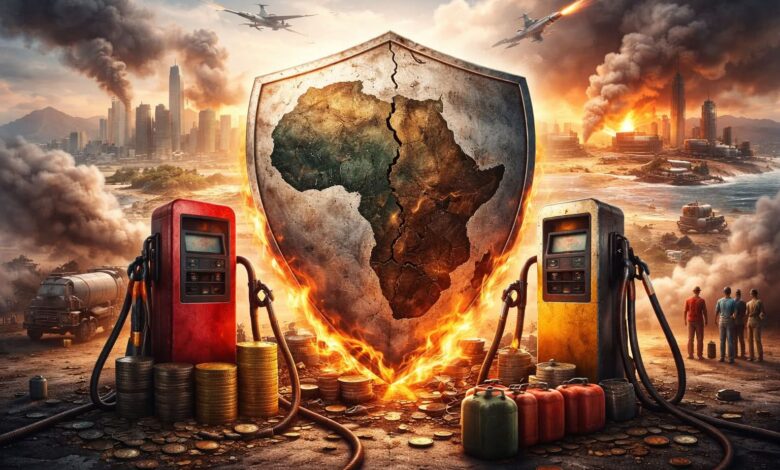
The global energy landscape is currently undergoing a seismic transformation, triggered by the recent military escalations between the United States, Israel, and Iran. While the epicenter of the conflict remains geographically confined to the Middle East, the economic shockwaves have traversed oceans and continents, landing with particular force on the shores of Africa. South Africa, often characterized as the continent’s most industrialized and affluent economy, now finds itself in a precarious position, admitting a startling lack of fiscal ammunition to protect its citizens from an impending fuel-price catastrophe. This development underscores a broader systemic vulnerability across emerging markets where the intersection of geopolitical instability and limited domestic reserves creates a perfect storm for economic distress.
The statistics emerging from the global oil markets are nothing short of staggering. Since the onset of the offensive last month, crude oil prices have surged by more than forty percent, comfortably breaching the hundred-dollar-per-barrel threshold. For a country like South Africa, which relies heavily on imported energy to power its manufacturing and transport sectors, such a spike is not merely a budgetary inconvenience but a fundamental threat to national stability. The National Treasury has been forced to break the silence, offering a sobering assessment of the nation’s inability to intervene in the market. The message from Pretoria is clear: the traditional safety nets that once shielded consumers from the volatile swings of the global commodities market have worn thin, leaving the public exposed to the full brunt of rising costs.
During a recent high-level gathering of financial minds at a Stanlib Asset Management conference in Johannesburg, the gravity of the situation was articulated with unsettling precision. Treasury Director-General Duncan Pieterse provided a candid look into the state’s depleted coffers, noting that the financial buffers required to cushion the blow for petrol and diesel consumers simply do not exist in the current fiscal framework. To implement a meaningful subsidy or price cap would require tens of millions of rand—funds that are currently earmarked for other critical infrastructure and social programs. This lack of maneuverability marks a significant departure from previous years, such as during the initial stages of the conflict in Ukraine, when the government was able to temporarily slash fuel levies to provide a modicum of relief. Today, any potential intervention is described as minimal at best and entirely dependent on existing, strained budgets.
The timing of this energy crisis is particularly cruel for South Africa. The nation has spent the better part of the last decade struggling to escape a cycle of stagnation, characterized by persistent electricity shortages and logistical bottlenecks that have crippled the mining and manufacturing industries. Last year offered a glimmer of hope with a growth rate of 1.1 percent, the strongest performance since 2022. However, this nascent recovery is now being suffocated by energy costs. When fuel prices rise in an economy as integrated as South Africa’s, the inflationary pressure is immediate and pervasive. It increases the cost of transporting food from farms to cities, raises the operational expenses of small businesses, and erodes the purchasing power of a middle class that is already stretched to its limits.
The crisis, however, is not confined to the south. Across the African continent, a pattern of energy insecurity is emerging, threatening to reverse years of developmental gains. In Ethiopia, the government has moved from warnings to active pleas, urging its population to drastically reduce fuel consumption as supply lines from the Middle East face unprecedented disruptions. The reality for many developing nations is that they are being priced out of the market. As global supply tightens, wealthier nations with deeper pockets are able to outbid African importers, leading to a scenario where fuel becomes a luxury rather than a utility. This competition creates a ripple effect of rationing and scarcity that can paralyze entire cities and halt industrial production.
Even Nigeria, despite its significant strides toward self-sufficiency through the massive Dangote Refinery, has not been immune to the global trend. The country has seen multiple fuel price hikes in a short span, adding immense pressure to households already grappling with a high cost of living. The paradox of being an oil-producing region that still suffers from global price volatility highlights the complex dependency of African economies on international refining benchmarks and geopolitical stability. Analysts warn that if the conflict in the Middle East persists or escalates further, the difficulty of securing consistent fuel supplies will only intensify for nations that lack significant strategic reserves.
As South Africa navigates this turbulent period, the role of the fuel levy remains a point of intense debate. Having collected approximately ninety-seven billion rand from these levies in the most recent fiscal year, the Treasury is loath to forfeit a primary source of revenue, especially when public debt remains a pressing concern. Yet, the social cost of inaction is rising. The tension between maintaining fiscal discipline and preventing social unrest due to rising costs is the central challenge facing policymakers today. Without a significant de-escalation in global tensions or a miraculous shift in oil production, the African continent remains a bystander to a conflict that is redefining its economic future. The current situation serves as a stark reminder that in a globalized world, the distance from a battlefield offers no protection from the economic consequences of war.
Read more