The economic landscape of Africa is defined by a formidable force: the multi-generational family dynasty. According to the latest Forbes Africa Wealth List and Bloomberg Billionaires Index, these ten families command industrial ecosystems that span telecommunications, mining, retail, and finance, acting as primary drivers of intra-continental trade.
These families represent the stabilizers of the African economy. In a continent where institutions can be fluid, these dynasties provide the long-term vision necessary for the projected growth of the coming century.
The Dangote Dynasty (Nigeria)
The Dangote name is synonymous with West African industrialization. As documented by Bloomberg, Aliko Dangote remains Africa’s richest individual, but his wealth is a family-led engine. Their dominance in cement and sugar—and the recent commissioning of the world’s largest single-train oil refinery, as reported by Reuters—has positioned them as a sovereign-level economic entity. The family’s strategy, verified by the Nigerian Stock Exchange (NGX) filings, is rooted in transforming Nigeria from an importer into a global industrial exporter.
The Oppenheimer Family (South Africa)
For over a century, the Oppenheimers orchestrated the global diamond trade. Since divesting their 40% stake in De Beers to Anglo American in 2012 for $5.1 billion—a transaction detailed in Financial Times archives—the family has transitioned into a private equity powerhouse. Through their investment vehicle, E. Oppenheimer & Son, they now focus on high-growth African startups, maintaining massive liquidity and intellectual influence over continental policy.
The Johann Rupert Family (South Africa)
Control over the global luxury market defines the Rupert family’s wealth. Through Richemont, they oversee iconic brands like Cartier and Montblanc, a fact consistently highlighted in Swiss Stock Exchange (SIX) reports. Domestically, their investment vehicle, Remgro, holds significant stakes in banking and media, representing the intersection of South African industrial roots and elite European luxury.
The Mansour Group (Egypt)
A titan of the North African economy, the Mansour family operates one of the world’s largest General Motors distributors, according to GM’s global dealership records. Their business model includes exclusive rights to brands like McDonald’s and Caterpillar in Egypt. As noted by The Wall Street Journal, the family’s private equity arm, Man Capital, ensures their capital is deployed globally, from Silicon Valley tech to European logistics.
The Sawiris Family (Egypt)
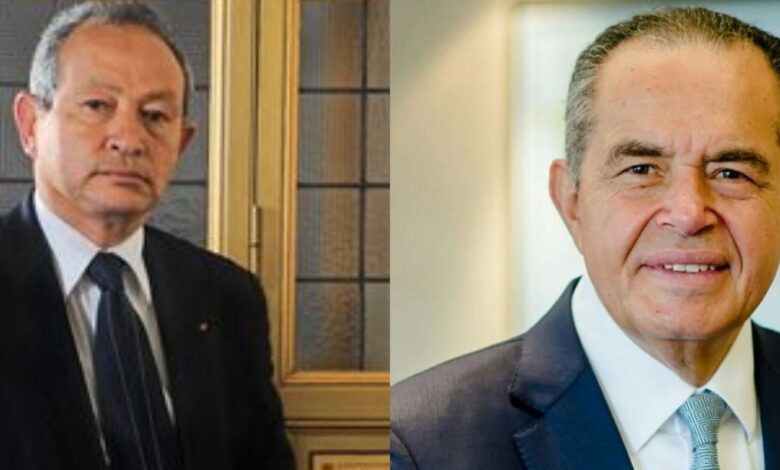
Perhaps the most internationally recognized Egyptian name, the Sawiris family has built a multi-sector empire. While Naguib Sawiris made his mark in telecommunications via Orascom, Nassef Sawiris has become a global leader in nitrogen fertilizers through OCI NV, listed on the Euronext Amsterdam. Their investments are truly global, including stakes in Adidas and professional sports, as frequently covered by Forbes Middle East.
The Bekker family & South African Contingents
Beyond the primary names, the South African landscape includes the Bekker family legacy. Koos Bekker transformed Naspers from a traditional print media company into a global tech giant by securing an early stake in Tencent—a move widely cited by The Economist as one of the most successful venture capital investments in history.
The Rebrab Family (Algeria)
Issad Rebrab and his family founded Cevital, Algeria’s largest private conglomerate. They own one of the world’s largest sugar refineries and have expanded into European steel. Despite past regulatory hurdles in Algiers, Jeune Afrique reports that the family remains a cornerstone of the Maghreb’s industrial power, proving that African private enterprise can compete on a Mediterranean scale.
The Adenuga Family (Nigeria)
Mike Adenuga’s wealth is built on the twin pillars of telecommunications (Globacom) and energy (Conoil). Unlike many who rely on public equity, Adenuga’s empire is largely private, a status confirmed by the Nigerian Communications Commission (NCC). Their story is one of indigenous mastery over connectivity and oil production.
The Akhannouch Family (Morocco)
The Akwa Group, a multi-billion dollar conglomerate, is the source of this family’s power. Dominating the petroleum and gas sectors in Morocco, they are essential to the kingdom’s energy security, according to the Moroccan Ministry of Energy data. Their influence is unique, as the family patriarch also serves at the highest levels of civil government.
The Chandaria Family (Kenya)
The Comcraft Group, led by the Chandarias, is the premier industrial force in East Africa. Specializing in aluminum and steel, they have built a manufacturing network spanning over 40 countries, as documented by the Kenya Association of Manufacturers. The family is celebrated for a philanthropic footprint that is as vast as its industrial reach.
read more
Africa’s richest country gets a new dollar billionaire.. Paul van Zuydam